Douglas K B, Windels D C, Zhao J, Gadeliya A V, Wu H, Kaufman K M, Harley J B, Merrill J, Kimberly R P, Alarcón G S, Brown E E, Edberg J C, Ramsey-Goldman R, Petri M, Reveille J D, Vilá L M, Gaffney P M, James J A, Moser K L, Alarcón-Riquelme M E, Vyse T J, Gilkeson G S, Jacob C O, Ziegler J T, Langefeld C D, Ulgiati D, Tsao B P, Boackle S A
University of Colorado Denver School of Medicine, Aurora, CO 80045, USA.
Genes Immun. 2009 Jul;10(5):457-69. doi: 10.1038/gene.2009.27. Epub 2009 Apr 23.
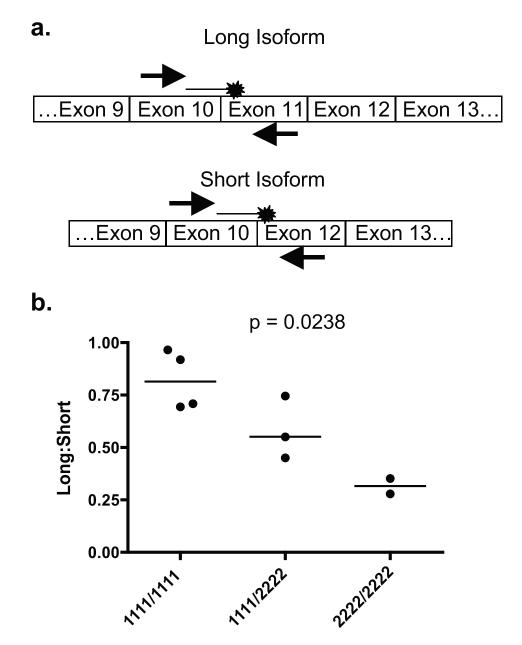
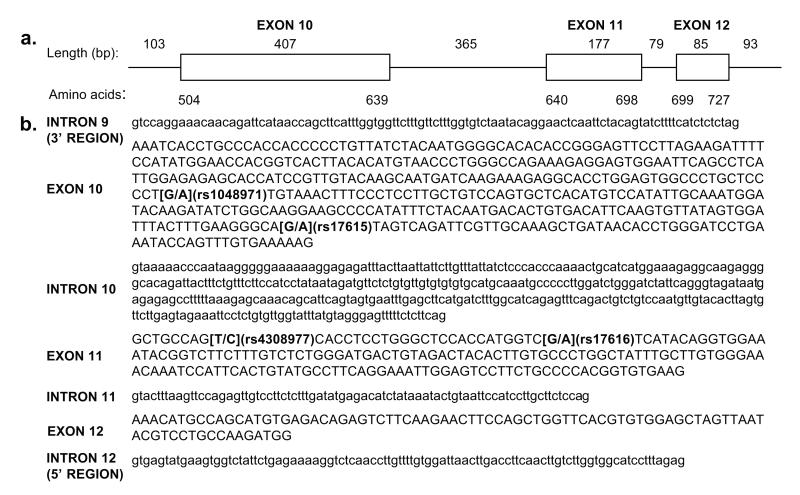
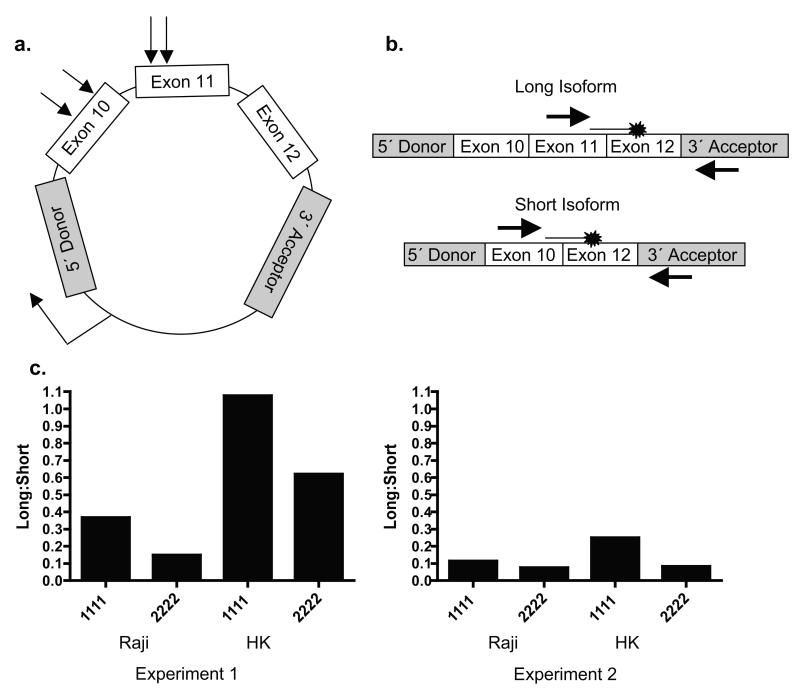
Genetic factors influence susceptibility to systemic lupus erythematosus (SLE). A recent family-based analysis in Caucasian and Chinese populations provided evidence for association of single-nucleotide polymorphisms (SNPs) in the complement receptor 2 (CR2/CD21) gene with SLE. Here we confirmed this result in a case-control analysis of an independent European-derived population including 2084 patients with SLE and 2853 healthy controls. A haplotype formed by the minor alleles of three CR2 SNPs (rs1048971, rs17615, rs4308977) showed significant association with decreased risk of SLE (30.4% in cases vs 32.6% in controls, P=0.016, OR=0.90 (0.82-0.98)). Two of these SNPs are in exon 10, directly 5' of an alternatively spliced exon preferentially expressed in follicular dendritic cells (FDC), and the third is in the alternatively spliced exon. Effects of these SNPs and a fourth SNP in exon 11 (rs17616) on alternative splicing were evaluated. We found that the minor alleles of these SNPs decreased splicing efficiency of exon 11 both in vitro and ex vivo. These findings further implicate CR2 in the pathogenesis of SLE and suggest that CR2 variants alter the maintenance of tolerance and autoantibody production in the secondary lymphoid tissues where B cells and FDCs interact.
遗传因素影响系统性红斑狼疮(SLE)的易感性。最近在白种人和中国人群中进行的一项基于家系的分析为补体受体2(CR2/CD21)基因中的单核苷酸多态性(SNP)与SLE的关联提供了证据。在此,我们在一项独立的欧洲裔人群病例对照分析中证实了这一结果,该分析纳入了2084例SLE患者和2853名健康对照。由三个CR2 SNP(rs1048971、rs17615、rs4308977)的次要等位基因形成的单倍型与SLE风险降低显著相关(病例组为30.4%,对照组为32.6%,P=0.016,OR=0.90(0.82-0.98))。其中两个SNP位于第10外显子,紧邻在滤泡树突状细胞(FDC)中优先表达的可变剪接外显子的5'端,第三个SNP位于可变剪接外显子中。评估了这些SNP以及第11外显子中的第四个SNP(rs17616)对可变剪接的影响。我们发现,这些SNP的次要等位基因在体外和体内均降低了第11外显子的剪接效率。这些发现进一步表明CR2参与了SLE的发病机制,并提示CR2变体改变了B细胞和FDC相互作用的二级淋巴组织中耐受性的维持和自身抗体的产生。