• 文献检索
  • 文档翻译
  • 深度研究
  • 学术资讯
  • Suppr Zotero 插件Zotero 插件
  • 邀请有礼
  • 套餐&价格
  • 历史记录
应用&插件
Suppr Zotero 插件Zotero 插件浏览器插件Mac 客户端Windows 客户端微信小程序
定价
高级版会员购买积分包购买API积分包
服务
文献检索文档翻译深度研究API 文档MCP 服务
关于我们
关于 Suppr公司介绍联系我们用户协议隐私条款
关注我们

Suppr 超能文献

核心技术专利:CN118964589B侵权必究
粤ICP备2023148730 号-1Suppr @ 2026

文献检索

告别复杂PubMed语法,用中文像聊天一样搜索,搜遍4000万医学文献。AI智能推荐,让科研检索更轻松。

立即免费搜索

文件翻译

保留排版,准确专业,支持PDF/Word/PPT等文件格式,支持 12+语言互译。

免费翻译文档

深度研究

AI帮你快速写综述,25分钟生成高质量综述,智能提取关键信息,辅助科研写作。

立即免费体验

医疗专业人员对使用Web 2.0门户进行儿童和青少年糖尿病护理的态度:定性研究

Health professionals' attitudes towards using a Web 2.0 portal for child and adolescent diabetes care: qualitative study.

作者信息

Nordqvist Cecilia, Hanberger Lena, Timpka Toomas, Nordfeldt Sam

机构信息

Department of Medical and Health Sciences, Linköping University, S-581 83 Linköping, Sweden.

出版信息

J Med Internet Res. 2009 Apr 6;11(2):e12. doi: 10.2196/jmir.1152.

DOI:10.2196/jmir.1152
PMID:19403464
原文链接:https://pmc.ncbi.nlm.nih.gov/articles/PMC2762803/
Abstract

BACKGROUND

The Internet, created and maintained in part by third-party apomediation, has become a dynamic resource for living with a chronic disease. Modern management of type 1 diabetes requires continuous support and problem-based learning, but few pediatric clinics offer Web 2.0 resources to patients as part of routine diabetes care.

OBJECTIVES

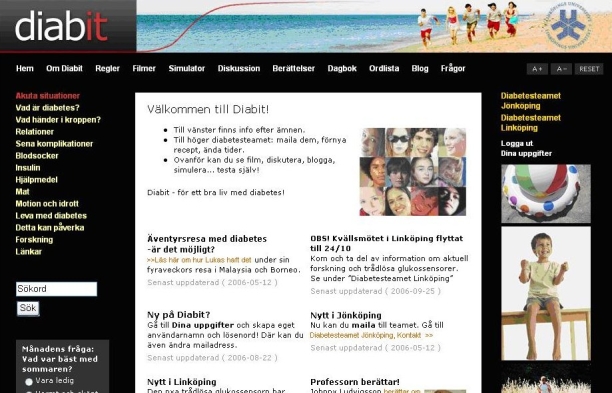
To explore pediatric practitioners' attitudes towards the introduction of a local Web portal for providing young type 1 diabetes patients with interactive pedagogic devices, social networking tools, and locally produced self-care and treatment information. Opportunities and barriers related to the introduction of such systems into clinical practice were sought.

METHODS

Twenty clinicians (seven doctors, nine nurses, two dieticians, and two social welfare officers) from two pediatric diabetes teams participated in the user-centered design of a local Web 2.0 portal. After completion of the design, individual semi-structured interviews were performed and data were analyzed using phenomenological methods.

RESULTS

The practitioners reported a range of positive attitudes towards the introduction of a local Web 2.0 portal to their clinical practice. Most interviewees were satisfied with how the portal turned out, and a sense of community emerged during the design process and development of the portal's contents. A complementary role was suggested for the portal within the context of health practice culture, where patients and their parents would be able to learn about the disease before, between, and after scheduled contacts with their health care team. Although some professionals expected that email communication with patients and online patient information would save time during routine care, others emphasized the importance of also maintaining face-to-face communication. Online peer-to-peer communication was regarded as a valuable function; however, most clinicians did not expect that the portal would be used extensively for social networking amongst their patients. There were no major differences in attitudes between different professions or clinics, but some differences appeared in relation to work tasks.

CONCLUSIONS

Experienced clinical practitioners working in diabetes teams exhibited positive attitudes towards a Web 2.0 portal tailored for young patients with type 1 diabetes and their parents. The portal included provision of third-party information, as well as practical and social means of support. The practitioners' early and active participation provides a possible explanation for these positive attitudes. The findings encourage close collaboration with all user groups when implementing Web 2.0 systems for the care of young patients with chronic diseases, particularly type 1 diabetes. The study also highlights the need for efforts to educate clinical practitioners in the use of Web publishing, social networking, and other Web 2.0 resources. Investigations of attitudes towards implementing similar systems in the care of adults with chronic diseases are warranted.
https://cdn.ncbi.nlm.nih.gov/pmc/blobs/f715/2762803/b355ffd4273a/jmir_v11i2e12_fig1.jpg
摘要

背景

互联网部分由第三方中介创建和维护,已成为慢性病患者生活的动态资源。1型糖尿病的现代管理需要持续支持和基于问题的学习,但很少有儿科诊所将Web 2.0资源作为常规糖尿病护理的一部分提供给患者。

目的

探讨儿科医生对引入本地门户网站的态度,该门户网站为1型糖尿病青少年患者提供交互式教学设备、社交网络工具以及本地制作的自我护理和治疗信息。寻找将此类系统引入临床实践的机会和障碍。

方法

来自两个儿科糖尿病团队的20名临床医生(7名医生、9名护士、2名营养师和2名社会福利官员)参与了本地Web 2.0门户网站的以用户为中心的设计。设计完成后,进行了个人半结构化访谈,并使用现象学方法对数据进行了分析。

结果

医生们对将本地Web 2.0门户网站引入他们的临床实践表现出一系列积极态度。大多数受访者对门户网站的最终效果感到满意,并且在门户网站内容的设计过程和开发过程中形成了一种社区感。有人建议该门户网站在健康实践文化背景下发挥补充作用,患者及其父母可以在与医疗团队定期接触之前、期间和之后了解该疾病。虽然一些专业人员预计与患者的电子邮件通信和在线患者信息将在常规护理中节省时间,但其他人强调保持面对面沟通的重要性。在线点对点通信被视为一项有价值的功能;然而,大多数临床医生预计该门户网站不会被患者广泛用于社交网络。不同专业或诊所之间的态度没有重大差异,但在工作任务方面存在一些差异。

结论

在糖尿病团队工作的经验丰富的临床医生对为1型糖尿病青少年患者及其父母量身定制的Web 2.0门户网站表现出积极态度。该门户网站包括提供第三方信息以及实际和社会支持手段。医生的早期积极参与为这些积极态度提供了一种可能的解释。研究结果鼓励在为慢性病青少年患者,特别是1型糖尿病患者实施Web 2.0系统时,与所有用户群体密切合作。该研究还强调了努力对临床医生进行Web发布、社交网络和其他Web 2.0资源使用教育的必要性。有必要对在慢性病成年患者护理中实施类似系统的态度进行调查。

相似文献

1
Health professionals' attitudes towards using a Web 2.0 portal for child and adolescent diabetes care: qualitative study.医疗专业人员对使用Web 2.0门户进行儿童和青少年糖尿病护理的态度:定性研究
J Med Internet Res. 2009 Apr 6;11(2):e12. doi: 10.2196/jmir.1152.
2
Patient and parent views on a Web 2.0 Diabetes Portal--the management tool, the generator, and the gatekeeper: qualitative study.患者及家长对Web 2.0糖尿病门户网站的看法——管理工具、信息源及把关者:定性研究
J Med Internet Res. 2010 May 28;12(2):e17. doi: 10.2196/jmir.1267.
3
To use or not to use--practitioners' perceptions of an open web portal for young patients with diabetes.使用还是不使用——从业者对糖尿病青少年患者开放网络门户的看法。
J Med Internet Res. 2012 Nov 9;14(6):e154. doi: 10.2196/jmir.1987.
4
Promoting and supporting self-management for adults living in the community with physical chronic illness: A systematic review of the effectiveness and meaningfulness of the patient-practitioner encounter.促进和支持社区中患有慢性身体疾病的成年人进行自我管理:对医患互动的有效性和意义的系统评价。
JBI Libr Syst Rev. 2009;7(13):492-582. doi: 10.11124/01938924-200907130-00001.
5
A Qualitative Study of the Barriers and Opportunities for Adoption of Web-Portals for Doctors and Patients in Russia.俄罗斯医生和患者采用网络门户的障碍与机遇的定性研究
J Med Syst. 2017 Apr;41(4):62. doi: 10.1007/s10916-017-0713-8. Epub 2017 Mar 7.
6
The effectiveness of internet-based e-learning on clinician behavior and patient outcomes: a systematic review protocol.基于互联网的电子学习对临床医生行为和患者结局的有效性:一项系统评价方案。
JBI Database System Rev Implement Rep. 2015 Jan;13(1):52-64. doi: 10.11124/jbisrir-2015-1919.
7
Use of communication technologies by people with type 1 diabetes in the social networking era. A chance for improvement.1型糖尿病患者在社交网络时代对通信技术的使用。改善的契机。
Prim Care Diabetes. 2016 Apr;10(2):121-8. doi: 10.1016/j.pcd.2015.09.002. Epub 2015 Oct 5.
8
Use of a web 2.0 portal to improve education and communication in young patients with families: randomized controlled trial.使用Web 2.0门户网站改善年轻患者及其家庭的教育与沟通:随机对照试验
J Med Internet Res. 2013 Aug 23;15(8):e175. doi: 10.2196/jmir.2425.
9
Health care providers' attitudes towards transfer and transition in young persons with long term illness- a web-based survey.医疗服务提供者对患有长期疾病的年轻人转诊和过渡的态度——一项基于网络的调查。
BMC Health Serv Res. 2017 Apr 11;17(1):260. doi: 10.1186/s12913-017-2192-5.
10
Improving Care for the Frail in Nova Scotia: An Implementation Evaluation of a Frailty Portal in Primary Care Practice.改善新斯科舍省体弱患者的护理:初级保健实践中虚弱门户的实施评估。
Int J Health Policy Manag. 2019 Feb 1;8(2):112-123. doi: 10.15171/ijhpm.2018.102.

引用本文的文献

1
Legal and Ethical Considerations for the Design and Use of Web Portals for Researchers, Clinicians, and Patients: Scoping Literature Review.法律和伦理考虑因素,用于研究人员、临床医生和患者的 Web 门户的设计和使用:范围文献综述。
J Med Internet Res. 2021 Nov 11;23(11):e26450. doi: 10.2196/26450.
2
Patients' Use of Social Media for Diabetes Self-Care: Systematic Review.患者使用社交媒体进行糖尿病自我护理:系统评价
J Med Internet Res. 2020 Apr 24;22(4):e14209. doi: 10.2196/14209.
3
Establishing a Framework for the Use of Social Media in Pharmacovigilance in Europe.

本文引用的文献

1
Web 2.0 systems supporting childhood chronic disease management: a pattern language representation of a general architecture.支持儿童慢性病管理的Web 2.0系统:一种通用架构的模式语言表示
BMC Med Inform Decis Mak. 2008 Nov 28;8:54. doi: 10.1186/1472-6947-8-54.
2
Medicine 2.0: social networking, collaboration, participation, apomediation, and openness.医学2.0:社交网络、协作、参与、辅助调解及开放性。
J Med Internet Res. 2008 Aug 25;10(3):e22. doi: 10.2196/jmir.1030.
3
Designing healthcare information technology to catalyse change in clinical care.
在欧洲建立药物警戒中使用社交媒体的框架。
Drug Saf. 2019 Aug;42(8):921-930. doi: 10.1007/s40264-019-00811-8.
4
Strategies to Increase Latino Immigrant Youth Engagement in Health Promotion Using Social Media: Mixed-Methods Study.利用社交媒体提高拉丁裔移民青年参与健康促进的策略:混合方法研究。
JMIR Public Health Surveill. 2018 Dec 19;4(4):e71. doi: 10.2196/publichealth.9332.
5
The use of social media among health professionals to facilitate chronic disease self-management with their patients: A systematic review.医疗专业人员利用社交媒体促进患者慢性病自我管理的系统评价。
Digit Health. 2018 May 3;4:2055207618771416. doi: 10.1177/2055207618771416. eCollection 2018 Jan-Dec.
6
How Can Social Media Lead to Co-Production (Co-Delivery) of New Services for the Elderly Population? A Qualitative Study.社交媒体如何促成针对老年人群体的新服务的共同生产(共同交付)?一项定性研究。
JMIR Hum Factors. 2018 Feb 12;5(1):e5. doi: 10.2196/humanfactors.7856.
7
Social Media for the Dissemination of Cochrane Child Health Evidence: Evaluation Study.用于传播考克兰儿童健康证据的社交媒体:评估研究
J Med Internet Res. 2017 Sep 1;19(9):e308. doi: 10.2196/jmir.7819.
8
Complexity of medical decision-making in care provided by surgeons through patient portals.外科医生通过患者门户网站提供护理时医疗决策的复杂性。
J Surg Res. 2017 Jun 15;214:93-101. doi: 10.1016/j.jss.2017.02.077. Epub 2017 Mar 8.
9
Social media for arthritis-related comparative effectiveness and safety research and the impact of direct-to-consumer advertising.用于关节炎相关比较疗效与安全性研究的社交媒体以及直接面向消费者广告的影响。
Arthritis Res Ther. 2017 Mar 7;19(1):48. doi: 10.1186/s13075-017-1251-y.
10
Internet and social media usage of orthopaedic patients: A questionnaire-based survey.骨科患者的互联网和社交媒体使用情况:一项基于问卷调查的研究。
World J Orthop. 2017 Feb 18;8(2):178-186. doi: 10.5312/wjo.v8.i2.178.
设计医疗信息技术以推动临床护理变革。
Inform Prim Care. 2008;16(1):9-19. doi: 10.14236/jhi.v16i1.670.
4
The attitudes of health care staff to information technology: a comprehensive review of the research literature.医护人员对信息技术的态度:研究文献综述
Health Info Libr J. 2008 Jun;25(2):81-97. doi: 10.1111/j.1471-1842.2008.00777.x.
5
The contribution of teleconsultation and videoconferencing to diabetes care: a systematic literature review.远程会诊和视频会议对糖尿病护理的贡献:一项系统的文献综述。
J Med Internet Res. 2007 Dec 14;9(5):e37. doi: 10.2196/jmir.9.5.e37.
6
From intermediation to disintermediation and apomediation: new models for consumers to access and assess the credibility of health information in the age of Web2.0.从媒介中介到去中介化和非中介化:Web2.0时代消费者获取和评估健康信息可信度的新模式。
Stud Health Technol Inform. 2007;129(Pt 1):162-6.
7
Design and evaluation in eHealth: challenges and implications for an interdisciplinary field.电子健康领域的设计与评估:跨学科领域面临的挑战与影响
J Med Internet Res. 2007 May 27;9(2):e15. doi: 10.2196/jmir.9.2.e15.
8
Development of a PC-based diabetes simulator in collaboration with teenagers with type 1 diabetes.
Diabetes Technol Ther. 2007 Feb;9(1):17-25. doi: 10.1089/dia.2006.0053.
9
A randomized controlled trial of Sweet Talk, a text-messaging system to support young people with diabetes.一项针对“甜言蜜语”(一种支持糖尿病青少年的短信系统)的随机对照试验。
Diabet Med. 2006 Dec;23(12):1332-8. doi: 10.1111/j.1464-5491.2006.01989.x.
10
Internet interventions for long-term conditions: patient and caregiver quality criteria.针对慢性病的互联网干预措施:患者及照护者质量标准
J Med Internet Res. 2006 Jul 28;8(3):e13. doi: 10.2196/jmir.8.3.e13.