Prabhakaran Sabitha, Liang Xiaowen, Skare Jonathan T, Potts Jennifer R, Höök Magnus
Institute of Biosciences and Technology, Texas A&M Health Science Center, College Station, Texas, United States of America.
PLoS One. 2009;4(4):e5412. doi: 10.1371/journal.pone.0005412. Epub 2009 Apr 30.
BBK32 is a surface expressed lipoprotein and fibronectin (Fn)-binding microbial surface component recognizing adhesive matrix molecule (MSCRAMM) of Borrelia burgdorferi, the causative agent of Lyme disease. Previous studies from our group showed that BBK32 is a virulence factor in experimental Lyme disease and located the Fn-binding region to residues 21-205 of the lipoprotein.
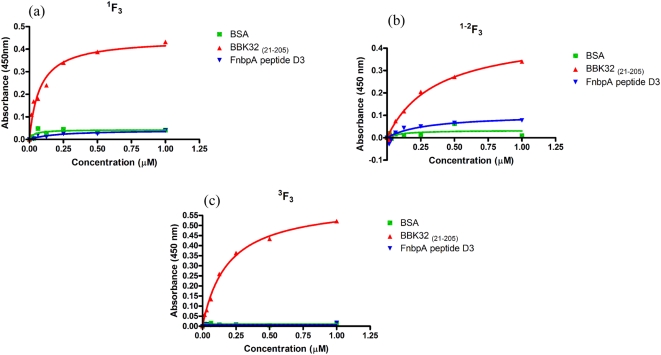
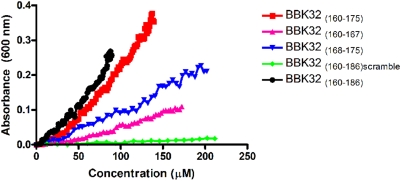
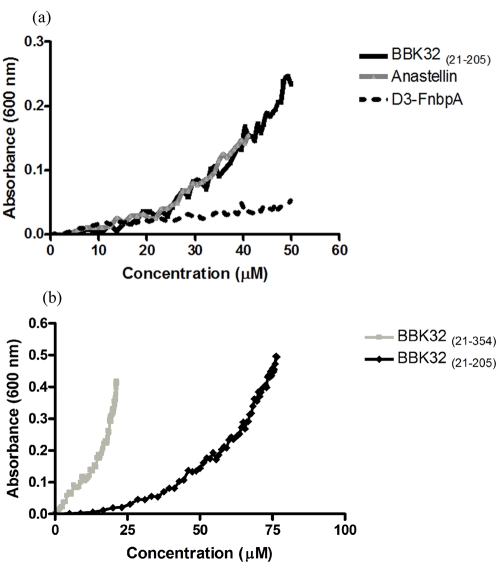
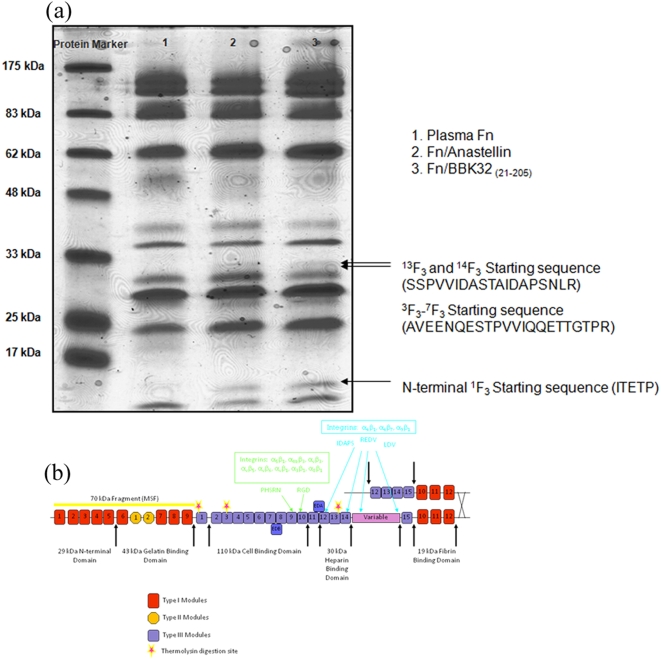
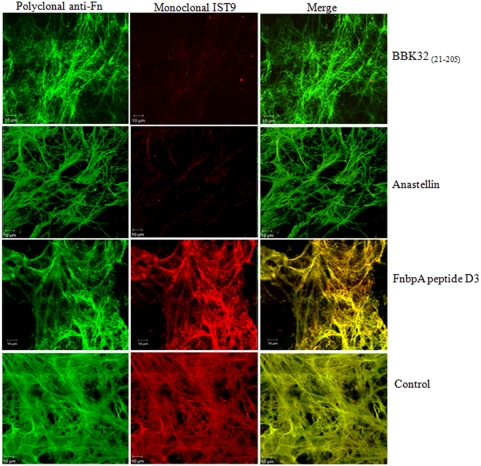
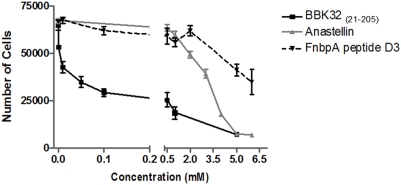
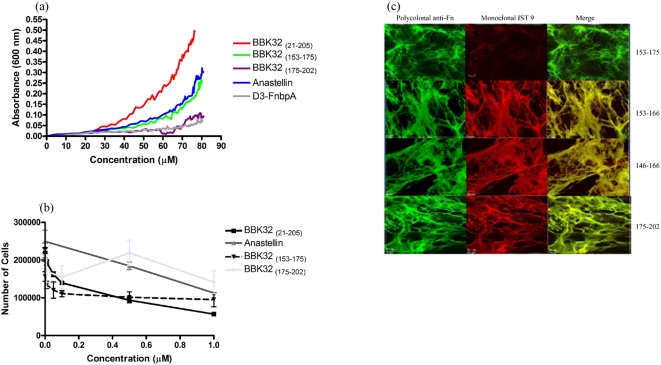
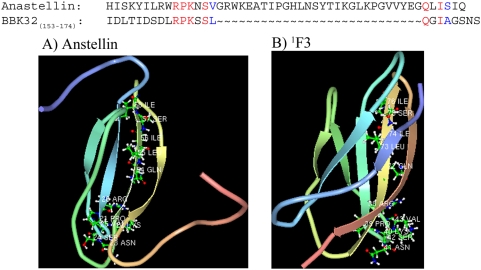
METHODOLOGY/PRINCIPAL FINDINGS: Studies aimed at identifying interacting sites between BBK32 and Fn revealed an interaction between the MSCRAMM and the Fn F3 modules. Further analysis of this interaction showed that BBK32 can cause the aggregation of human plasma Fn in a similar concentration-dependent manner to that of anastellin, the superfibronectin (sFn) inducing agent. The resulting Fn aggregates are conformationally distinct from plasma Fn as indicated by a change in available thermolysin cleavage sites. Recombinant BBK32 and anastellin affect the structure of Fn matrices formed by cultured fibroblasts and inhibit endothelial cell proliferation similarly. Within BBK32, we have located the sFn-forming activity to a region between residues 160 and 175 which contains two sequence motifs that are also found in anastellin. Synthetic peptides mimicking these motifs induce Fn aggregation, whereas a peptide with a scrambled sequence motif was inactive, suggesting that these motifs represent the sFn-inducing sequence.
CONCLUSIONS/SIGNIFICANCE: We conclude that BBK32 induces the formation of Fn aggregates that are indistinguishable from those formed by anastellin. The results of this study provide evidence for how bacteria can target host proteins to manipulate host cell activities.
BBK32是一种表面表达的脂蛋白,也是一种与纤连蛋白(Fn)结合的微生物表面成分识别黏附基质分子(MSCRAMM),由莱姆病的病原体伯氏疏螺旋体产生。我们团队之前的研究表明,BBK32是实验性莱姆病中的一种毒力因子,并将Fn结合区域定位到脂蛋白的21 - 205位残基。
方法/主要发现:旨在确定BBK32与Fn之间相互作用位点的研究揭示了该MSCRAMM与Fn F3模块之间存在相互作用。对这种相互作用的进一步分析表明,BBK32能够以与超纤连蛋白(sFn)诱导剂阿那司他丁类似的浓度依赖性方式导致人血浆Fn聚集。所产生的Fn聚集体在构象上与血浆Fn不同,这可通过可用的嗜热菌蛋白酶切割位点的变化来表明。重组BBK32和阿那司他丁对培养的成纤维细胞形成的Fn基质结构有影响,并同样抑制内皮细胞增殖。在BBK32中,我们将sFn形成活性定位到160至175位残基之间的区域,该区域包含两个也存在于阿那司他丁中的序列基序。模拟这些基序的合成肽可诱导Fn聚集,而具有乱序序列基序的肽则无活性,这表明这些基序代表sFn诱导序列。
结论/意义:我们得出结论,BBK32诱导形成的Fn聚集体与阿那司他丁诱导形成的聚集体无法区分。本研究结果为细菌如何靶向宿主蛋白以操纵宿主细胞活动提供了证据。