Heitkemper Margaret M, Chang Lin
Department of Biobehavioral Nursing and Health Systems, University of Washington, Seattle, Washington 98125-7266, USA.
Gend Med. 2009;6 Suppl 2(Suppl 2):152-67. doi: 10.1016/j.genm.2009.03.004.
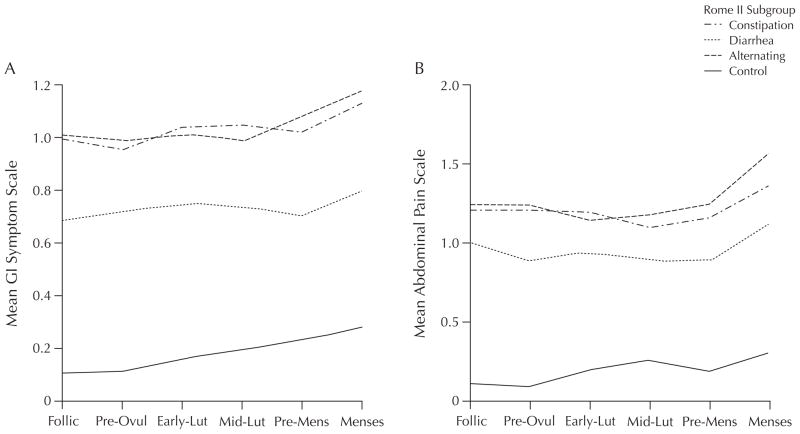
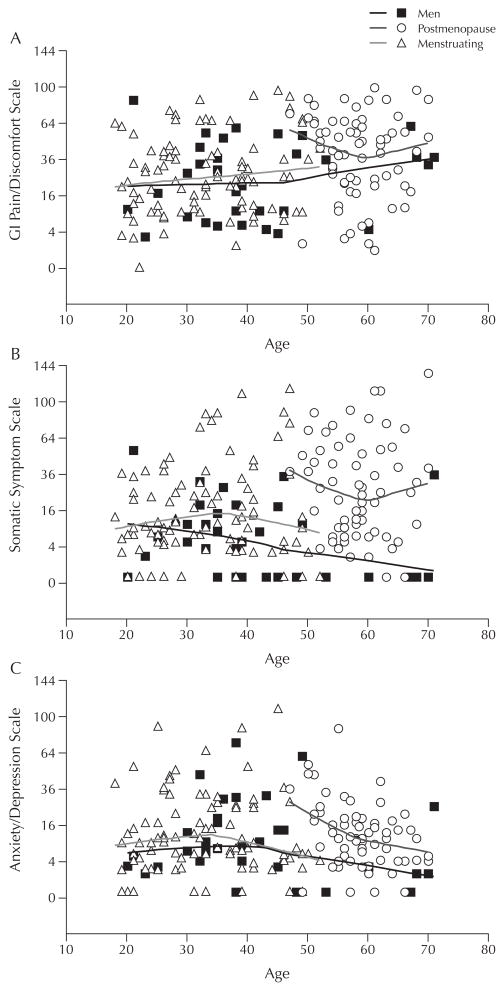
An increase in gastrointestinal (GI) symptoms, including bowel discomfort, abdominal pain/discomfort, bloating, and alterations in bowel patterns, has been reported during premenses and menses menstrual cycle phases and the perimenopause period in women with and without irritable bowel syndrome (IBS).
This article reviews the literature related to one possible physiological mechanism-declining or low ovarian hormone levels--that may underlie the occurrence or exacerbations of abdominal pain/discomfort at times of low ovarian hormones (menses, menopause) in women with or without IBS.
To identify English-only review and data-based articles, PubMed was searched between January 1980 and September 2008 using the following terms: irritable bowel syndrome, functional gastrointestinal disorders, gastrointestinal motility, immune, pain, hyperalgesia, menstrual cycle, menopause, pregnancy, estrogen, estradiol (E(2)), and progesterone. Studies in animals and in humans were included; drug trials were excluded.
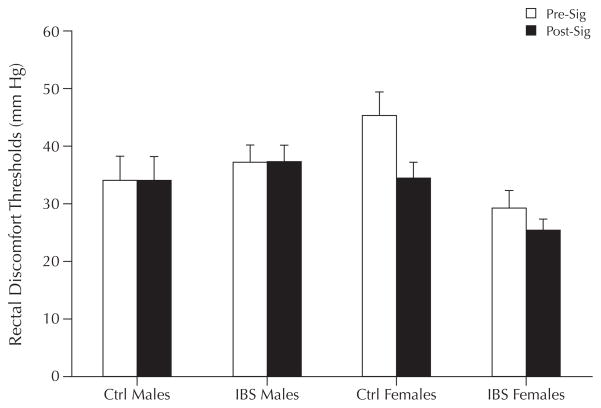
From our review of the literature, 18 papers were identified that were related either to the mechanisms accounting for menstrual cycle fluctuations (n = 12) or to the impact of menopausal status on symptoms of IBS (n = 6). One study reported that visceral pain sensitivity was significantly higher during menses than at other menstrual cycle phases in women with IBS (P < 0.05). Other menstrual cycle phase-linked symptoms, dysmenorrheal symptoms (cramping pain) in particular, were more intense in women with IBS. Animal studies have shed some light on the relationship of ovarian hormones to GI sensorimotor function.
The increase in GI symptoms around the time of menses and early menopause occurs at times of declining or low ovarian hormones, suggesting that estrogen and progesterone withdrawal may contribute either directly or indirectly. This review highlights the need for confirmatory preclinical and clinical studies to unravel the role of ovarian hormones in women with IBS.
据报道,患有和未患有肠易激综合征(IBS)的女性在经前期、月经期和围绝经期会出现胃肠道(GI)症状增加,包括肠道不适、腹痛/不适、腹胀以及排便习惯改变。
本文综述了与一种可能的生理机制——卵巢激素水平下降或偏低——相关的文献,该机制可能是患有或未患有IBS的女性在卵巢激素水平较低时(月经期、绝经)出现腹痛/不适或病情加重的原因。
为了查找仅用英文撰写的综述和基于数据的文章,于1980年1月至2008年9月期间在PubMed数据库中使用以下检索词进行检索:肠易激综合征、功能性胃肠疾病、胃肠动力、免疫、疼痛、痛觉过敏、月经周期、绝经、妊娠、雌激素、雌二醇(E₂)和孕酮。纳入动物和人体研究;排除药物试验。
通过对文献的综述,我们确定了18篇与月经周期波动机制(n = 12)或绝经状态对IBS症状的影响(n = 6)相关的论文。一项研究报告称,患有IBS的女性在月经期的内脏疼痛敏感性显著高于其他月经周期阶段(P < 0.05)。IBS女性的其他与月经周期阶段相关的症状,尤其是痛经症状(痉挛性疼痛)更为严重。动物研究对卵巢激素与胃肠感觉运动功能的关系有所揭示。
月经期和绝经早期胃肠道症状的增加发生在卵巢激素水平下降或偏低时,这表明雌激素和孕酮撤退可能直接或间接起作用。本综述强调需要进行验证性的临床前和临床研究,以阐明卵巢激素在患有IBS的女性中的作用。