O'Gorman Grace M, Park Stephen D E, Hill Emmeline W, Meade Kieran G, Coussens Paul M, Agaba Morris, Naessens Jan, Kemp Stephen J, MacHugh David E
Animal Genomics Laboratory, UCD School of Agriculture, Food Science and Veterinary Medicine, UCD College of Life Sciences, University College Dublin, Belfield, Dublin 4, Ireland.
BMC Genomics. 2009 May 1;10:207. doi: 10.1186/1471-2164-10-207.
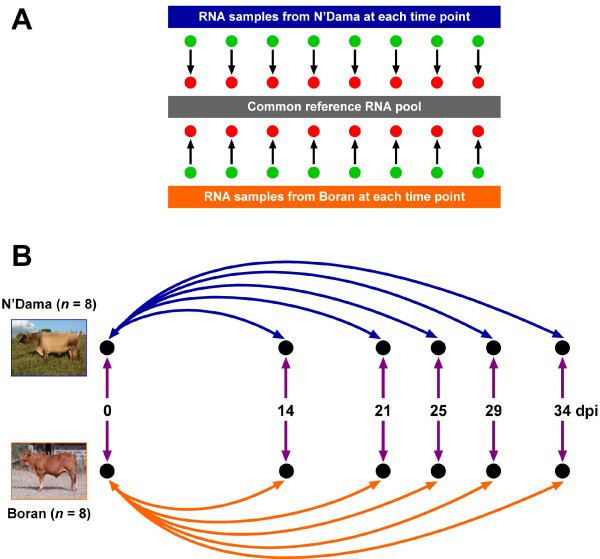
African animal trypanosomiasis (AAT) caused by tsetse fly-transmitted protozoa of the genus Trypanosoma is a major constraint on livestock and agricultural production in Africa and is among the top ten global cattle diseases impacting on the poor. Here we show that a functional genomics approach can be used to identify temporal changes in host peripheral blood mononuclear cell (PBMC) gene expression due to disease progression. We also show that major gene expression differences exist between cattle from trypanotolerant and trypanosusceptible breeds. Using bovine long oligonucleotide microarrays and real time quantitative reverse transcription PCR (qRT-PCR) validation we analysed PBMC gene expression in naïve trypanotolerant and trypanosusceptible cattle experimentally challenged with Trypanosoma congolense across a 34-day infection time course.
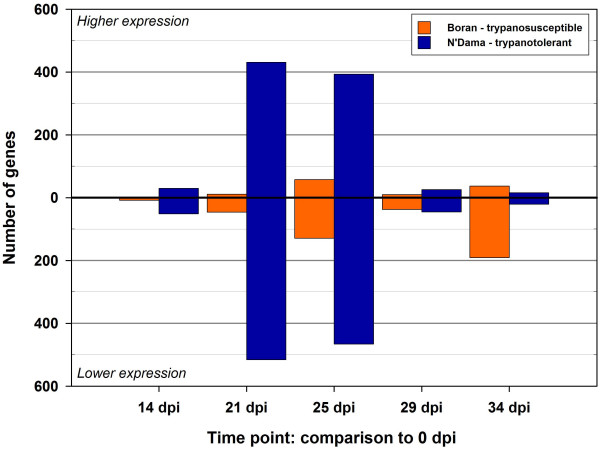
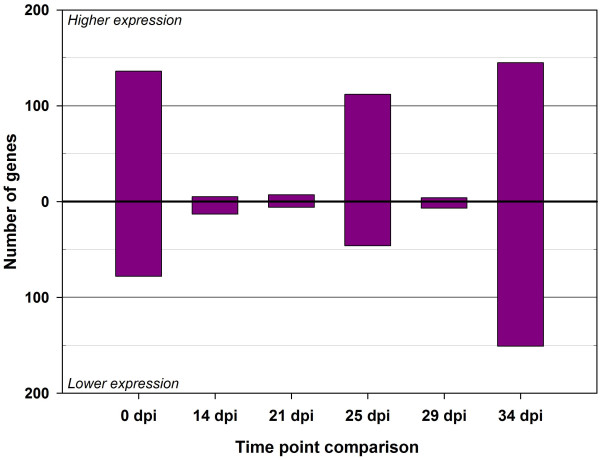
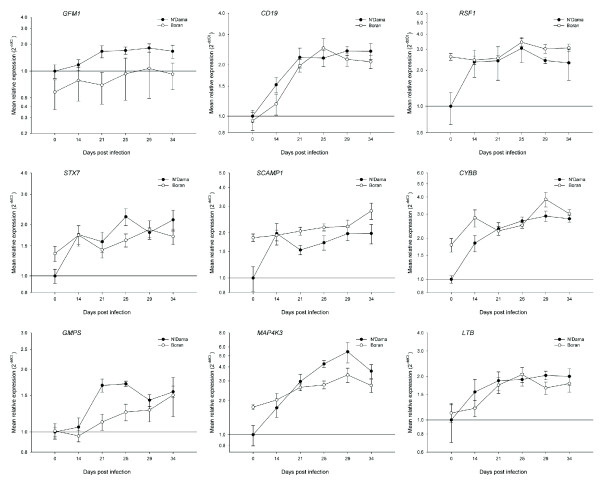
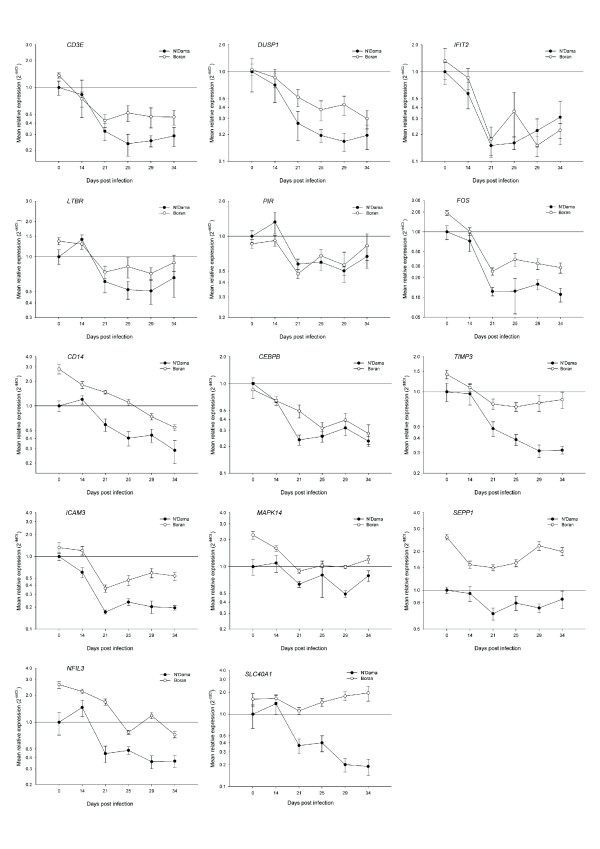
Trypanotolerant N'Dama cattle displayed a rapid and distinct transcriptional response to infection, with a ten-fold higher number of genes differentially expressed at day 14 post-infection compared to trypanosusceptible Boran cattle. These analyses identified coordinated temporal gene expression changes for both breeds in response to trypanosome infection. In addition, a panel of genes were identified that showed pronounced differences in gene expression between the two breeds, which may underlie the phenomena of trypanotolerance and trypanosusceptibility. Gene ontology (GO) analysis demonstrate that the products of these genes may contribute to increased mitochondrial mRNA translational efficiency, a more pronounced B cell response, an elevated activation status and a heightened response to stress in trypanotolerant cattle.
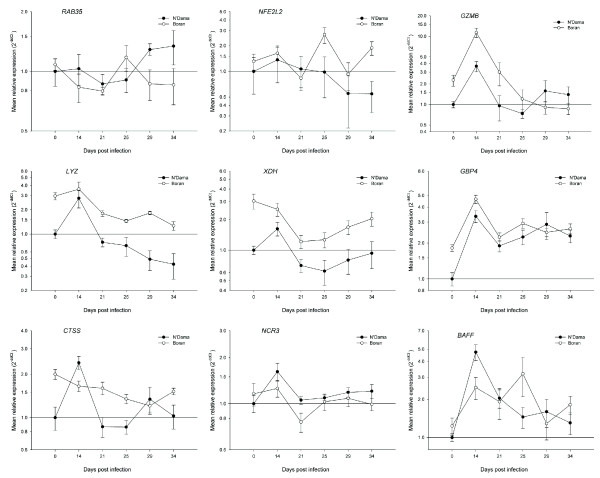
This study has revealed an extensive and diverse range of cellular processes that are altered temporally in response to trypanosome infection in African cattle. Results indicate that the trypanotolerant N'Dama cattle respond more rapidly and with a greater magnitude to infection compared to the trypanosusceptible Boran cattle. Specifically, a subset of the genes analyzed by real time qRT-PCR, which display significant breed differences, could collectively contribute to the trypanotolerance trait in N'Dama.
由采采蝇传播的锥虫属原生动物引起的非洲动物锥虫病(AAT)是非洲畜牧业和农业生产的主要制约因素,也是影响贫困人口的十大全球牛病之一。在此,我们表明功能基因组学方法可用于识别由于疾病进展导致的宿主外周血单核细胞(PBMC)基因表达的时间变化。我们还表明,耐锥虫品种和易感染锥虫品种的牛之间存在主要基因表达差异。使用牛长寡核苷酸微阵列和实时定量逆转录PCR(qRT-PCR)验证,我们分析了在34天感染时间过程中,用刚果锥虫实验性攻击的未感染耐锥虫和易感染锥虫的牛的PBMC基因表达。
耐锥虫的恩达马牛对感染表现出快速且独特的转录反应,与易感染锥虫的博拉牛相比,感染后第14天差异表达的基因数量高出十倍。这些分析确定了两个品种在应对锥虫感染时协调的时间基因表达变化。此外,还鉴定出一组基因,它们在两个品种之间表现出明显的基因表达差异,这可能是耐锥虫和易感染锥虫现象的基础。基因本体(GO)分析表明,这些基因的产物可能有助于提高耐锥虫牛的线粒体mRNA翻译效率、更明显的B细胞反应、更高的激活状态和对压力的更强反应。
本研究揭示了一系列广泛而多样的细胞过程,这些过程在非洲牛中因锥虫感染而随时间发生改变。结果表明,与易感染锥虫的博拉牛相比,耐锥虫的恩达马牛对感染的反应更快且程度更大。具体而言,通过实时qRT-PCR分析的一组显示出显著品种差异的基因可能共同促成了恩达马牛的耐锥虫特性。