Balu Bharath, Chauhan Chitra, Maher Steven P, Shoue Douglas A, Kissinger Jessica C, Fraser Malcolm J, Adams John H
Department of Global Health, University of South Florida, Tampa, Florida 33612, USA.
BMC Microbiol. 2009 May 7;9:83. doi: 10.1186/1471-2180-9-83.
Much of the Plasmodium falciparum genome encodes hypothetical proteins with limited homology to other organisms. A lack of robust tools for genetic manipulation of the parasite limits functional analysis of these hypothetical proteins and other aspects of the Plasmodium genome. Transposon mutagenesis has been used widely to identify gene functions in many organisms and would be extremely valuable for functional analysis of the Plasmodium genome.
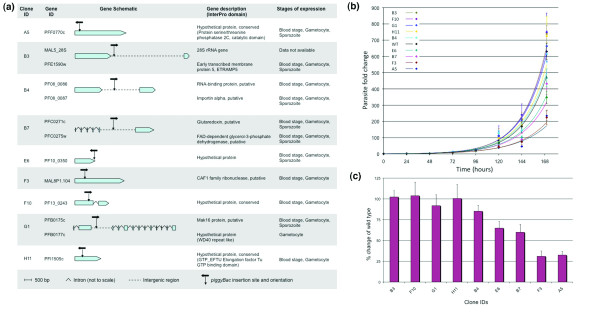
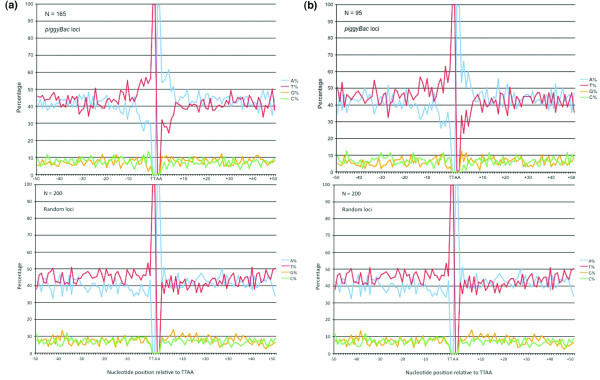
In this study, we investigated the lepidopteran transposon, piggyBac, as a molecular genetic tool for functional characterization of the Plasmodium falciparum genome. Through multiple transfections, we generated 177 unique P. falciparum mutant clones with mostly single piggyBac insertions in their genomes. Analysis of piggyBac insertion sites revealed random insertions into the P. falciparum genome, in regards to gene expression in parasite life cycle stages and functional categories. We further explored the possibility of forward genetic studies in P. falciparum with a phenotypic screen for attenuated growth, which identified several parasite genes and pathways critical for intra-erythrocytic development.
Our results clearly demonstrate that piggyBac is a novel, indispensable tool for forward functional genomics in P. falciparum that will help better understand parasite biology and accelerate drug and vaccine development.
恶性疟原虫基因组的很大一部分编码与其他生物体同源性有限的假设蛋白。缺乏用于该寄生虫基因操作的强大工具限制了对这些假设蛋白以及疟原虫基因组其他方面的功能分析。转座子诱变已被广泛用于鉴定许多生物体中的基因功能,对于疟原虫基因组的功能分析将极具价值。
在本研究中,我们研究了鳞翅目转座子piggyBac作为恶性疟原虫基因组功能表征的分子遗传工具。通过多次转染,我们在其基因组中产生了177个独特的恶性疟原虫突变克隆,大多带有单个piggyBac插入。对piggyBac插入位点的分析揭示了其在恶性疟原虫基因组中的随机插入,涉及寄生虫生命周期阶段的基因表达和功能类别。我们进一步探索了在恶性疟原虫中进行正向遗传学研究的可能性,通过对生长减弱的表型筛选,确定了几个对红细胞内发育至关重要的寄生虫基因和途径。
我们的结果清楚地表明,piggyBac是恶性疟原虫正向功能基因组学的一种新型、不可或缺的工具,将有助于更好地理解寄生虫生物学,并加速药物和疫苗开发。