
半球功能划分是独立概率偏差的结果。
Hemispheric division of function is the result of independent probabilistic biases.
作者信息
Whitehouse Andrew J O, Bishop Dorothy V M
机构信息
Telethon Institute for Child Health Research, Centre for Child Health Research, The University of Western Australia, West Perth, Western Australia, Australia.
出版信息
Neuropsychologia. 2009 Jul;47(8-9):1938-43. doi: 10.1016/j.neuropsychologia.2009.03.005. Epub 2009 Mar 13.
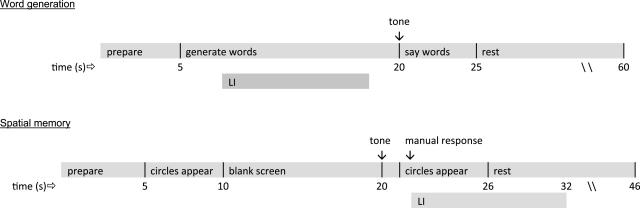
Verbal and visuospatial abilities are typically subserved by different cerebral hemispheres: the left hemisphere for the former and the right hemisphere for the latter. However little is known of the origin of this division of function. Causal theories propose that functional asymmetry is an obligatory pattern of organisation, while statistical theories maintain this is a reflection of independent, probalistic biases. The current study investigated lateralisation for language production and spatial memory using functional Transcranial Doppler in 75 healthy adults (45 right handed, 27 left-handed, 3 ambidextrous). The majority of participants had language abilities lateralised to the left-hemisphere and spatial memory to the right hemisphere, while around one-quarter of participants had these functions lateralised to the same hemisphere. No participants showed the reversal of typical organisation. The findings are consistent with a statistical view of functional asymmetry, in which hemispheric biases for verbal and visual functions reflect probabilities relating to independent causal sources.
言语和视觉空间能力通常由不同的大脑半球提供支持
左半球负责前者,右半球负责后者。然而,对于这种功能划分的起源知之甚少。因果理论认为功能不对称是一种必然的组织模式,而统计理论则认为这是独立概率偏差的反映。本研究使用功能性经颅多普勒对75名健康成年人(45名右利手、27名左利手、3名双手灵巧者)的语言产生和空间记忆的偏侧化进行了调查。大多数参与者的语言能力偏侧于左半球,空间记忆偏侧于右半球,而约四分之一的参与者这些功能偏侧于同一半球。没有参与者表现出典型组织的逆转。这些发现与功能不对称的统计观点一致,即言语和视觉功能的半球偏差反映了与独立因果源相关的概率。


 Zotero 插件