King M W
Indiana University School of Medicine, Department of Biochemistry and Molecular Biology, Terre Haute Center for Medical Sciences, IN 47809.
Nucleic Acids Res. 1991 Oct 25;19(20):5777-83. doi: 10.1093/nar/19.20.5777.
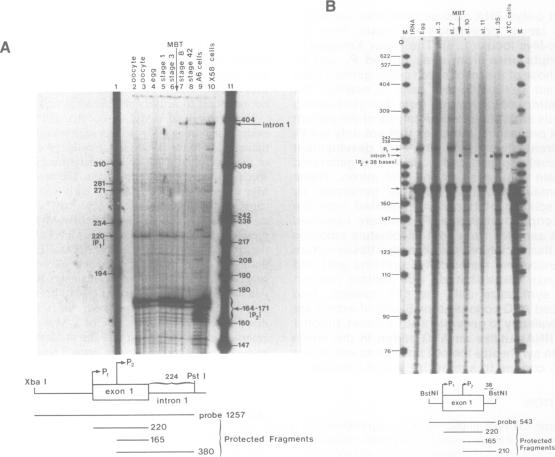
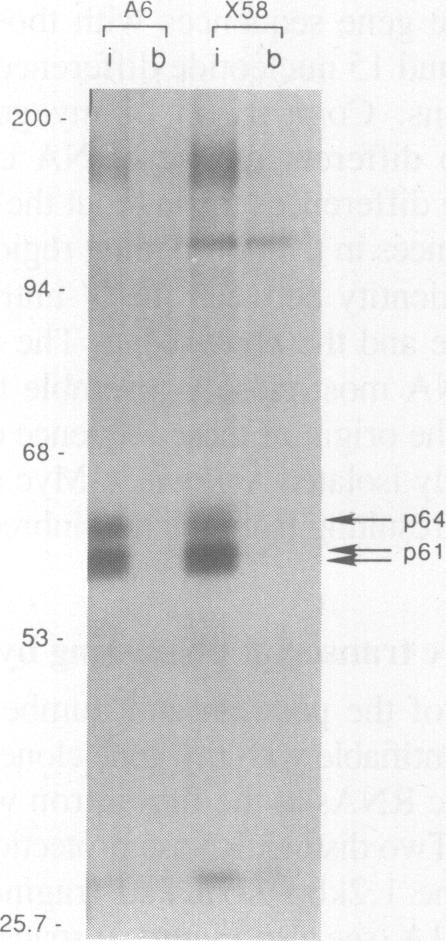
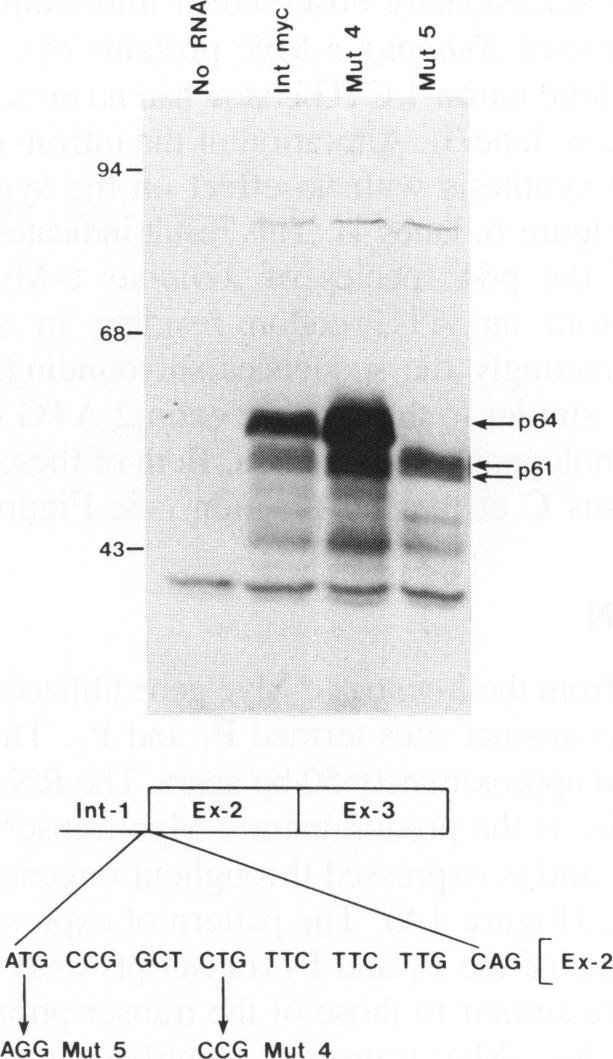
Two distinct c-Myc RNA classes have been identified in Xenopus laevis, presumably expressed from the duplicated c-Myc locus (1, 6). The major Xenopus c-Myc transcripts arise from sites termed P1 and P2 similarly to those of the mammalian c-Myc genes. I have used a cloned Xenopus c-Myc gene to examine the regulated pattern of expression from this gene during early Xenopus embryogenesis. Analysis of the pattern of transcript processing indicates that not only are P1 and P2 differentially active during early development but alternatively spliced c-Myc RNAs are generated which contain sequences of the first intron. These intron-1 containing c-Myc RNAs are generated by alternative splicing of transcripts initiated from the major transcription start site, P2, and are observed only in RNA samples from post-midblastula embryos or Xenopus tissue culture cells. Xenopus tissue culture cells synthesize two major c-Myc proteins (p61 and p64). Xenopus RNAs that do not contain intron-1 sequences synthesize only the p61 species. Two closely spaced ATG codons at the 5' end of exon-2 are utilized equivalently to generate a p61 doublet. Intron-1 containing RNAs utilize an ATG codon in the intron sequences to synthesize the p64 species as well as the exon-2 ATG codons to synthesize the p61 doublet.
在非洲爪蟾中已鉴定出两种不同的c-Myc RNA类别,推测它们由重复的c-Myc基因座表达(1, 6)。与哺乳动物的c-Myc基因类似,非洲爪蟾主要的c-Myc转录本来自称为P1和P2的位点。我利用克隆的非洲爪蟾c-Myc基因来研究该基因在非洲爪蟾早期胚胎发育过程中的表达调控模式。转录本加工模式分析表明,在早期发育过程中,不仅P1和P2的活性不同,而且还产生了包含第一个内含子序列的可变剪接c-Myc RNA。这些含有内含子1的c-Myc RNA是由从主要转录起始位点P2起始的转录本的可变剪接产生的,并且仅在囊胚中期后胚胎或非洲爪蟾组织培养细胞的RNA样本中观察到。非洲爪蟾组织培养细胞合成两种主要的c-Myc蛋白(p61和p64)。不包含内含子1序列的非洲爪蟾RNA仅合成p61蛋白。外显子2 5'端两个紧密相邻的ATG密码子被等效利用以产生p61双峰。含有内含子1的RNA利用内含子序列中的一个ATG密码子来合成p64蛋白,同时利用外显子2的ATG密码子来合成p61双峰。