Pepers Barry A, Schut Menno H, Vossen Rolf Ham, van Ommen Gert-Jan B, den Dunnen Johan T, van Roon-Mom Willeke Mc
Center for Human and Clinical Genetics, Leiden University Medical Center, Albinusdreef 2, Leiden, The Netherlands.
BMC Biotechnol. 2009 May 22;9:50. doi: 10.1186/1472-6750-9-50.
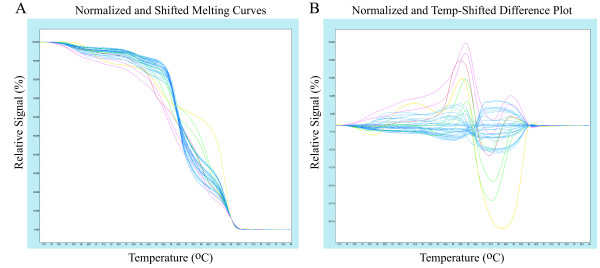
Methodologies like phage display selection, in vitro mutagenesis and the determination of allelic expression differences include steps where large numbers of clones need to be compared and characterised. In the current study we show that high-resolution melt curve analysis (HRMA) is a simple, cost-saving tool to quickly study clonal variation without prior nucleotide sequence knowledge.
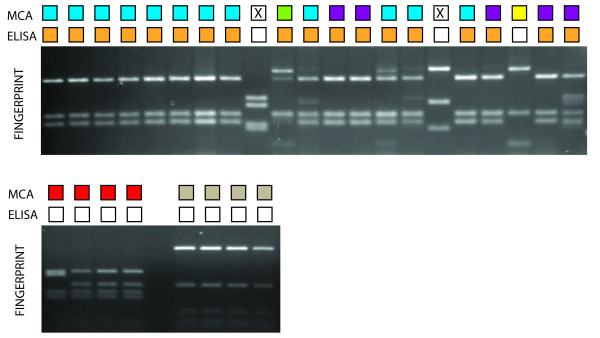
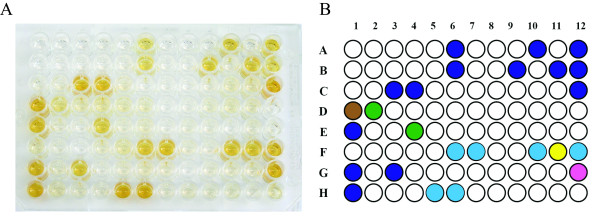
HRMA results nicely matched those obtained with ELISA and compared favourably to DNA fingerprinting of restriction digested clone insert-PCR. DNA sequence analysis confirmed that HRMA-clustered clones contained identical inserts.
Using HRMA, analysis of up to 384 samples can be done simultaneously and will take approximately 30 minutes. Clustering of clones can be largely automated using the system's software within 2 hours. Applied to the analysis of clones obtained after phage display antibody selection, HRMA facilitated a quick overview of the overall success as well as the identification of identical clones. Our approach can be used to characterize any clone set prior to sequencing, thereby reducing sequencing costs significantly.
噬菌体展示筛选、体外诱变以及等位基因表达差异测定等方法包含大量克隆需要进行比较和表征的步骤。在本研究中,我们表明高分辨率熔解曲线分析(HRMA)是一种无需预先了解核苷酸序列就能快速研究克隆变异的简单、节省成本的工具。
HRMA结果与酶联免疫吸附测定(ELISA)获得的结果完美匹配,并且与限制性消化克隆插入片段-聚合酶链反应(PCR)的DNA指纹图谱相比更具优势。DNA序列分析证实,HRMA聚类的克隆包含相同的插入片段。
使用HRMA,可同时分析多达384个样本,耗时约30分钟。利用该系统软件,可在2小时内基本实现克隆聚类自动化。将HRMA应用于噬菌体展示抗体筛选后获得的克隆分析,有助于快速全面了解整体成功率以及鉴定相同克隆。我们的方法可用于在测序前对任何克隆集进行表征,从而显著降低测序成本。