Edelsbrunner Martin E, Nakano Motoko, Holzer Peter
Institute of Experimental and Clinical Pharmacology, Medical University of Graz, Graz, Austria.
BMC Gastroenterol. 2009 Jun 2;9:40. doi: 10.1186/1471-230X-9-40.
Lafutidine is a histamine H2 receptor antagonist, the gastroprotective effect of which is related to its antisecretory activity and its ability to activate a sensory neuron-dependent mechanism of defence. The present study investigated whether intragastric administration of lafutidine (10 and 30 mg/kg) modifies vagal afferent signalling, mucosal injury, intragastric acidity and gastric emptying after gastric acid challenge.
Adult rats were treated with vehicle, lafutidine (10 - 30 mg/kg) or cimetidine (10 mg/kg), and 30 min later their stomachs were exposed to exogenous HCl (0.25 M). During the period of 2 h post-HCl, intragastric pH, gastric volume, gastric acidity and extent of macroscopic gastric mucosal injury were determined and the activation of neurons in the brainstem was visualized by c-Fos immunocytochemistry.
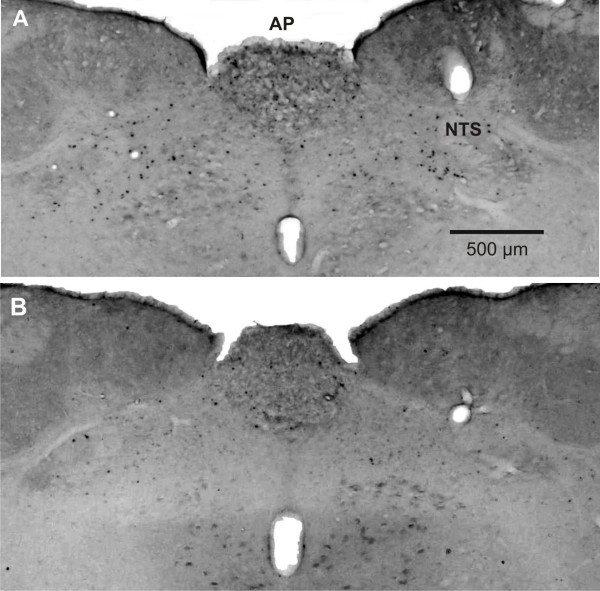
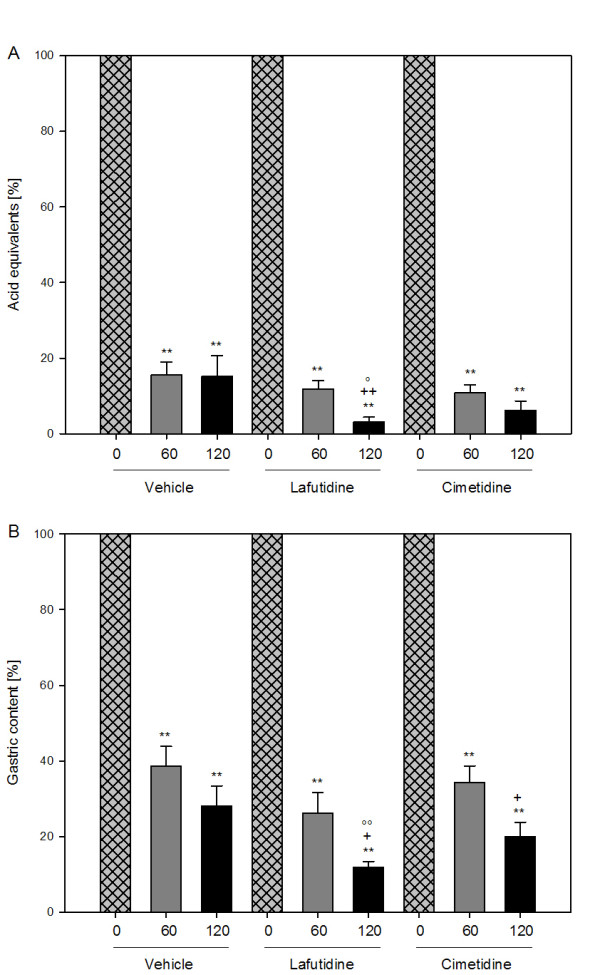
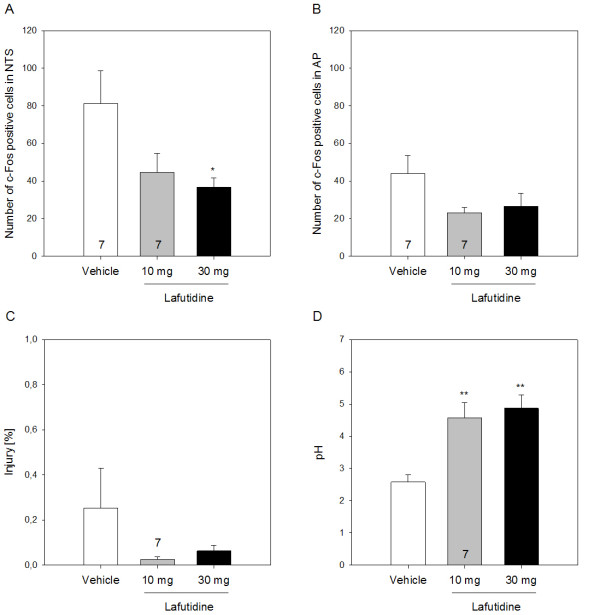
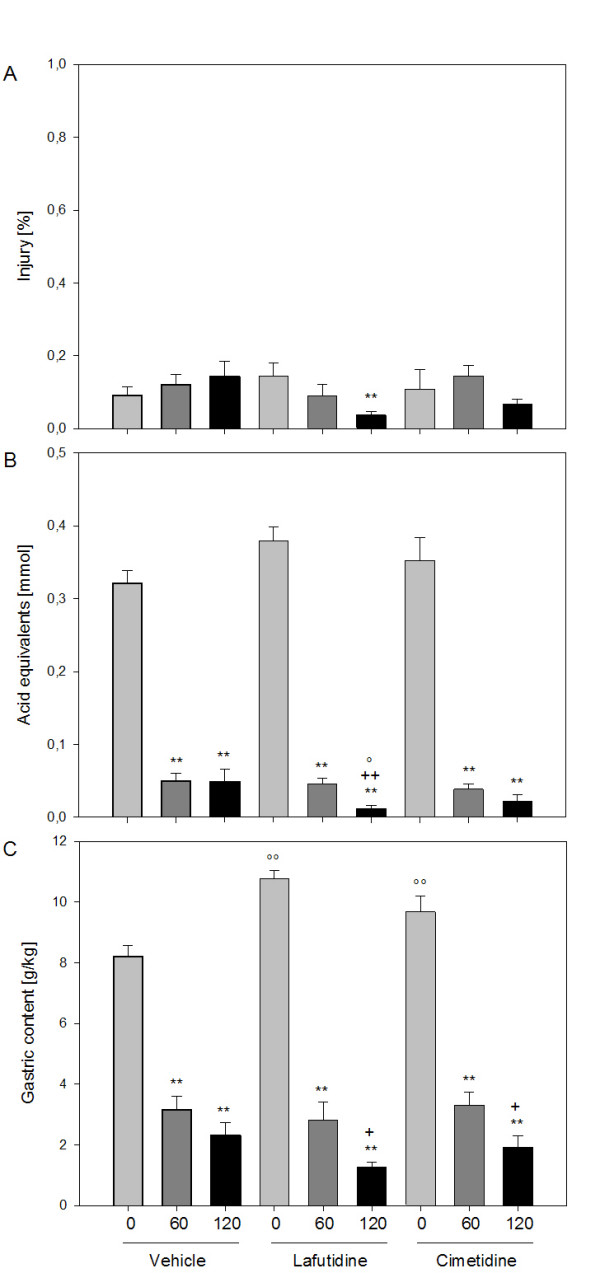
Gastric acid challenge enhanced the expression of c-Fos in the nucleus tractus solitarii but caused only minimal damage to the gastric mucosa. Lafutidine reduced the HCl-evoked expression of c-Fos in the NTS and elevated the intragastric pH following intragastric administration of excess HCl. Further analysis showed that the gastroprotective effect of lafutidine against excess acid was delayed and went in parallel with facilitation of gastric emptying, measured indirectly via gastric volume changes, and a reduction of gastric acidity. The H2 receptor antagonist cimetidine had similar but weaker effects.
These observations indicate that lafutidine inhibits the vagal afferent signalling of a gastric acid insult, which may reflect an inhibitory action on acid-induced gastric pain. The ability of lafutidine to decrease intragastric acidity following exposure to excess HCl cannot be explained by its antisecretory activity but appears to reflect dilution and/or emptying of the acid load into the duodenum. This profile of actions emphasizes the notion that H2 receptor antagonists can protect the gastric mucosa from acid injury independently of their ability to suppress gastric acid secretion.
拉呋替丁是一种组胺H2受体拮抗剂,其胃保护作用与其抗分泌活性以及激活感觉神经元依赖性防御机制的能力有关。本研究调查了胃内给予拉呋替丁(10和30mg/kg)是否会改变胃酸刺激后的迷走神经传入信号、粘膜损伤、胃内酸度和胃排空。
成年大鼠接受赋形剂、拉呋替丁(10 - 30mg/kg)或西咪替丁(10mg/kg)治疗,30分钟后将它们的胃暴露于外源性HCl(0.25M)中。在HCl处理后的2小时内,测定胃内pH值、胃容积、胃酸度和宏观胃粘膜损伤程度,并通过c-Fos免疫细胞化学观察脑干中神经元的激活情况。
胃酸刺激增强了孤束核中c-Fos的表达,但仅对胃粘膜造成了最小程度的损伤。拉呋替丁降低了HCl诱发的NTS中c-Fos的表达,并在胃内给予过量HCl后提高了胃内pH值。进一步分析表明,拉呋替丁对过量酸的胃保护作用延迟出现,且与胃排空的促进(通过胃容积变化间接测量)和胃酸度的降低平行。H2受体拮抗剂西咪替丁具有类似但较弱的作用。
这些观察结果表明,拉呋替丁抑制了胃酸刺激的迷走神经传入信号,这可能反映了对酸诱导的胃痛的抑制作用。拉呋替丁在暴露于过量HCl后降低胃内酸度的能力不能用其抗分泌活性来解释,而似乎反映了酸负荷向十二指肠的稀释和/或排空。这种作用模式强调了H2受体拮抗剂可以独立于其抑制胃酸分泌的能力来保护胃粘膜免受酸损伤的观点。