Department of Cardiology, Shandong Provincial Hospital, Shandong University, Jinan, China.
J Cell Mol Med. 2009 Aug;13(8A):1513-25. doi: 10.1111/j.1582-4934.2009.00798.x. Epub 2009 Jun 5.
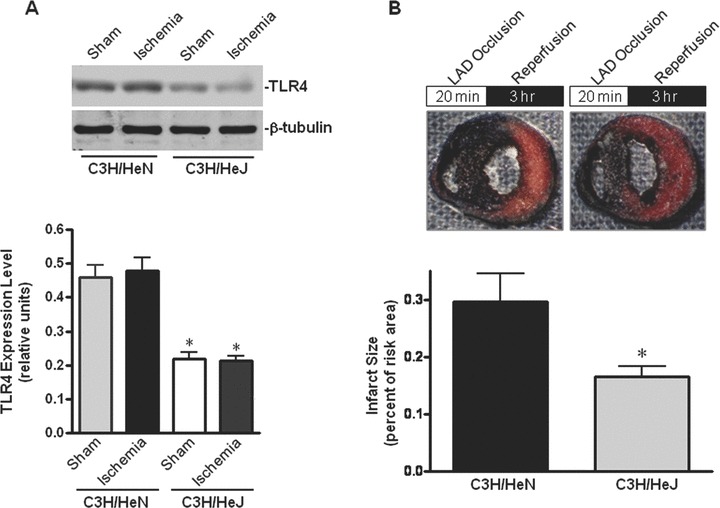
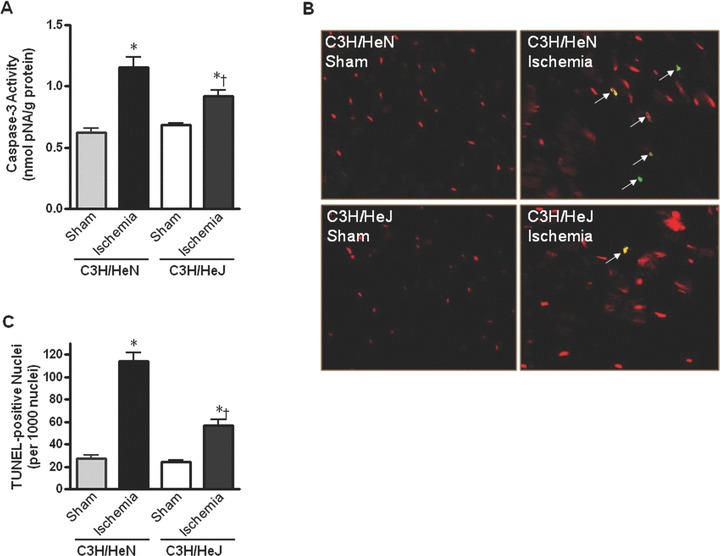
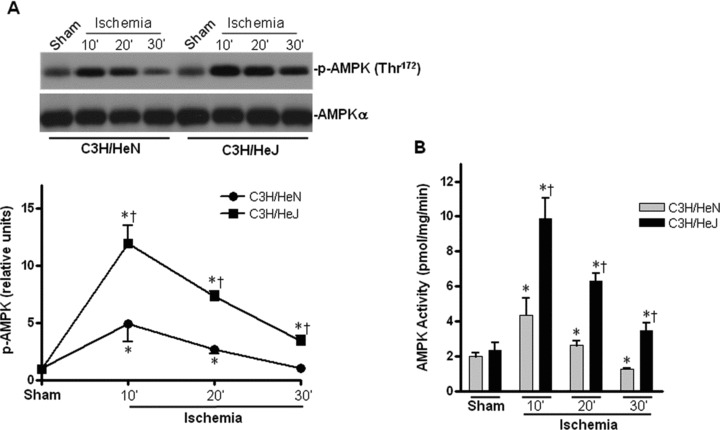
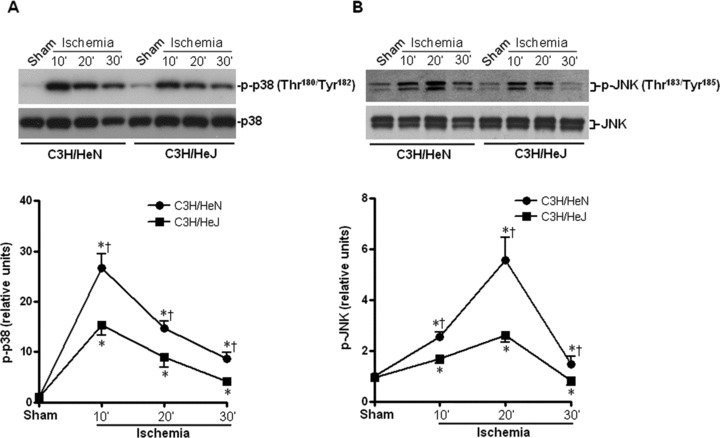
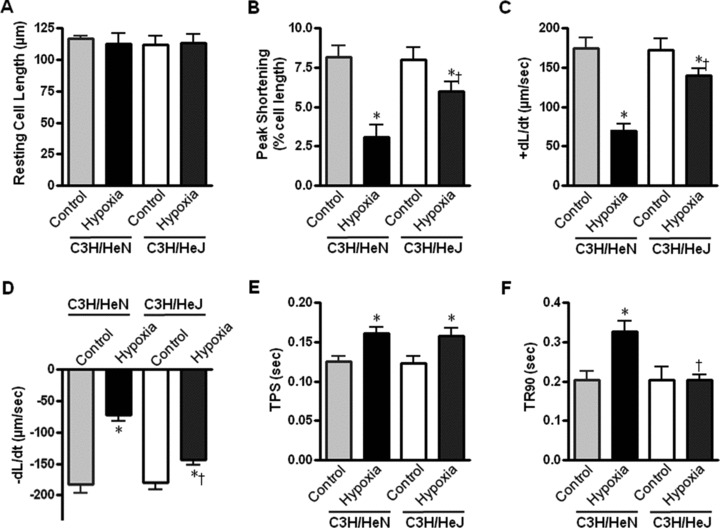
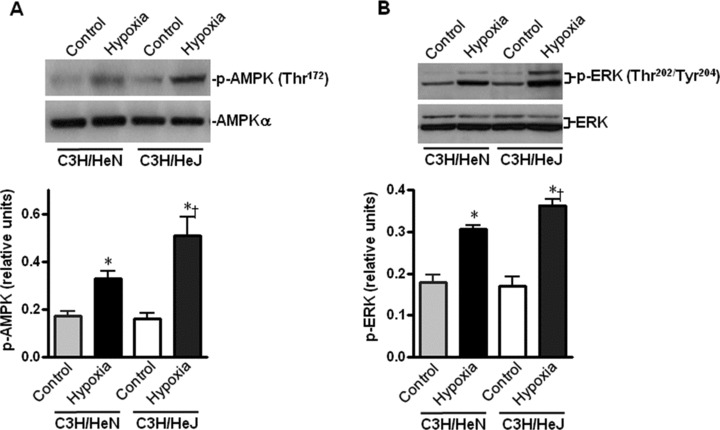
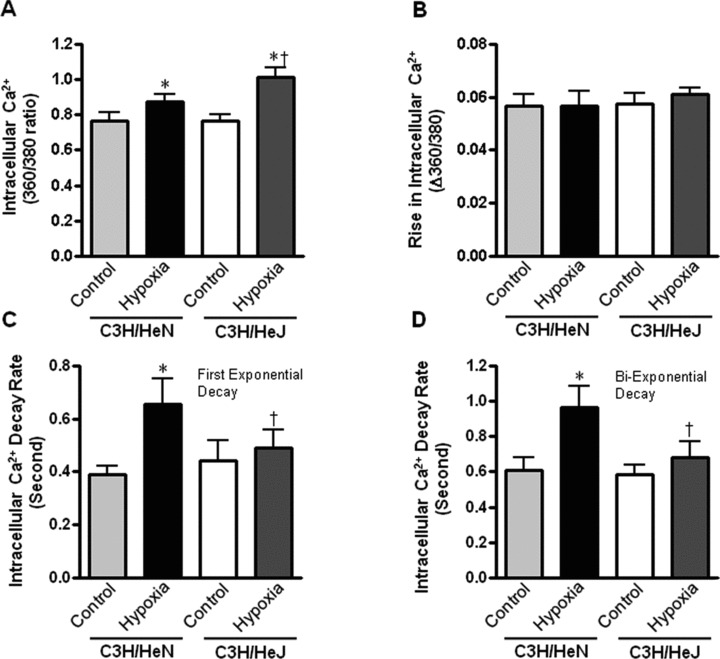
Toll-like receptor 4 (TLR4), a proximal signalling receptor in innate immune responses to lipopolysaccharide of gram-negative pathogens, is expressed in the heart. Accumulating evidence have consolidated the notion that TLR4 plays an essential role in the pathogenesis of cardiac dysfunction. However, the molecular mechanisms of TLR4 responsible for ischemia-induced cardiac dysfunction remain unclear. To address the signalling mechanisms of TLR4-deficiency cardioprotection against ischemic injury, in vivo regional ischemia was induced by occlusion of the left anterior descending coronary artery in wild-type (WT) C3H/HeN and TLR4-mutated C3H/HeJ mice. The results demonstrated that blunted ischemic activation of p38 mitogen-activated protein kinase and JNK signalling occurred in C3H/HeJ hearts versus C3H/HeN hearts, while ERK and AMP-activated protein kinase (AMPK) signalling pathways were augmented during ischemia in C3H/HeJ hearts versus C3H/HeN hearts. Intriguingly, ischemia-stimulated endoplasmic reticulum stress was higher in C3H/HeN hearts than that in C3H/HeJ as demonstrated by up-regulation of Grp78/BiP, Gadd153/CHOP and IRE-1alpha. Myocardial infarct, caspase-3 activity and terminal deoxynucleotidyl transferase dUTP nick end labelling (TUNEL) staining demonstrated that C3H/HeN hearts suffered more damage than those of C3H/HeJ hearts during ischemia. Moreover, isolated cardiomyocytes from C3H/HeJ hearts showed resistance to hypoxia-induced contractile dysfunction compared to those from C3H/HeN hearts, which are associated with greater hypoxic activation of AMPK and ERK signalling, better intracellular Ca(2+) handling in C3H/HeJ versus C3H/HeN cardiomyocytes. These findings suggest that the cardioprotective effects against ischemic injury of hearts with deficiency in TLR4 signalling may be mediated through modulating AMPK and ERK signalling pathway during ischemia.
Toll 样受体 4(TLR4)是革兰氏阴性病原体脂多糖固有免疫反应的近端信号受体,在心脏中表达。越来越多的证据证实,TLR4 在心脏功能障碍的发病机制中发挥重要作用。然而,TLR4 导致缺血性心脏功能障碍的分子机制尚不清楚。为了阐明 TLR4 缺失对缺血性损伤的心脏保护作用的信号机制,采用左前降支冠状动脉结扎法在野生型(WT)C3H/HeN 和 TLR4 突变型(C3H/HeJ)小鼠体内诱导局部缺血。结果表明,与 C3H/HeN 心脏相比,C3H/HeJ 心脏的 p38 丝裂原活化蛋白激酶和 JNK 信号通路的缺血激活减弱,而 ERK 和 AMP 激活蛋白激酶(AMPK)信号通路在 C3H/HeJ 心脏中增强。有趣的是,与 C3H/HeJ 心脏相比,C3H/HeN 心脏的内质网应激在缺血时更高,表现为 Grp78/BiP、Gadd153/CHOP 和 IRE-1alpha 的上调。心肌梗死、caspase-3 活性和末端脱氧核苷酸转移酶 dUTP 缺口末端标记(TUNEL)染色表明,与 C3H/HeJ 心脏相比,C3H/HeN 心脏在缺血时受到更大的损伤。此外,与 C3H/HeN 心脏相比,C3H/HeJ 心脏分离的心肌细胞对缺氧诱导的收缩功能障碍具有抗性,这与 AMPK 和 ERK 信号通路在 C3H/HeJ 心脏中的缺氧激活增强以及 C3H/HeJ 心脏中的细胞内 Ca(2+)处理更好有关。这些发现表明,TLR4 信号缺失的心脏对缺血性损伤的保护作用可能是通过在缺血期间调节 AMPK 和 ERK 信号通路来介导的。