Cheng Jiangxia, Zhu Pengfei, Qin Han, Li Xia, Yu Hai, Yu Hui, Peng Xiaohong
1 Department of Anesthesia, Puai Hospital, Tongji Medical College, Huazhong University of Science and Technology, Wuhan, Hubei, China.
2 Department of Cardiology, Puai Hospital, Tongji Medical College, Huazhong University of Science and Technology, Wuhan, Hubei, China.
J Int Med Res. 2018 Jul;46(7):2925-2932. doi: 10.1177/0300060518781382. Epub 2018 Jun 21.
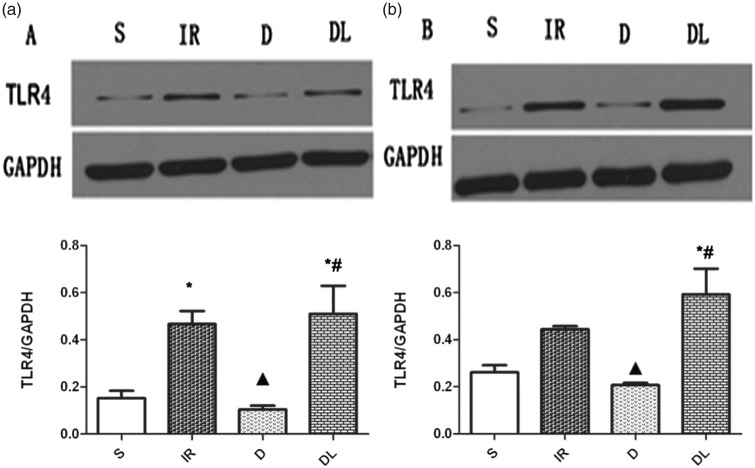
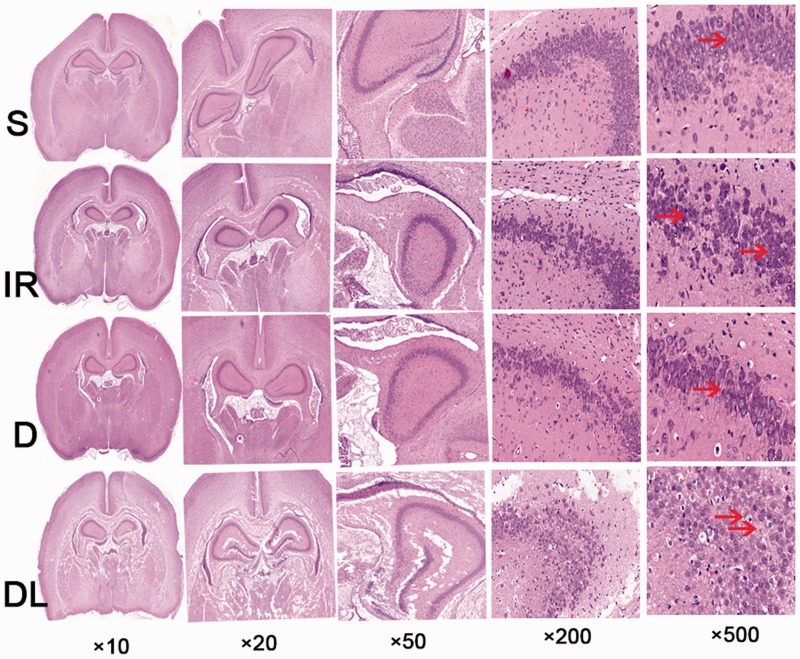
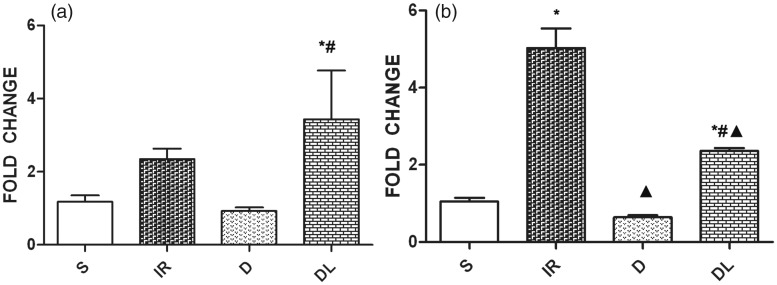
Objective The sedative dexmedetomidine plays a role in multi-organ protection by inhibiting toll-like receptor (TLR) 4 expression in ischemia/reperfusion injury. The present study investigated whether the neuroprotective effects of dexmedetomidine could be blocked by the TLR4 agonist lipopolysaccharide. Methods We established a cerebral ischemia/reperfusion model in neonatal Sprague-Dawley rats through bilateral carotid artery occlusion for 20 minutes followed by a 2-hour reperfusion. Rats were assigned to four groups: Sham operation, ischemia/reperfusion, ischemia/reperfusion preceded by dexmedetomidine treatment (10 µg/kg), and ischemia/reperfusion preceded by dexmedetomidine (10 µg/kg) and lipopolysaccharide (500 µg/kg) treatments. Cerebral tissue injury was assessed by hematoxylin and eosin staining, and cerebral TLR4 expression was evaluated by real-time PCR and western blot. Results Pretreatment with dexmedetomidine reduced ischemia-induced morphological changes in the hippocampal CA3 region and downregulated TLR4 expression, but these neuroprotective effects were partially blocked by co-treatment with the TLR4 agonist lipopolysaccharide. Conclusion Our results indicate that inhibition of cerebral TLR4 expression is related to the neuroprotective effects of dexmedetomidine in this neonatal rat cerebral ischemia/reperfusion model.
目的 镇静剂右美托咪定通过抑制缺血/再灌注损伤中Toll样受体(TLR)4的表达发挥多器官保护作用。本研究探讨TLR4激动剂脂多糖是否会阻断右美托咪定的神经保护作用。方法 通过双侧颈总动脉闭塞20分钟,随后再灌注2小时,建立新生Sprague-Dawley大鼠脑缺血/再灌注模型。将大鼠分为四组:假手术组、缺血/再灌注组、右美托咪定治疗(10μg/kg)预处理的缺血/再灌注组、右美托咪定(10μg/kg)和脂多糖(500μg/kg)治疗预处理的缺血/再灌注组。通过苏木精-伊红染色评估脑组织损伤,通过实时PCR和蛋白质印迹法评估脑TLR4表达。结果 右美托咪定预处理可减轻海马CA3区缺血诱导的形态学变化并下调TLR4表达,但这些神经保护作用被TLR4激动剂脂多糖联合治疗部分阻断。结论 我们的结果表明,在该新生大鼠脑缺血/再灌注模型中,脑TLR4表达的抑制与右美托咪定的神经保护作用有关。