Fox Chase Cancer Center, Philadelphia, PA 19111, USA.
Breast Cancer Res. 2009;11(3):206. doi: 10.1186/bcr2255. Epub 2009 May 29.
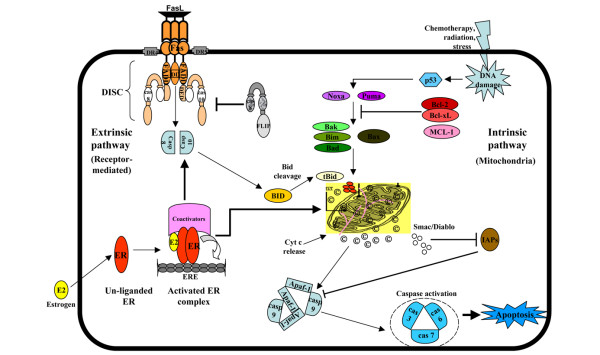
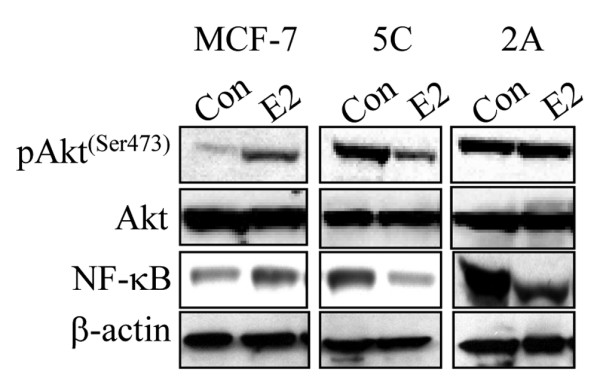
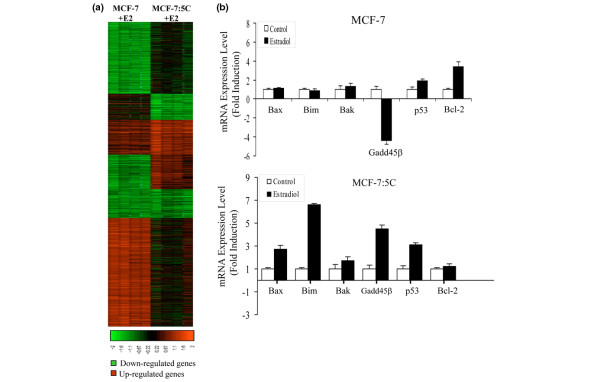
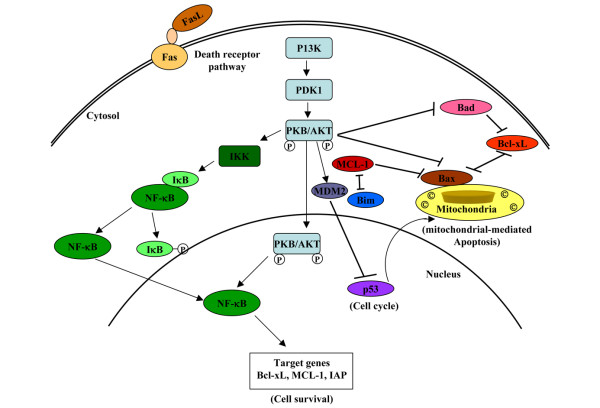
The link between estrogen and the development and proliferation of breast cancer is well documented. Estrogen stimulates growth and inhibits apoptosis through estrogen receptor-mediated mechanisms in many cell types. Interestingly, there is strong evidence that estrogen induces apoptosis in breast cancer and other cell types. Forty years ago, before the development of tamoxifen, high-dose estrogen was used to induce tumor regression of hormone-dependent breast cancer in post-menopausal women. While the mechanisms by which estrogen induces apoptosis were not completely known, recent evidence from our laboratory and others demonstrates the involvement of the extrinsic (Fas/FasL) and the intrinsic (mitochondria) pathways in this process. We discuss the different apoptotic signaling pathways involved in E2 (17beta-estradiol)-induced apoptosis, including the intrinsic and extrinsic apoptosis pathways, the NF-kappaB (nuclear factor-kappa-B)-mediated survival pathway as well as the PI3K (phosphoinositide 3-kinase)/Akt signaling pathway. Breast cancer cells can also be sensitized to estrogen-induced apoptosis through suppression of glutathione by BSO (L-buthionine sulfoximine). This finding has implications for the control of breast cancer with low-dose estrogen and other targeted therapeutic drugs.
雌激素与乳腺癌的发生和增殖之间的关系已有充分的文献记载。雌激素通过雌激素受体介导的机制在许多细胞类型中刺激生长并抑制细胞凋亡。有趣的是,有强有力的证据表明雌激素可诱导乳腺癌和其他细胞类型的细胞凋亡。四十年前,在他莫昔芬开发之前,高剂量雌激素被用于诱导绝经后妇女的激素依赖性乳腺癌肿瘤消退。虽然雌激素诱导细胞凋亡的机制尚不完全清楚,但我们实验室和其他实验室的最新证据表明,这一过程涉及外在(Fas/FasL)和内在(线粒体)途径。我们讨论了 E2(17β-雌二醇)诱导细胞凋亡所涉及的不同凋亡信号通路,包括内在和外在凋亡通路、NF-κB(核因子-κB)介导的生存通路以及 PI3K(磷酸肌醇 3-激酶)/Akt 信号通路。通过 BSO(L-丁硫氨酸亚砜)抑制谷胱甘肽,乳腺癌细胞也可以对雌激素诱导的细胞凋亡变得敏感。这一发现对用低剂量雌激素和其他靶向治疗药物控制乳腺癌具有重要意义。