Das Hiranmoy, Abdulhameed Nasreen, Joseph Matthew, Sakthivel Ramasamy, Mao Hai-Quan, Pompili Vincent J
Davis Heart and Lung Research Institute, The Ohio State University, Columbus, OH, USA.
Cell Transplant. 2009;18(3):305-18. doi: 10.3727/096368909788534870.
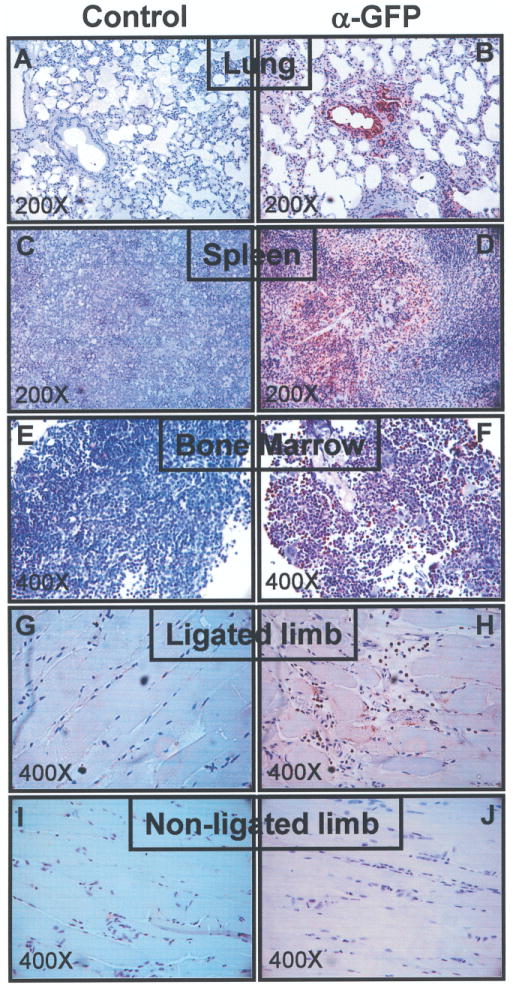
The stem cell therapy for treating ischemic diseases is promising; however, the limited availability and compromised quality of progenitor cells in aged and diseased patients limit its therapeutic use. Here we report a nanofiber-based ex vivo stem cell expansion technology and proangiogenic growth factors overexpression of human umbilical cord blood (UCB)-derived progenitor cells to enhance angiogenic potential of therapeutic stem cells. The progenitor cells were expanded approximately 225-fold on nanofiber-based serum-free ex vivo expansion culture technique without inducing differentiation. The expanded cells express high levels of stem cell homing receptor, CXCR4, and adhesion molecule, LFA-1. The nanofiber-expanded stem cells uptake AcLDL effectively, and migrate efficiently in an in vitro transmigration assay. These expanded cells can also differentiate into endothelial and smooth muscle cells in vitro. In a NOD/SCID mouse hind limb vascular injury model, nanofiber-expanded cells were more effective in blood flow restoration and this effect was further augmented by VEGF(164) and PDGF-BB, growth factor overexpression. The data indicate that nanofiber-based ex vivo expansion technology can provide an essential number of therapeutic stem cells. Additionally, proangiogenic growth factors overexpression in progenitor cells can potentially improve autologous or allogeneic stem cell therapy for ischemic diseases.
用于治疗缺血性疾病的干细胞疗法前景广阔;然而,老年和患病患者中祖细胞的可用性有限且质量受损,限制了其治疗应用。在此,我们报告了一种基于纳米纤维的体外干细胞扩增技术以及人脐带血(UCB)来源的祖细胞促血管生成生长因子的过表达,以增强治疗性干细胞的血管生成潜力。祖细胞在基于纳米纤维的无血清体外扩增培养技术上扩增了约225倍,且未诱导分化。扩增后的细胞高水平表达干细胞归巢受体CXCR4和黏附分子LFA-1。纳米纤维扩增的干细胞能有效摄取乙酰化低密度脂蛋白(AcLDL),并在体外迁移实验中高效迁移。这些扩增后的细胞在体外也能分化为内皮细胞和平滑肌细胞。在NOD/SCID小鼠后肢血管损伤模型中,纳米纤维扩增细胞在恢复血流方面更有效,并且通过VEGF(164)和PDGF-BB生长因子的过表达,这种效果进一步增强。数据表明,基于纳米纤维的体外扩增技术可以提供足够数量的治疗性干细胞。此外,祖细胞中促血管生成生长因子的过表达可能会改善缺血性疾病的自体或异体干细胞治疗。