Plo Isabelle, Zhang Yanyan, Le Couédic Jean-Pierre, Nakatake Mayuka, Boulet Jean-Michel, Itaya Miki, Smith Steven O, Debili Najet, Constantinescu Stefan N, Vainchenker William, Louache Fawzia, de Botton Stéphane
Research Laboratory on Hematopoiesis and Normal and Leukemic Stem Cells, U790, Institut National de la Santé et de la Recherche Médicale, 94805 Villejuif, France.
J Exp Med. 2009 Aug 3;206(8):1701-7. doi: 10.1084/jem.20090693. Epub 2009 Jul 20.
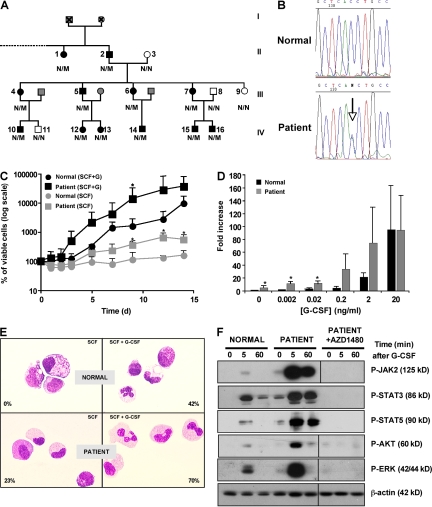
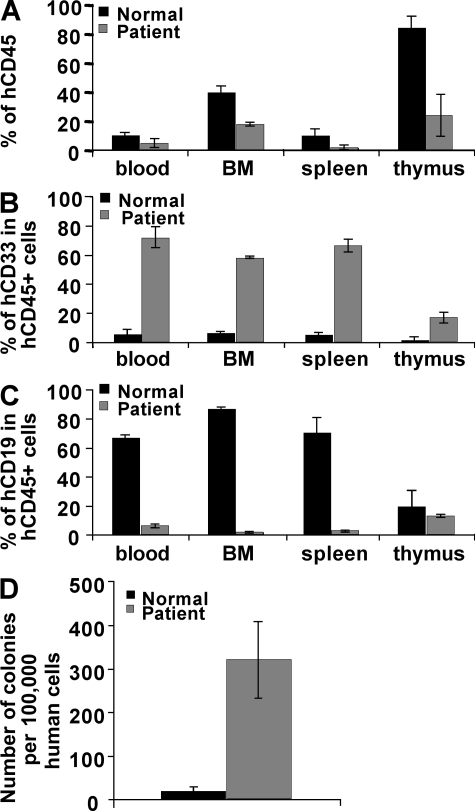
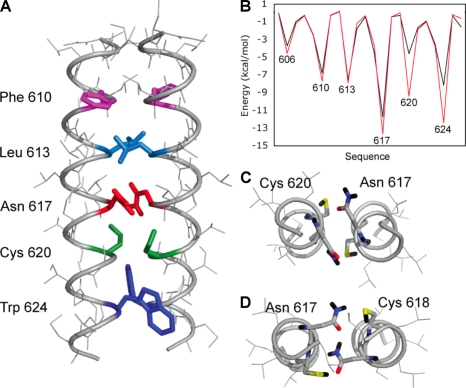
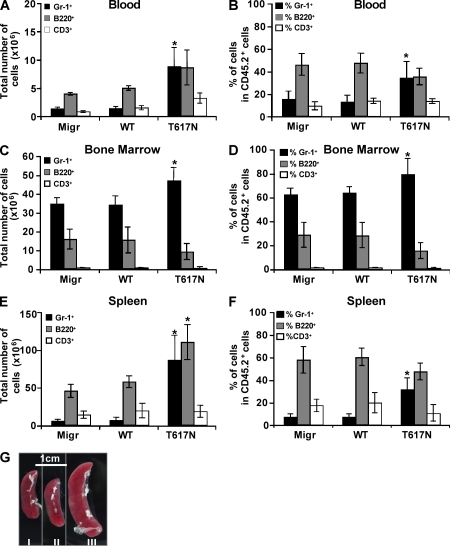
We identify an autosomal mutation in the CSF3R gene in a family with a chronic neutrophilia. This T617N mutation energetically favors dimerization of the granulocyte colony-stimulating factor (G-CSF) receptor transmembrane domain, and thus, strongly promotes constitutive activation of the receptor and hypersensitivity to G-CSF for proliferation and differentiation, which ultimately leads to chronic neutrophilia. Mutant hematopoietic stem cells yield a myeloproliferative-like disorder in xenotransplantation and syngenic mouse bone marrow engraftment assays. The survey of 12 affected individuals during three generations indicates that only one patient had a myelodysplastic syndrome. Our data thus indicate that mutations in the CSF3R gene can be responsible for hereditary neutrophilia mimicking a myeloproliferative disorder.
我们在一个患有慢性中性粒细胞增多症的家族中鉴定出CSF3R基因的常染色体突变。这种T617N突变在能量上有利于粒细胞集落刺激因子(G-CSF)受体跨膜结构域的二聚化,因此,强烈促进受体的组成性激活以及对G-CSF增殖和分化的超敏反应,最终导致慢性中性粒细胞增多症。在异种移植和同基因小鼠骨髓移植试验中,突变的造血干细胞产生了类似骨髓增殖性疾病的病症。对三代中的12名受影响个体的调查表明,只有一名患者患有骨髓增生异常综合征。因此,我们的数据表明,CSF3R基因的突变可能是导致模仿骨髓增殖性疾病的遗传性中性粒细胞增多症的原因。