Kim Min Seuk, Hong Jeong Hee, Li Qin, Shin Dong Min, Abramowitz Joel, Birnbaumer Lutz, Muallem Shmuel
Department of Physiology, University of Texas Southwestern Medical Center, Dallas, Texas 75390-9040, USA.
Gastroenterology. 2009 Oct;137(4):1509-17. doi: 10.1053/j.gastro.2009.07.042. Epub 2009 Jul 19.
BACKGROUND & AIMS: Receptor-stimulated Ca(2+) influx is a critical component of the Ca(2+) signal and mediates all cellular functions regulated by Ca(2+). However, excessive Ca(2+) influx is highly toxic, resulting in cell death, which is the nodal point in all forms of pancreatitis. Ca(2+) influx is mediated by store-operated channels (SOCs). The identity and function of the native SOCs in most cells is unknown.
Here, we determined the role of deletion of Trpc3 in mice on Ca(2+) signaling, exocytosis, intracellular trypsin activation, and pancreatitis.
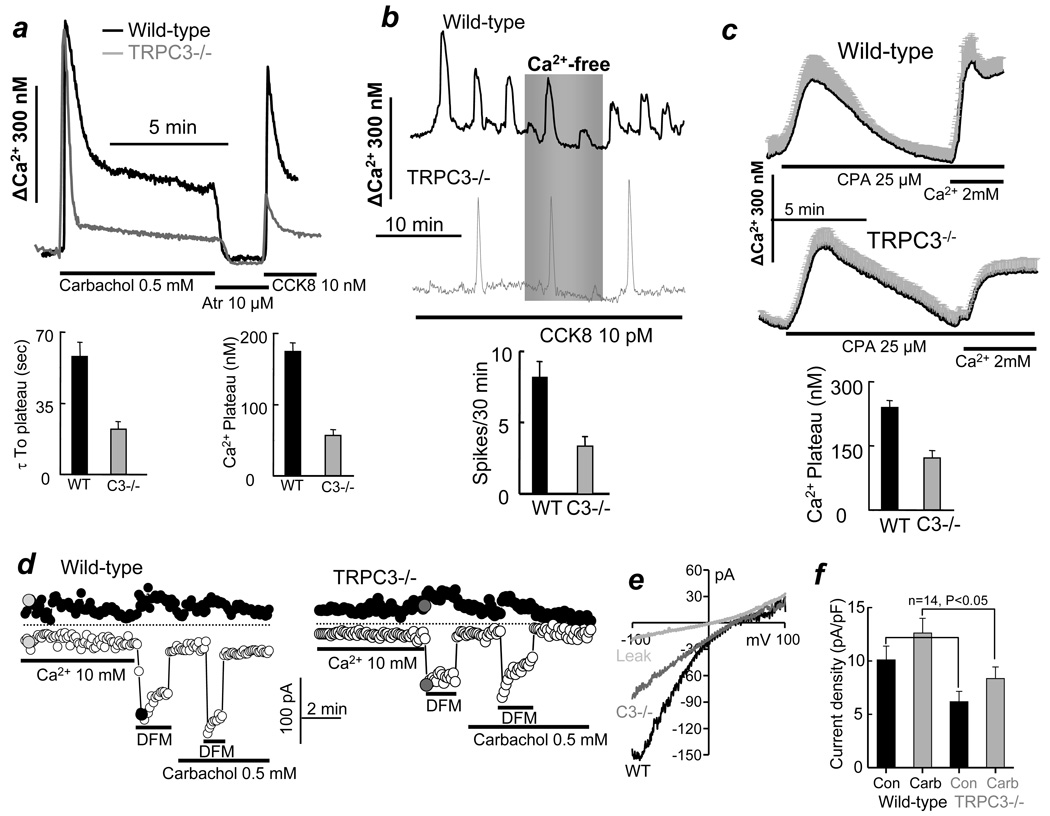
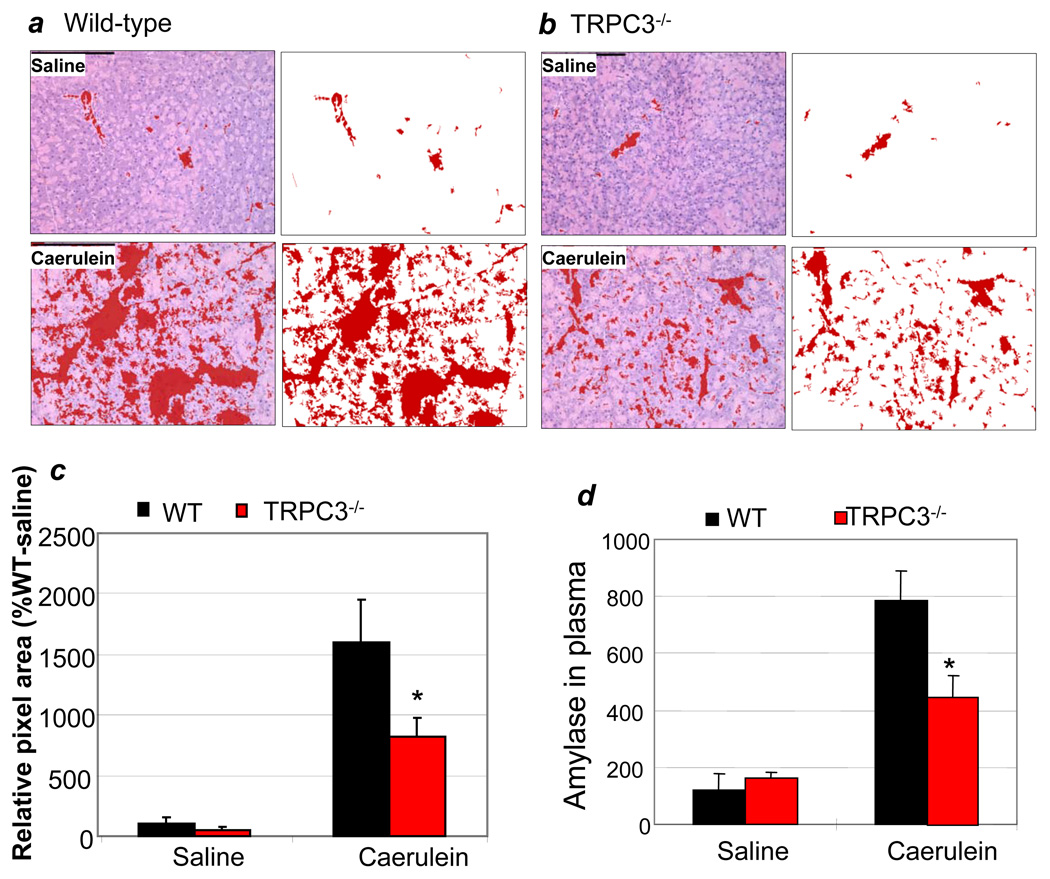
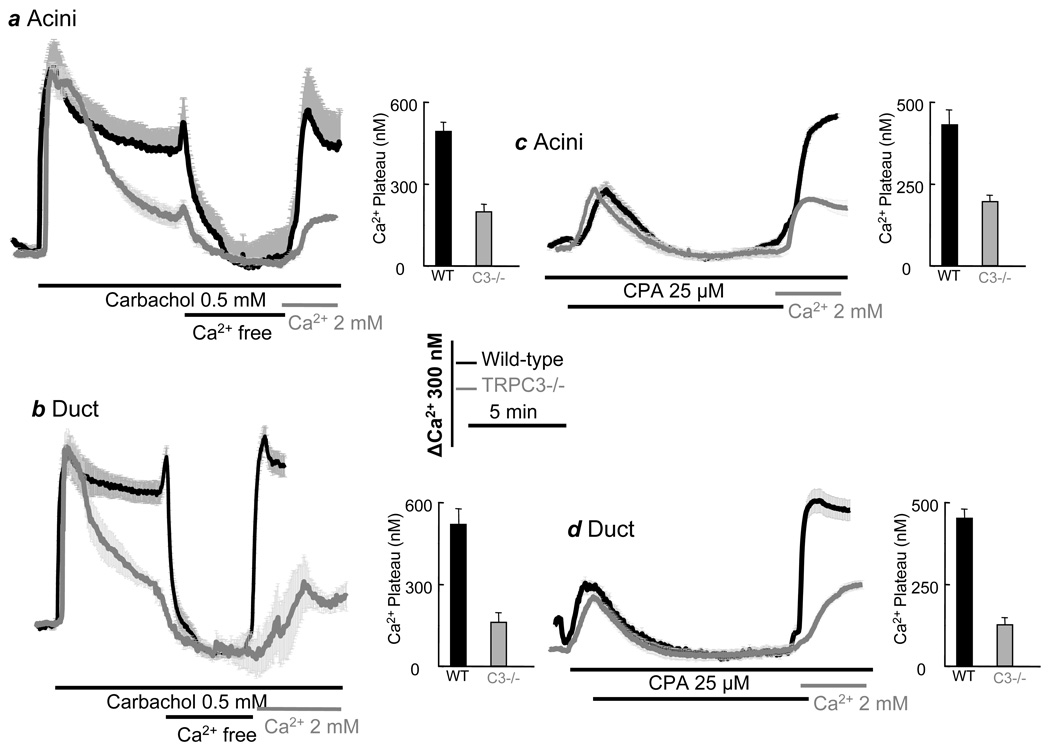
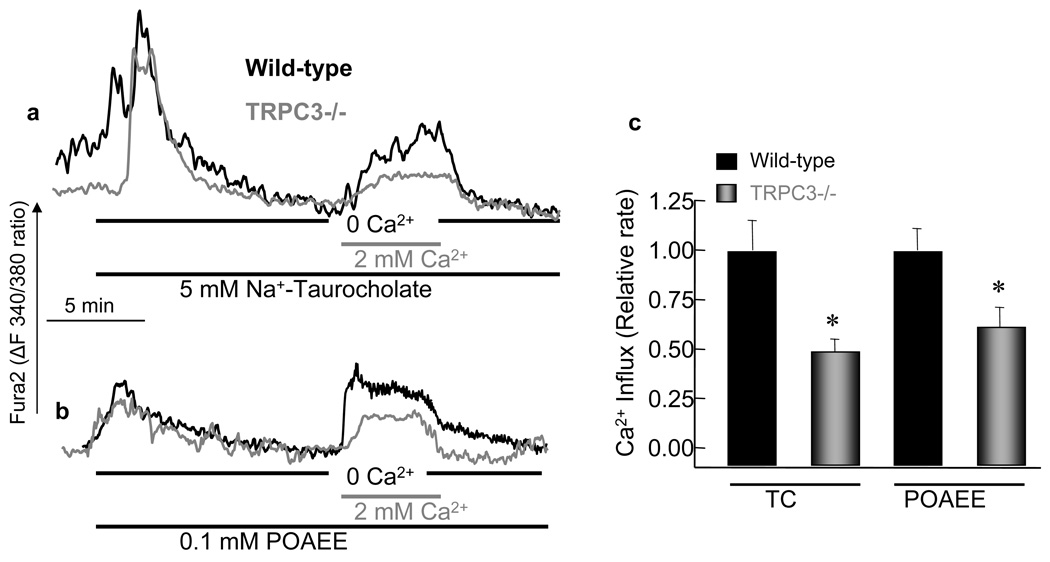
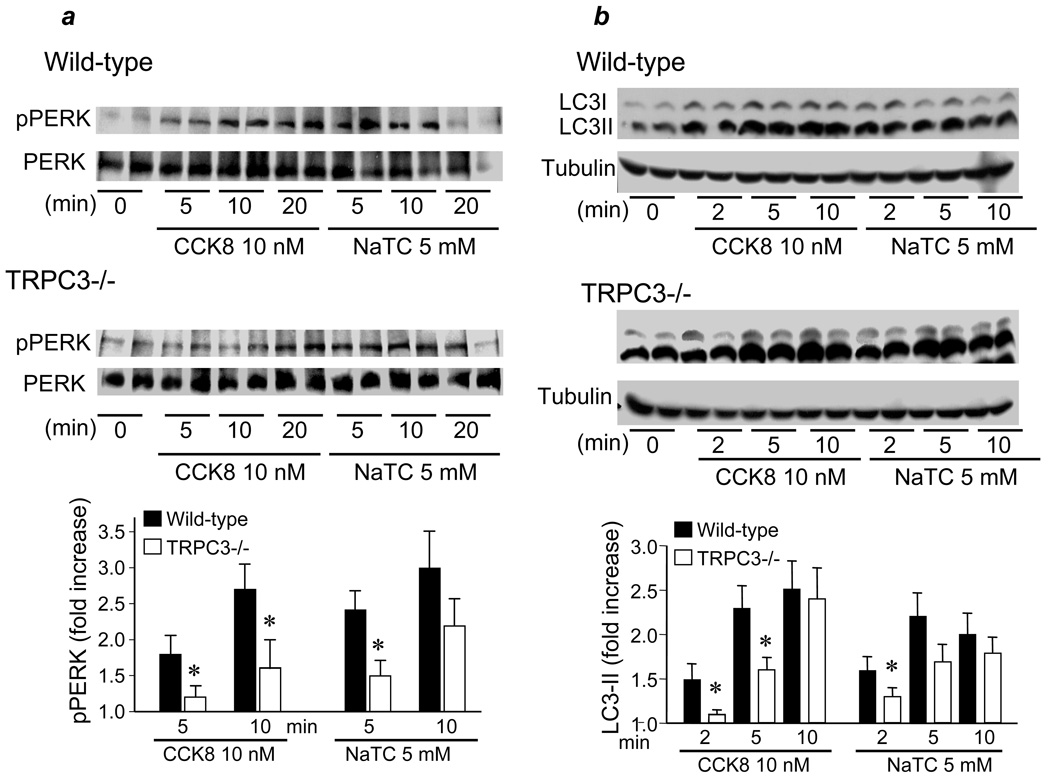
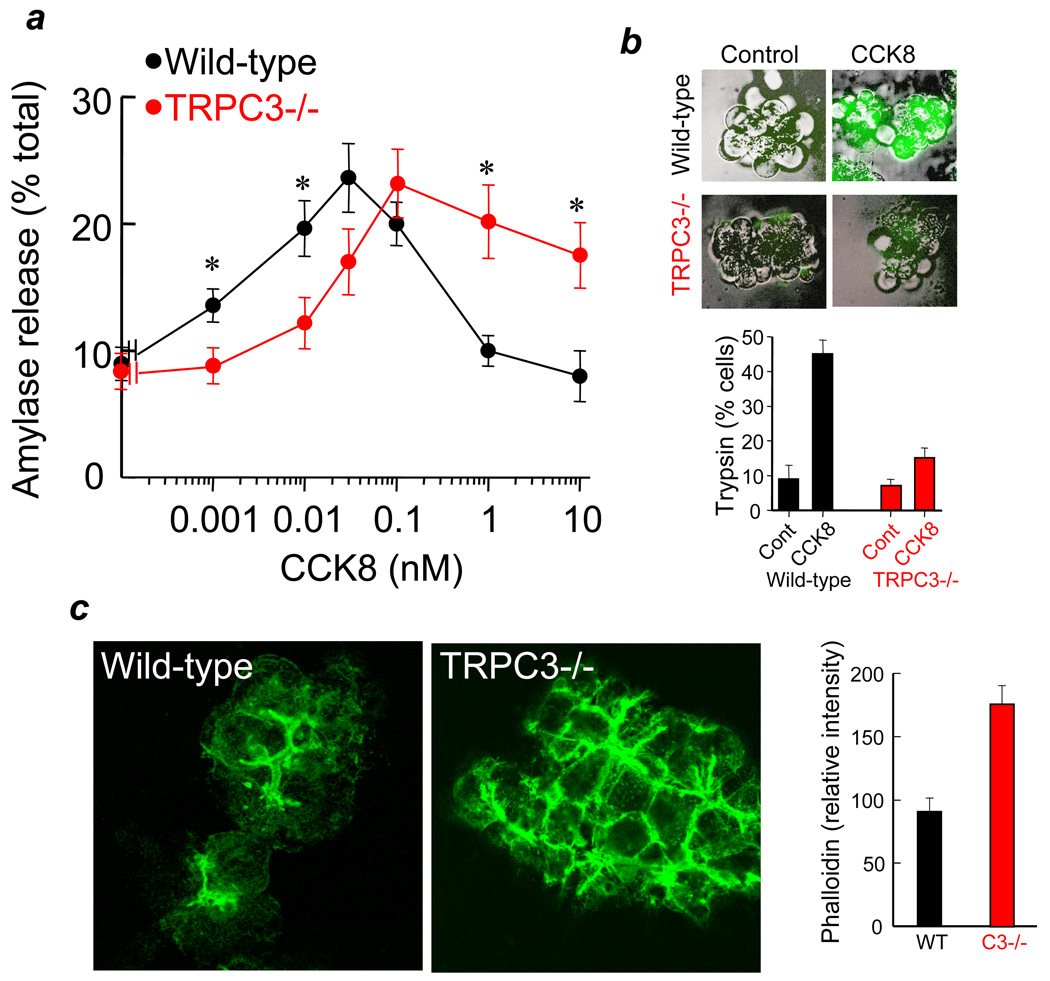
Deletion of TRPC3 reduced the receptor-stimulated and SOC-mediated Ca(2+) influx by about 50%, indicating that TRPC3 functions as an SOC in vivo. The reduced Ca(2+) influx in TRPC3(-/-) acini resulted in reduced frequency of the physiologic Ca(2+) oscillations and of the pathologic sustained increase in cytosolic Ca(2+) levels caused by supramaximal stimulation and by the toxins bile acids and palmitoleic acid ethyl ester. Consequently, deletion of TRPC3 shifted the dose response for receptor-stimulated exocytosis and prevented the pathologic inhibition of digestive enzyme secretion at supramaximal agonist concentrations. Accordingly, deletion of TRPC3 markedly reduced intracellular trypsin activation and excessive actin depolymerization in vitro and the severity of pancreatitis in vivo.
These findings establish the native TRPC3 as an SOC in vivo and a role for TRPC3-mediated Ca(2+) influx in the pathogenesis of acute pancreatitis and suggest that TRPC3 should be considered a target for prevention of pancreatic damage in acute pancreatitis.
受体刺激的钙离子内流是钙信号的关键组成部分,介导所有受钙离子调控的细胞功能。然而,过量的钙离子内流具有高度毒性,可导致细胞死亡,这是所有形式胰腺炎的关键点。钙离子内流由储存-操纵性通道(SOCs)介导。大多数细胞中天然SOCs的身份和功能尚不清楚。
在此,我们确定了小鼠中Trpc3缺失对钙信号、胞吐作用、细胞内胰蛋白酶激活和胰腺炎的作用。
TRPC3的缺失使受体刺激和SOC介导的钙离子内流减少了约50%,表明TRPC3在体内作为一种SOC发挥作用。TRPC3基因敲除的腺泡细胞中钙离子内流减少,导致生理性钙振荡频率降低,以及由超最大刺激以及毒素胆汁酸和棕榈油酸乙酯引起的病理性胞浆钙水平持续升高减少。因此,TRPC3的缺失改变了受体刺激的胞吐作用的剂量反应,并防止了在超最大激动剂浓度下消化酶分泌的病理性抑制。相应地,TRPC3的缺失在体外显著降低了细胞内胰蛋白酶激活和过度的肌动蛋白解聚,以及在体内降低了胰腺炎的严重程度。
这些发现确立了天然TRPC3在体内作为一种SOC的地位,以及TRPC3介导的钙离子内流在急性胰腺炎发病机制中的作用,并表明TRPC3应被视为预防急性胰腺炎中胰腺损伤的一个靶点。