Wong Hector R, Cvijanovich Natalie, Lin Richard, Allen Geoffrey L, Thomas Neal J, Willson Douglas F, Freishtat Robert J, Anas Nick, Meyer Keith, Checchia Paul A, Monaco Marie, Odom Kelli, Shanley Thomas P
Cincinnati Children's Hospital Medical Center and Cincinnati Children's Research Foundation, Department of Pediatrics, University of Cincinnati College of Medicine, Cincinnati, OH, USA.
BMC Med. 2009 Jul 22;7:34. doi: 10.1186/1741-7015-7-34.
Septic shock is a heterogeneous syndrome within which probably exist several biological subclasses. Discovery and identification of septic shock subclasses could provide the foundation for the design of more specifically targeted therapies. Herein we tested the hypothesis that pediatric septic shock subclasses can be discovered through genome-wide expression profiling.
Genome-wide expression profiling was conducted using whole blood-derived RNA from 98 children with septic shock, followed by a series of bioinformatic approaches targeted at subclass discovery and characterization.
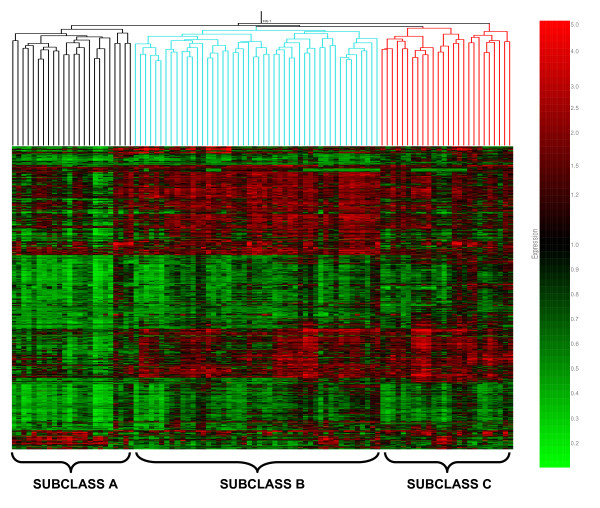
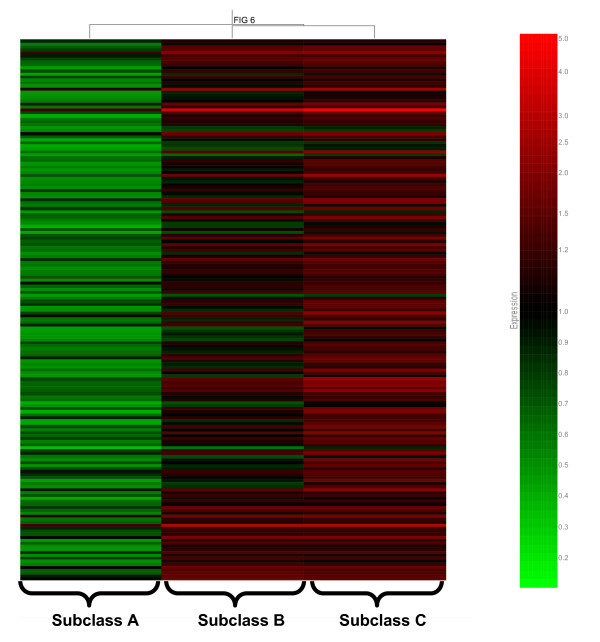
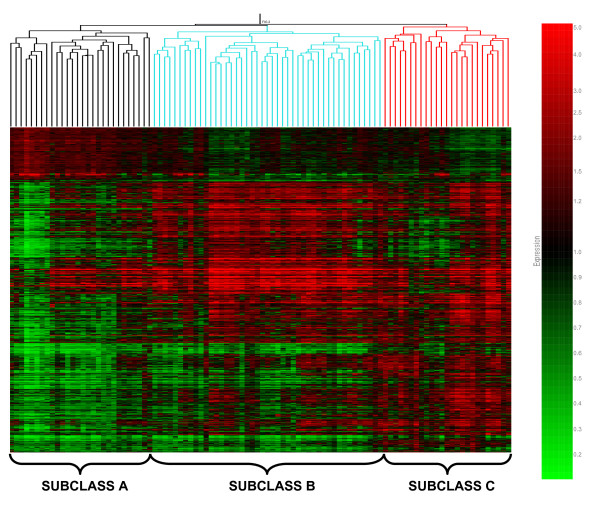
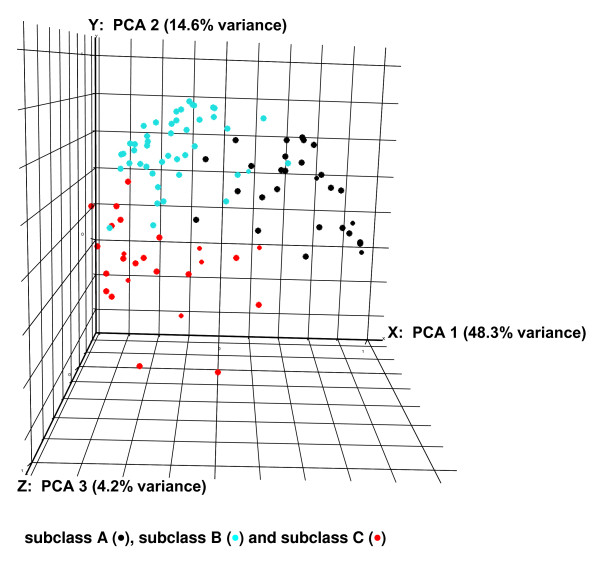
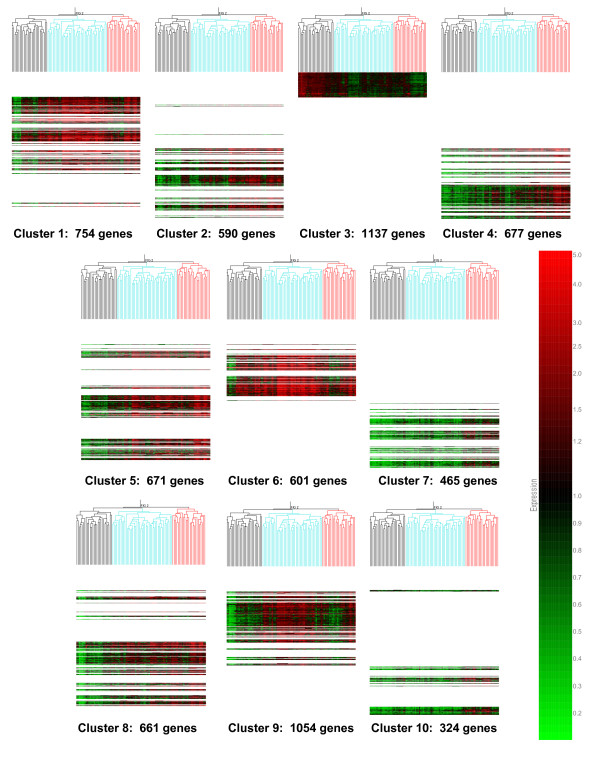
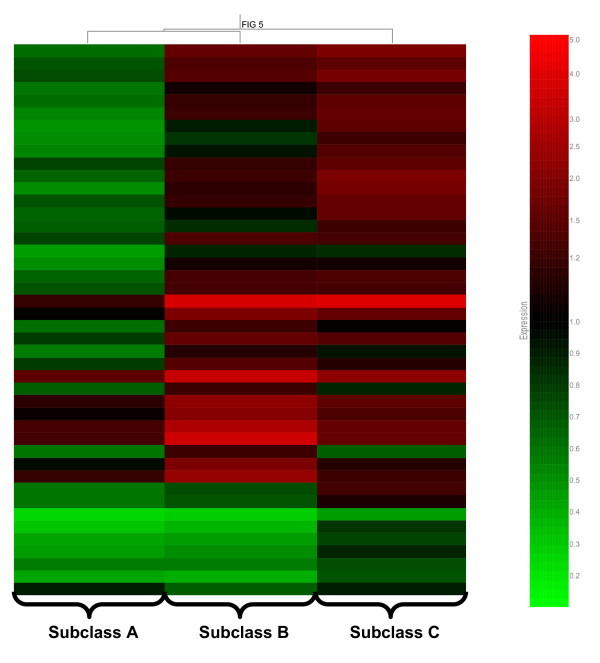
Three putative subclasses (subclasses A, B, and C) were initially identified based on an empiric, discovery-oriented expression filter and unsupervised hierarchical clustering. Statistical comparison of the three putative subclasses (analysis of variance, Bonferonni correction, P < 0.05) identified 6,934 differentially regulated genes. K-means clustering of these 6,934 genes generated 10 coordinately regulated gene clusters corresponding to multiple signaling and metabolic pathways, all of which were differentially regulated across the three subclasses. Leave one out cross-validation procedures indentified 100 genes having the strongest predictive values for subclass identification. Forty-four of these 100 genes corresponded to signaling pathways relevant to the adaptive immune system and glucocorticoid receptor signaling, the majority of which were repressed in subclass A patients. Subclass A patients were also characterized by repression of genes corresponding to zinc-related biology. Phenotypic analyses revealed that subclass A patients were younger, had a higher illness severity, and a higher mortality rate than patients in subclasses B and C.
Genome-wide expression profiling can identify pediatric septic shock subclasses having clinically relevant phenotypes.
感染性休克是一种异质性综合征,可能存在几种生物学亚类。发现和识别感染性休克亚类可为设计更具针对性的治疗方法提供基础。在此,我们检验了通过全基因组表达谱分析可发现儿童感染性休克亚类的假设。
使用98例感染性休克患儿全血来源的RNA进行全基因组表达谱分析,随后采用一系列针对亚类发现和特征描述的生物信息学方法。
基于经验性的、以发现为导向的表达筛选和无监督层次聚类,最初鉴定出三个假定亚类(亚类A、B和C)。对这三个假定亚类进行统计学比较(方差分析,Bonferonni校正,P < 0.05),确定了6934个差异调节基因。对这6934个基因进行K均值聚类,生成了10个协调调节的基因簇,对应多种信号传导和代谢途径,所有这些基因簇在三个亚类中均有差异调节。留一法交叉验证程序确定了100个对亚类识别具有最强预测价值的基因。这100个基因中的44个对应于与适应性免疫系统和糖皮质激素受体信号传导相关的信号通路,其中大多数在亚类A患者中受到抑制。亚类A患者还具有与锌相关生物学对应的基因受到抑制的特征。表型分析显示,亚类A患者比B和C亚类患者更年轻疾病严重程度更高,死亡率更高。
全基因组表达谱分析可识别具有临床相关表型的儿童感染性休克亚类。