Yang Jamie O, Zinter Matt S, Pellegrini Matteo, Wong Man Yee, Gala Kinisha, Markovic Daniela, Nadel Brian, Peng Kerui, Do Nguyen, Mangul Serghei, Nadkarni Vinay M, Karlsberg Aaron, Deshpande Dhrithi, Butte Manish J, Asaro Lisa, Agus Michael, Sapru Anil
University of California, Los Angeles.
University of California, San Francisco.
Res Sq. 2023 Aug 28:rs.3.rs-3267057. doi: 10.21203/rs.3.rs-3267057/v1.
Sepsis is a highly heterogeneous syndrome, that has hindered the development of effective therapies. This has prompted investigators to develop a precision medicine approach aimed at identifying biologically homogenous subgroups of patients with septic shock and critical illnesses. Transcriptomic analysis can identify subclasses derived from differences in underlying pathophysiological processes that may provide the basis for new targeted therapies. The goal of this study was to elucidate pathophysiological pathways and identify pediatric septic shock subclasses based on whole blood RNA expression profiles.
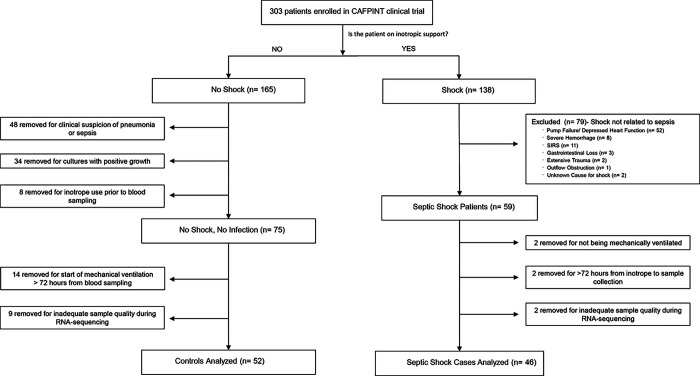
The subjects were critically ill children with cardiopulmonary failure who were a part of a prospective randomized insulin titration trial to treat hyperglycemia. Genome-wide expression profiling was conducted using RNA-sequencing from whole blood samples obtained from 46 children with septic shock and 52 mechanically ventilated noninfected controls without shock. Patients with septic shock were allocated to subclasses based on hierarchical clustering of gene expression profiles, and we then compared clinical characteristics, plasma inflammatory markers, cell compositions using GEDIT, and immune repertoires using Imrep between the two subclasses.
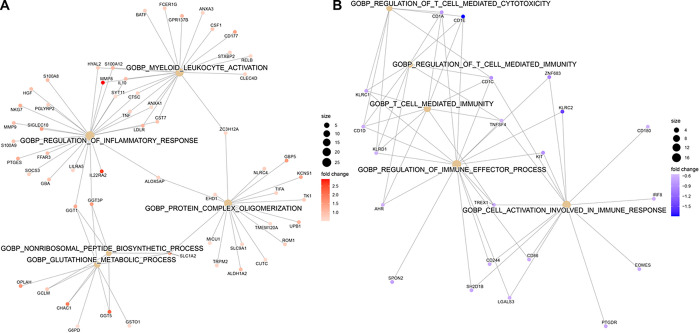
Patients with septic shock depicted alterations in innate and adaptive immune pathways. Among patients with septic shock, we identified two subtypes based on gene expression patterns. Compared with Subclass 2, Subclass 1 was characterized by upregulation of innate immunity pathways and downregulation of adaptive immunity pathways. Subclass 1 had significantly worse clinical outcomes despite the two classes having similar illness severity on initial clinical presentation. Subclass 1 had elevated levels of plasma inflammatory cytokines and endothelial injury biomarkers and demonstrated decreased percentages of CD4 T cells and B cells, and less diverse T-Cell receptor repertoires.
Two subclasses of pediatric septic shock patients were discovered through genome-wide expression profiling based on whole blood RNA sequencing with major biological and clinical differences.
This is a secondary analysis of data generated as part of the observational CAF PINT ancillary of the HALF PINT study (NCT01565941). Registered 29 March 2012.
脓毒症是一种高度异质性的综合征,这阻碍了有效治疗方法的发展。这促使研究人员开发一种精准医学方法,旨在识别感染性休克和危重症患者的生物学同质亚组。转录组分析可以识别源自潜在病理生理过程差异的亚类,这可能为新的靶向治疗提供基础。本研究的目的是阐明病理生理途径,并基于全血RNA表达谱识别儿童感染性休克亚类。
研究对象为患有心肺衰竭的危重症儿童,他们是一项治疗高血糖的前瞻性随机胰岛素滴定试验的一部分。使用RNA测序对从46名感染性休克儿童和52名无休克的机械通气非感染对照获得的全血样本进行全基因组表达谱分析。根据基因表达谱的层次聚类将感染性休克患者分为亚类,然后我们比较了两个亚类之间的临床特征、血浆炎症标志物、使用GEDIT的细胞组成以及使用Imrep的免疫库。
感染性休克患者表现出先天性和适应性免疫途径的改变。在感染性休克患者中,我们根据基因表达模式识别出两个亚型。与亚类2相比,亚类1的特征是先天性免疫途径上调和适应性免疫途径下调。尽管两类患者在初始临床表现时疾病严重程度相似,但亚类1的临床结局明显更差。亚类1的血浆炎症细胞因子和内皮损伤生物标志物水平升高,CD4 T细胞和B细胞百分比降低,T细胞受体库多样性减少。
通过基于全血RNA测序的全基因组表达谱分析发现了儿童感染性休克患者的两个亚类,它们在生物学和临床方面存在主要差异。
这是对作为HALF PINT研究(NCT01565941)的观察性CAF PINT辅助研究一部分产生的数据的二次分析。于2012年3月29日注册。