Slesak Günther, Douangdala Phouvieng, Inthalad Saythong, Silisouk Joy, Vongsouvath Manivanh, Sengduangphachanh Amphonesavanh, Moore Catrin E, Mayxay Mayfong, Matsuoka Hiroyuki, Newton Paul N
SFE Medical Project, Luang Namtha, Lao People's Democratic Republic.
Ann Clin Microbiol Antimicrob. 2009 Jul 29;8:24. doi: 10.1186/1476-0711-8-24.
Chromobacterium violaceum is a Gram negative facultative anaerobic bacillus, found in soil and stagnant water, that usually has a violet pigmented appearance on agar culture. It is rarely described as a human pathogen, mostly from tropical and subtropical areas.
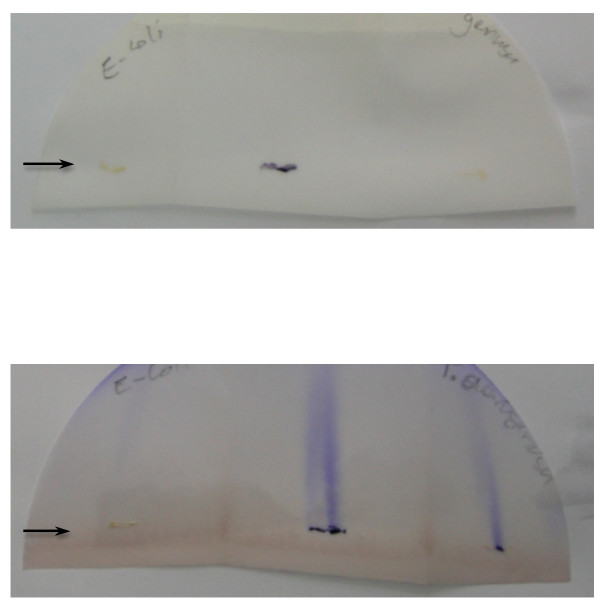
A 53 year-old farmer died with Chromobacterium violaceum septicemia in Laos. A modified oxidase method was used to demonstrate that this violacious organism was oxidase positive. Forensic analysis of the glucose-6-phosphate dehydrogenase genotypes of his family suggest that the deceased patient did not have this possible predisposing condition.
C. violaceum infection should be included in the differential diagnosis in patients presenting with community-acquired septicaemia in tropical and subtropical areas. The apparently neglected but simple modified oxidase test may be useful in the oxidase assessment of other violet-pigmented organisms or of those growing on violet coloured agar.
紫色色杆菌是一种革兰氏阴性兼性厌氧杆菌,存在于土壤和死水中,在琼脂培养基上培养时通常呈现紫色外观。它很少被描述为人类病原体,主要来自热带和亚热带地区。
一名53岁的老挝农民死于紫色色杆菌败血症。采用改良氧化酶法证明这种紫色微生物氧化酶呈阳性。对其家族葡萄糖-6-磷酸脱氢酶基因型的法医分析表明,已故患者不存在这种可能的易感状况。
在热带和亚热带地区出现社区获得性败血症的患者的鉴别诊断中应包括紫色色杆菌感染。这种明显被忽视但简单的改良氧化酶试验可能有助于对其他产生紫色色素的微生物或在紫色琼脂上生长的微生物进行氧化酶评估。