Liu Pixu, Cheng Hailing, Roberts Thomas M, Zhao Jean J
Department of Cancer Biology, Dana-Farber Cancer Institute, Pathology, Harvard Medical School, Boston, MA 02115, USA.
Nat Rev Drug Discov. 2009 Aug;8(8):627-44. doi: 10.1038/nrd2926.
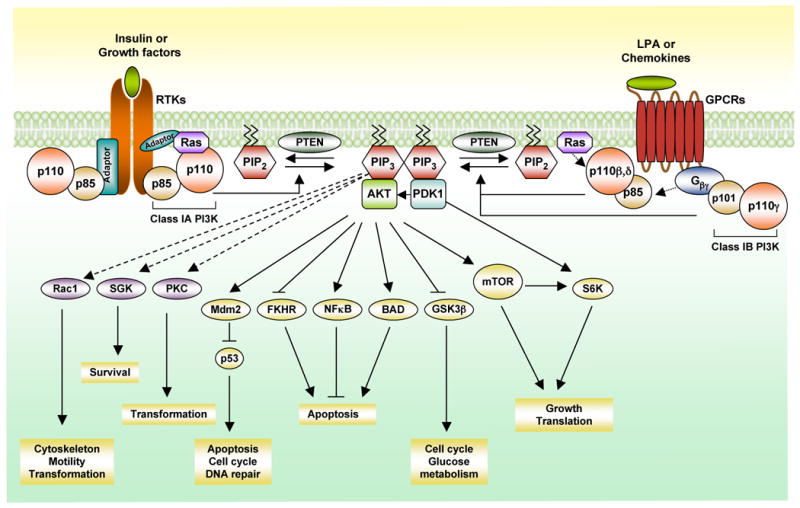
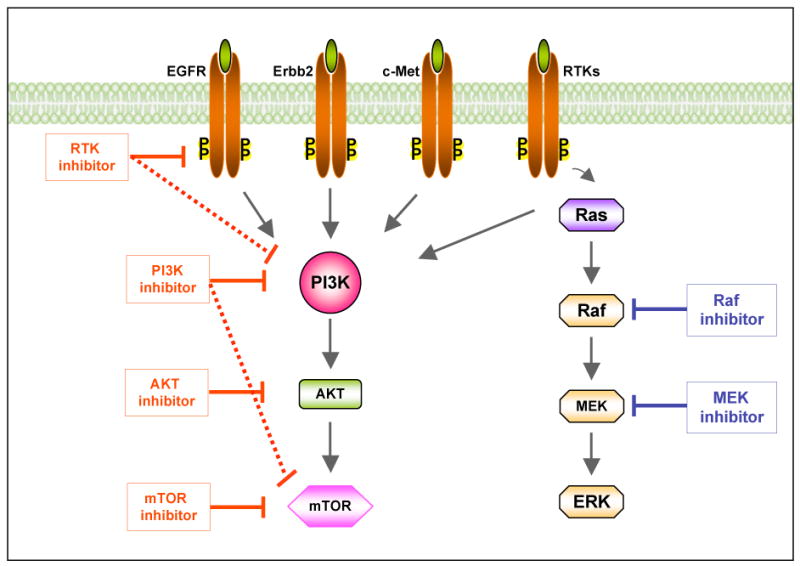
The phosphoinositide 3-kinase (PI3K) pathway is a key signal transduction system that links oncogenes and multiple receptor classes to many essential cellular functions, and is perhaps the most commonly activated signalling pathway in human cancer. This pathway therefore presents both an opportunity and a challenge for cancer therapy. Even as inhibitors that target PI3K isoforms and other major nodes in the pathway, including AKT and mammalian target of rapamycin (mTOR), reach clinical trials, major issues remain. Here, we highlight recent progress that has been made in our understanding of the PI3K pathway and discuss the potential of and challenges for the development of therapeutic agents that target this pathway in cancer.
磷酸肌醇3激酶(PI3K)信号通路是一个关键的信号转导系统,它将癌基因和多种受体类型与许多重要的细胞功能联系起来,可能是人类癌症中最常被激活的信号通路。因此,该通路给癌症治疗带来了机遇和挑战。尽管针对PI3K亚型以及该通路中其他主要节点(包括AKT和雷帕霉素哺乳动物靶点(mTOR))的抑制剂已进入临床试验阶段,但主要问题依然存在。在此,我们重点介绍了在理解PI3K通路方面取得的最新进展,并讨论了开发针对该通路的癌症治疗药物的潜力和挑战。