Rushing Elisabeth J, Bouffard John-Paul, McCall Sherman, Olsen Cara, Mena Hernando, Sandberg Glenn D, Thompson Lester D R
Department of Neuropathology and Ophthalmic Pathology, Armed Forces Institute of Pathology, Washington, DC 20306-6000, USA.
Head Neck Pathol. 2009 Jun;3(2):116-30. doi: 10.1007/s12105-009-0118-1. Epub 2009 May 20.
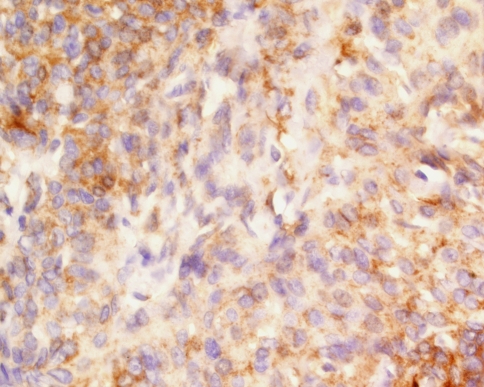
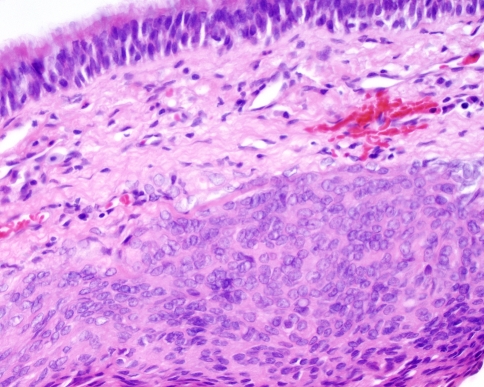
Primary extracranial meningiomas are rare neoplasms, frequently misdiagnosed, resulting in inappropriate clinical management. To date, a large clinicopathologic study has not been reported. One hundred and forty-six cases diagnosed between 1970 and 1999 were retrieved from the files of the Armed Forces Institute of Pathology. Histologic features were reviewed, immunohistochemistry analysis was performed (n = 85), and patient follow-up was obtained (n = 110). The patients included 74 (50.7%) females and 72 (49.3%) males. Tumors of the skin were much more common in males than females (1.7:1). There was an overall mean age at presentation of 42.4 years, with a range of 0.3-88 years. The overall mean age at presentation was significantly younger for skin primaries (36.2 years) than for ear (50.1 years) and nasal cavity (47.1 years) primaries. Symptoms were in general non-specific and reflected the anatomic site of involvement, affecting the following areas in order of frequency: scalp skin (40.4%), ear and temporal bone (26%), and sinonasal tract (24%). The tumors ranged in size from 0.5 up to 8 cm, with a mean size of 2.3 cm. Histologically, the majority of tumors were meningothelial (77.4%), followed by atypical (7.5%), psammomatous (4.1%) and anaplastic (2.7%). Psammoma bodies were present in 45 tumors (30.8%), and bone invasion in 31 (21.2%) of tumors. The vast majority were WHO Grade I tumors (87.7%), followed by Grade II (9.6%) and Grade III (2.7%) tumors. Immunohistochemically, the tumor cells labeled for EMA (76%; 61/80), S-100 protein (19%; 15/78), CK 7 (22%; 12/55), and while there was ki-67 labeling in 27% (21/78), <3% of cells were positive. The differential diagnosis included a number of mesenchymal and epithelial tumors (paraganglioma, schwannoma, carcinoma, melanoma, neuroendocrine adenoma of the middle ear), depending on the anatomic site of involvement. Treatment and follow-up was available in 110 patients: Biopsy, local excision, or wide excision was employed. Follow-up time ranged from 1 month to 32 years, with an average of 14.5 years. Recurrences were noted in 26 (23.6%) patients, who were further managed by additional surgery. At last follow-up, recurrent disease was persistent in 15 patients (mean, 7.7 years): 13 patients were dead (died with disease) and two were alive; the remaining patients were disease free (alive 60, mean 19.0 years, dead 35, mean 9.6 years). There is no statistically significant difference in 5-year survival rates by site: ear and temporal bone: 83.3%; nasal cavity: 81.8%; scalp skin: 78.5%; other sites: 65.5% (P = 0.155). Meningiomas can present in a wide variety of sites, especially within the head and neck region. They behave as slow-growing neoplasms with a good prognosis, with longest survival associated with younger age, and complete resection. Awareness of this diagnosis in an unexpected location will help to avoid potential difficulties associated with the diagnosis and management of these tumors.
原发性颅外脑膜瘤是罕见的肿瘤,常被误诊,导致临床处理不当。迄今为止,尚未见大型临床病理研究报道。从武装部队病理研究所档案中检索出1970年至1999年间诊断的146例病例。回顾组织学特征,进行免疫组化分析(n = 85),并获取患者随访资料(n = 110)。患者包括74名女性(50.7%)和72名男性(49.3%)。男性皮肤肿瘤比女性更常见(1.7:1)。总体就诊时平均年龄为42.4岁,范围为0.3 - 88岁。皮肤原发性肿瘤的总体就诊平均年龄(36.2岁)明显低于耳部(50.1岁)和鼻腔(47.1岁)原发性肿瘤。症状一般无特异性,反映受累的解剖部位,按频率依次影响以下部位:头皮皮肤(40.4%)、耳和颞骨(26%)、鼻窦道(24%)。肿瘤大小从0.5厘米至8厘米不等,平均大小为2.3厘米。组织学上,大多数肿瘤为脑膜皮型(77.4%),其次是非典型型(7.5%)、砂粒体型(4.1%)和间变型(2.7%)。45个肿瘤(30.8%)有砂粒体,31个肿瘤(21.2%)有骨质侵犯。绝大多数为世界卫生组织I级肿瘤(87.7%),其次是II级(9.6%)和III级(2.7%)肿瘤。免疫组化方面,肿瘤细胞EMA标记阳性率为76%(61/80),S - 100蛋白为19%(15/78),CK 7为22%(12/55),ki - 67标记阳性率为27%(21/78),<3%的细胞呈阳性。鉴别诊断包括一些间叶性和上皮性肿瘤(副神经节瘤、神经鞘瘤、癌、黑色素瘤、中耳神经内分泌腺瘤),取决于受累的解剖部位。110例患者有治疗及随访资料:采用活检、局部切除或广泛切除。随访时间从1个月至32年不等,平均为14.5年。26例(23.6%)患者出现复发,进一步行手术治疗。末次随访时,15例患者复发疾病持续存在(平均7.7年):13例患者死亡(死于疾病),2例存活;其余患者无疾病(存活60例,平均19.0年,死亡35例,平均9.6年)。各部位5年生存率无统计学显著差异:耳和颞骨:83.3%;鼻腔:81.8%;头皮皮肤:78.5%;其他部位:65.5%(P = 0.155)。脑膜瘤可出现在多种部位,尤其是头颈部区域。它们表现为生长缓慢的肿瘤,预后良好,年龄越小、完全切除者生存期最长。在意外部位意识到这一诊断将有助于避免与这些肿瘤的诊断和处理相关的潜在困难。