Han Yang, Moreira Irina S, Urizar Eneko, Weinstein Harel, Javitch Jonathan A
Center for Molecular Recognition, Columbia University College of Physicians and Surgeons, New York, NY, USA.
Nat Chem Biol. 2009 Sep;5(9):688-95. doi: 10.1038/nchembio.199. Epub 2009 Aug 2.
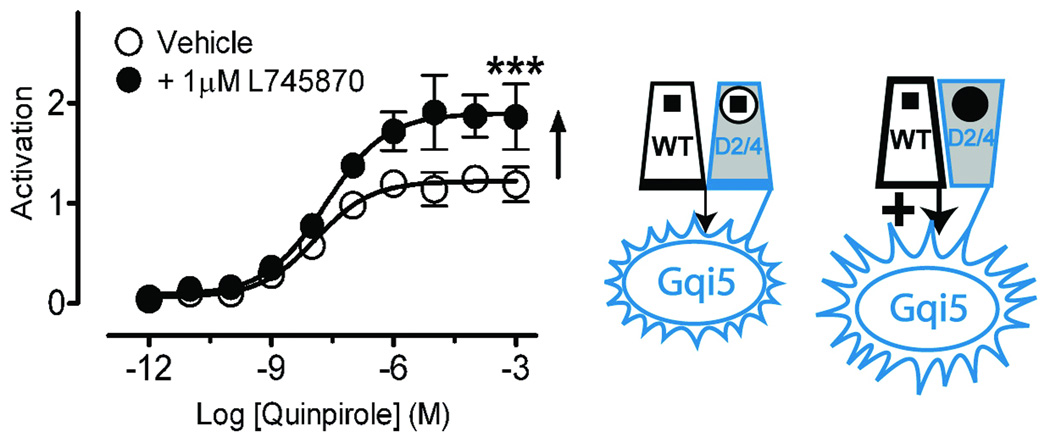
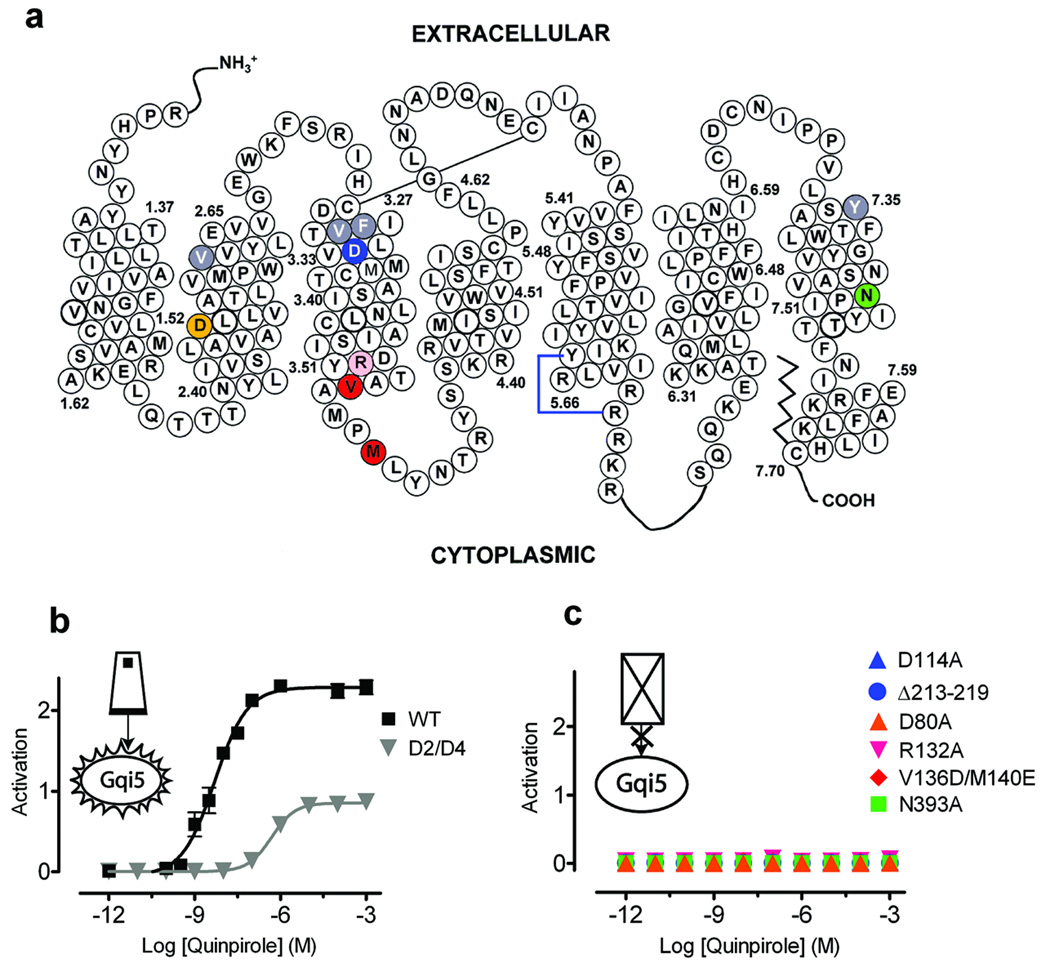
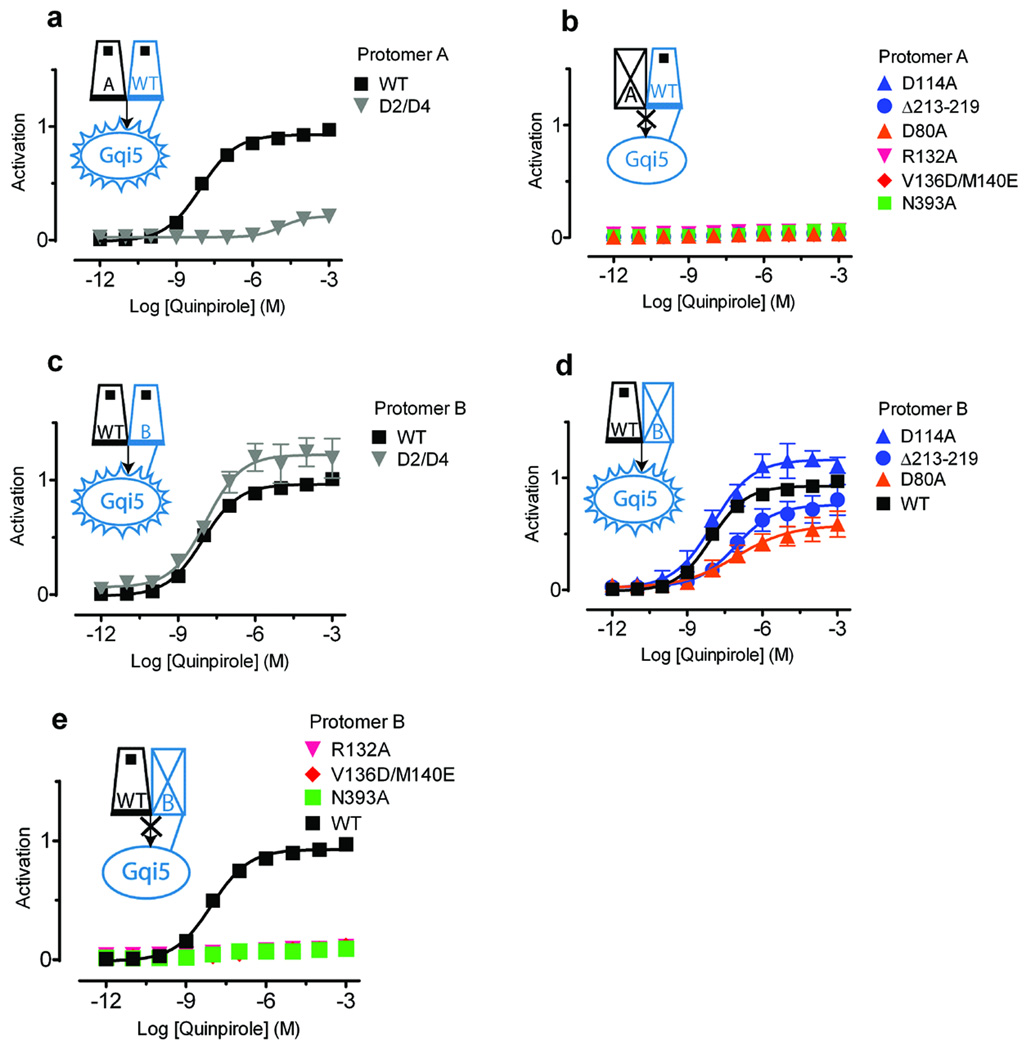
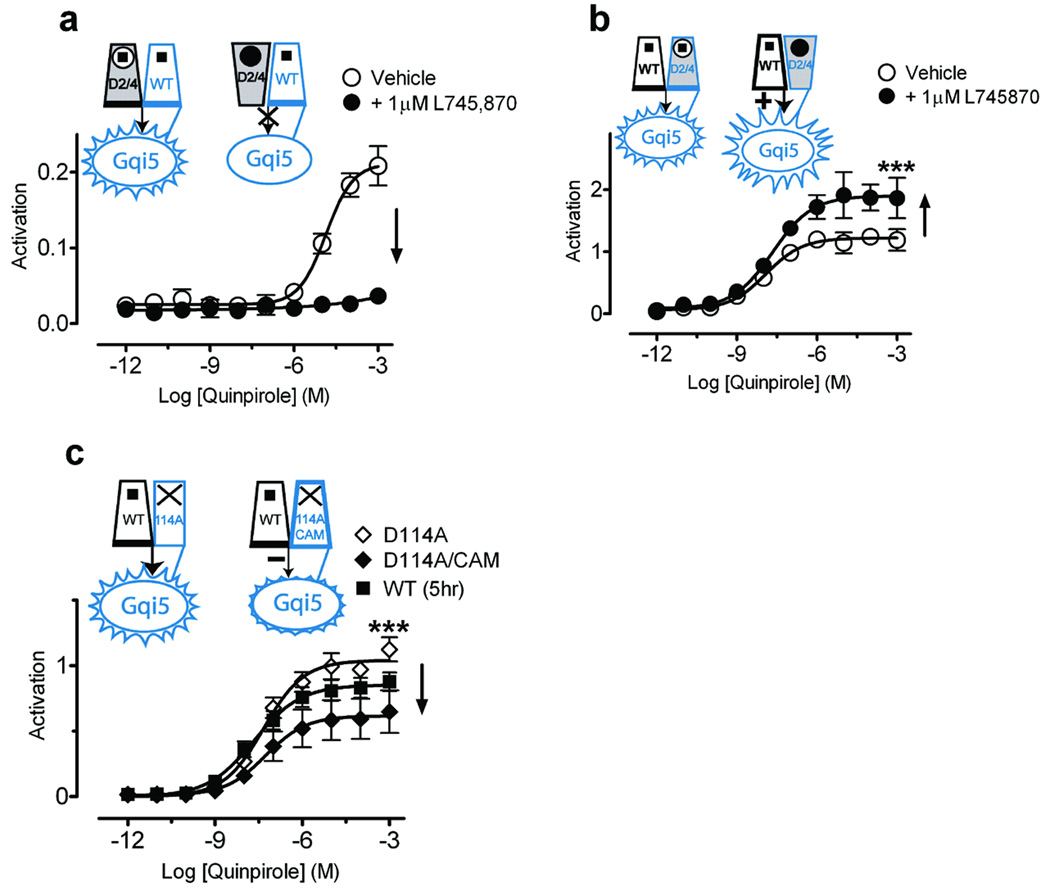
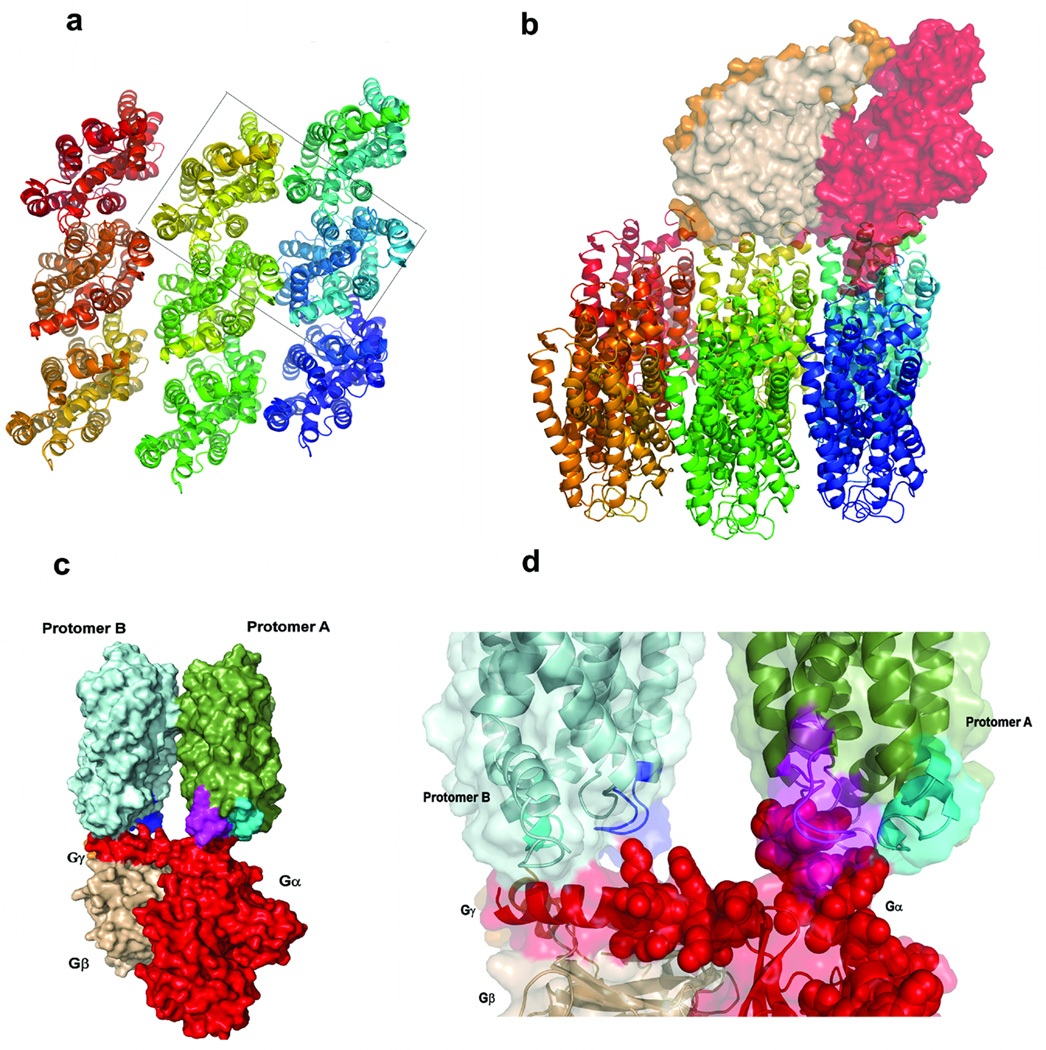
A major obstacle to understanding the functional importance of dimerization between class A G protein-coupled receptors (GPCRs) has been the methodological limitation in achieving control of the identity of the components comprising the signaling unit. We have developed a functional complementation assay that enables such control, and we demonstrate it here for the human dopamine D2 receptor. The minimal signaling unit, two receptors and a single G protein, is maximally activated by agonist binding to a single protomer, which suggests an asymmetrical activated dimer. Inverse agonist binding to the second protomer enhances signaling, whereas agonist binding to the second protomer blunts signaling. Ligand-independent constitutive activation of the second protomer also inhibits signaling. Thus, GPCR dimer function can be modulated by the activity state of the second protomer, which for a heterodimer may be altered in pathological states. Our new methodology also makes possible the characterization of signaling from a defined heterodimer unit.
理解A类G蛋白偶联受体(GPCR)二聚化的功能重要性的一个主要障碍是在实现对构成信号传导单元的组分身份的控制方面存在方法学限制。我们开发了一种功能互补测定法,能够实现这种控制,并且我们在此展示了针对人多巴胺D2受体的该方法。最小信号传导单元,即两个受体和一个单一的G蛋白,通过激动剂与单个原体的结合而被最大程度激活,这表明存在不对称激活的二聚体。反向激动剂与第二个原体的结合增强信号传导,而激动剂与第二个原体的结合则减弱信号传导。第二个原体的配体非依赖性组成性激活也会抑制信号传导。因此,GPCR二聚体功能可由第二个原体的活性状态调节,对于异二聚体而言,其在病理状态下可能会发生改变。我们的新方法还使得对来自定义的异二聚体单元的信号传导进行表征成为可能。