Department of Obstetrics and Gynecology, Child and Family Research Institute, The University of British Columbia, Vancouver, British Columbia, V6H 3V5, Canada.
Reprod Biol Endocrinol. 2009 Aug 5;7:81. doi: 10.1186/1477-7827-7-81.
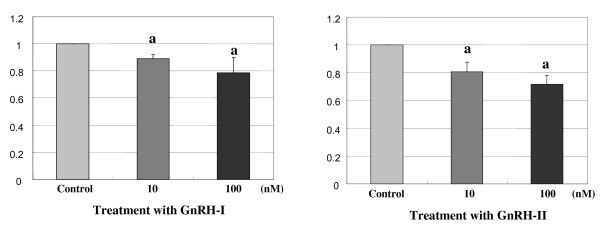
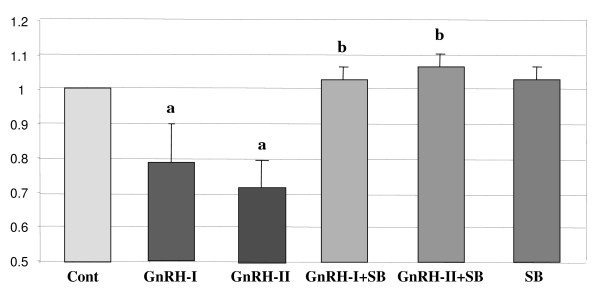
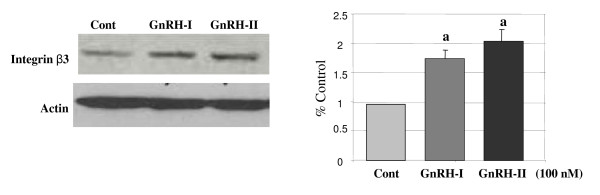
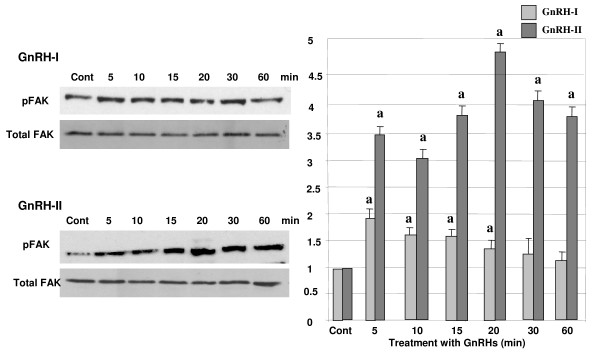
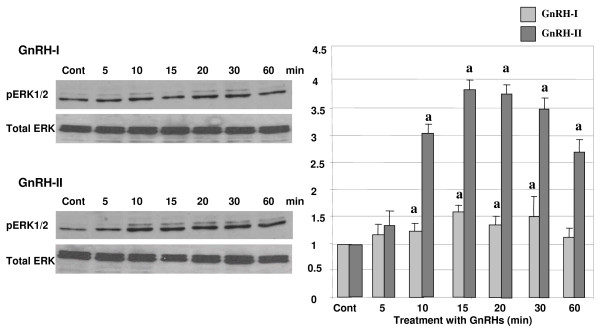
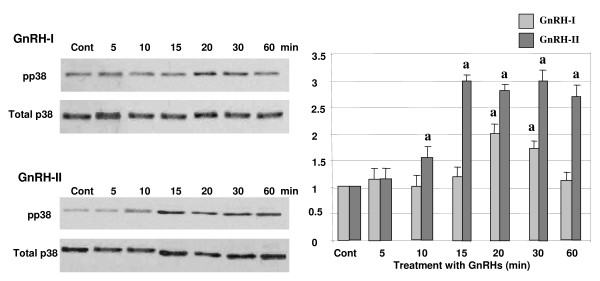
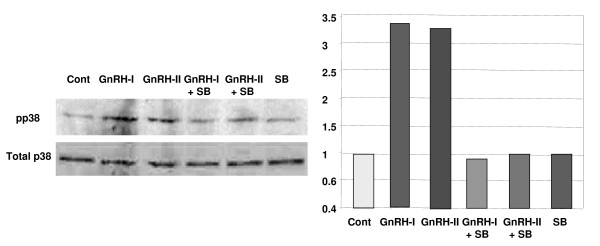
Endometrial carcinoma is the most common neoplasm of the female genital tract, accounting for nearly one half of all gynecologic cancers in the Western world. Although intensive research on pathological phenomena of endometrial cancer is currently going on, but exact cause and biological aspects of this disease are not well described yet. In addition to well-documented roles of gonadotropin-releasing hormone (GnRH) in hypopituitary ovarian (HPO) axis, the agonistic or antagonistic analogs (or both) of GnRH have been shown to inhibit the proliferation of a variety of human gynecologic cancers. Thus, in the present study, we further examined the possibility that GnRH induces integrin beta3 and activation of focal adhesion kinase (FAK) through mitogen-activated protein kinases (MAPKs), ERK1/2 and p38, to inhibit the growth of HEC1A endometrial cancer cell line. As a result, both GnRH-I and GnRH-II resulted in a significant increase in integrin beta3 expression and evoked the activation of FAK in a time-dependent manner in these cells. In addition, these analogs induced an activation of ERK1/2 and p38 MAPK in a time-dependent manner as downstream pathways of FAK. It appears that GnRH-II has much greater effect on the activation of FAK, ERK1/2 and p38 compared to GnRH-I in these cells. Further, we demonstrated that the growth inhibition of HEC1A cells by GnRH-I or GnRH-II is involved in the activation of integrin-FAK and ERK1/2 and p38 MAPK pathways. Taken together, these results suggest that GnRH may be involved in the inhibition of endometrial cancer cell growth via activation of integrin beta3 and FAK as a direct effect. This knowledge could contribute to a better understanding of the mechanisms implicated in the therapeutic action of GnRH and its biomedical application for the treatment against endometrial cancer.
子宫内膜癌是女性生殖道最常见的肿瘤,约占西方世界所有妇科癌症的一半。尽管目前正在对子宫内膜癌的病理现象进行深入研究,但这种疾病的确切原因和生物学方面尚未得到很好的描述。除了众所周知的促性腺激素释放激素 (GnRH) 在垂体卵巢 (HPO) 轴中的作用外, GnRH 的激动剂或拮抗剂(或两者)已被证明可抑制多种妇科癌症的增殖。因此,在本研究中,我们进一步研究了 GnRH 是否通过丝裂原活化蛋白激酶 (MAPK)、ERK1/2 和 p38 诱导整合素β3 的表达和粘着斑激酶 (FAK) 的激活,从而抑制 HEC1A 子宫内膜癌细胞系的生长。结果,GnRH-I 和 GnRH-II 均导致整合素β3 的表达显著增加,并以时间依赖性方式在这些细胞中引发 FAK 的激活。此外,这些类似物以时间依赖性方式诱导 ERK1/2 和 p38 MAPK 的激活,作为 FAK 的下游途径。似乎 GnRH-II 对 FAK、ERK1/2 和 p38 的激活作用比对这些细胞中 GnRH-I 的作用更大。此外,我们证明 GnRH-I 或 GnRH-II 对 HEC1A 细胞生长的抑制作用涉及整合素-FAK 和 ERK1/2 和 p38 MAPK 途径的激活。总之,这些结果表明 GnRH 可能通过激活整合素β3 和 FAK 参与抑制子宫内膜癌细胞生长,这是一种直接作用。这些知识可能有助于更好地理解 GnRH 治疗作用所涉及的机制及其在治疗子宫内膜癌方面的生物医学应用。