Shun-Shin Matthew, Thompson Matthew, Heneghan Carl, Perera Rafael, Harnden Anthony, Mant David
Kadoorie Centre, John Radcliffe Hospital, Headington, Oxford OX3 9DU.
BMJ. 2009 Aug 10;339:b3172. doi: 10.1136/bmj.b3172.
To assess the effects of the neuraminidase inhibitors oseltamivir and zanamivir in treatment of children with seasonal influenza and prevention of transmission to children in households.
Systematic review and meta-analysis of data from published and unpublished randomised controlled trials.
Medline and Embase to June 2009, trial registries, and manufacturers and authors of relevant studies. Review methods Eligible studies were randomised controlled trials of neuraminidase inhibitors in children aged </=12 in the community (that is, not admitted to hospital) with confirmed or clinically suspected influenza. Primary outcome measures were time to resolution of illness and incidence of influenza in children living in households with index cases of influenza.
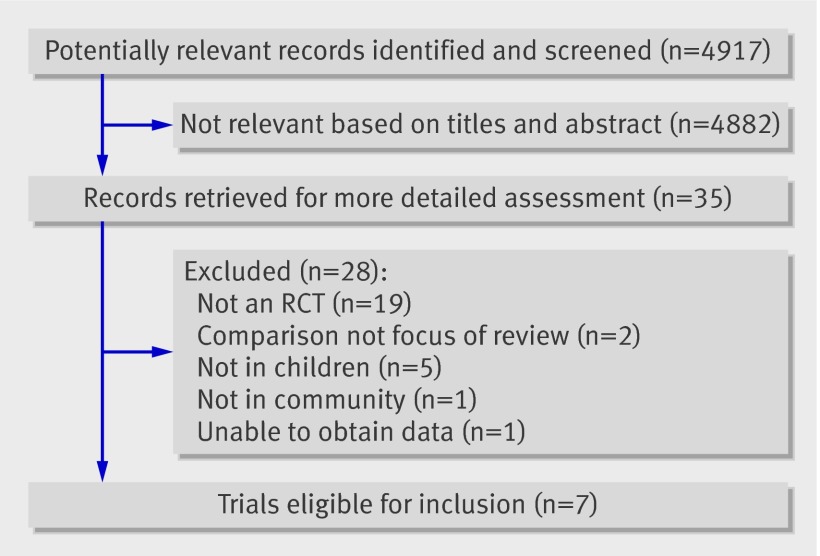
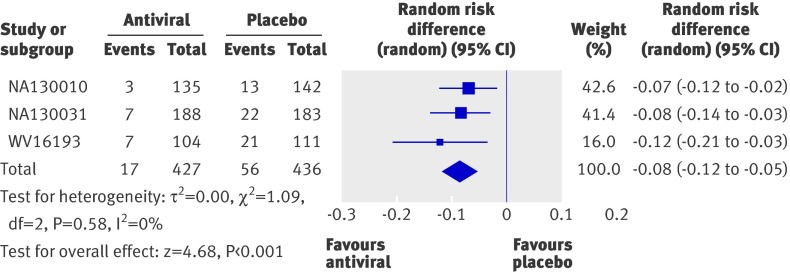
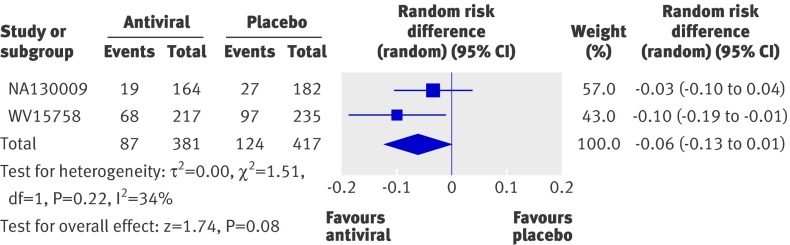
We identified four randomised trials of treatment of influenza (two with oseltamivir, two with zanamivir) involving 1766 children (1243 with confirmed influenza, of whom 55-69% had influenza A), and three randomised trials for postexposure prophylaxis (one with oseltamivir, two with zanamivir) involving 863 children; none of these trials tested efficacy with the current pandemic strain. Treatment trials showed reductions in median time to resolution of symptoms or return to normal activities, or both, of 0.5-1.5 days, which were significant in only two trials. A 10 day course of postexposure prophylaxis with zanamivir or oseltamivir resulted in an 8% (95% confidence interval 5% to 12%) decrease in the incidence of symptomatic influenza. Based on only one trial, oseltamivir did not reduce asthma exacerbations or improve peak flow in children with asthma. Treatment was not associated with reduction in overall use of antibiotics (risk difference -0.30, -0.13 to 0.01). Zanamivir was well tolerated, but oseltamivir was associated with an increased risk of vomiting (0.05, 0.02 to 0.09, number needed to harm=20).
Neuraminidase inhibitors provide a small benefit by shortening the duration of illness in children with seasonal influenza and reducing household transmission. They have little effect on asthma exacerbations or the use of antibiotics. Their effects on the incidence of serious complications, and on the current A/H1N1 influenza strain remain to be determined.
评估神经氨酸酶抑制剂奥司他韦和扎那米韦治疗儿童季节性流感及预防流感在家中传播给儿童的效果。
对已发表和未发表的随机对照试验数据进行系统评价和荟萃分析。
截至2009年6月的Medline和Embase、试验注册库以及相关研究的制造商和作者。
符合条件的研究为社区中(即未住院)确诊或临床疑似流感的12岁及以下儿童使用神经氨酸酶抑制剂的随机对照试验。主要结局指标为疾病缓解时间以及家中有流感指数病例的儿童流感发病率。
我们确定了4项治疗流感的随机试验(2项使用奥司他韦,2项使用扎那米韦),涉及1766名儿童(1243名确诊流感,其中55% - 69%为甲型流感),以及3项暴露后预防的随机试验(1项使用奥司他韦,2项使用扎那米韦),涉及863名儿童;这些试验均未对当前大流行毒株的疗效进行测试。治疗试验显示症状缓解或恢复正常活动的中位时间减少了0.5 - 1.5天,只有两项试验结果显著。扎那米韦或奥司他韦进行10天的暴露后预防可使有症状流感的发病率降低8%(95%置信区间为5%至12%)。仅基于一项试验,奥司他韦并未降低哮喘儿童的哮喘发作次数或改善其峰值呼气流速。治疗与抗生素总体使用量的减少无关(风险差值 - 0.30,- 0.13至0.01)。扎那米韦耐受性良好,但奥司他韦与呕吐风险增加有关(0.05,0.02至0.09,伤害所需人数 = 20)。
神经氨酸酶抑制剂通过缩短季节性流感儿童的病程和减少家庭传播带来微小益处。它们对哮喘发作或抗生素使用影响不大。它们对严重并发症发生率以及当前甲型H1N1流感毒株的影响仍有待确定。