Yamakoshi Kimi, Takahashi Akiko, Hirota Fumiko, Nakayama Rika, Ishimaru Naozumi, Kubo Yoshiaki, Mann David J, Ohmura Masako, Hirao Atsushi, Saya Hideyuki, Arase Seiji, Hayashi Yoshio, Nakao Kazuki, Matsumoto Mitsuru, Ohtani Naoko, Hara Eiji
The Cancer Institute, Japanese Foundation for Cancer Research, Koto-ku, Tokyo 135-8550, Japan.
J Cell Biol. 2009 Aug 10;186(3):393-407. doi: 10.1083/jcb.200904105.
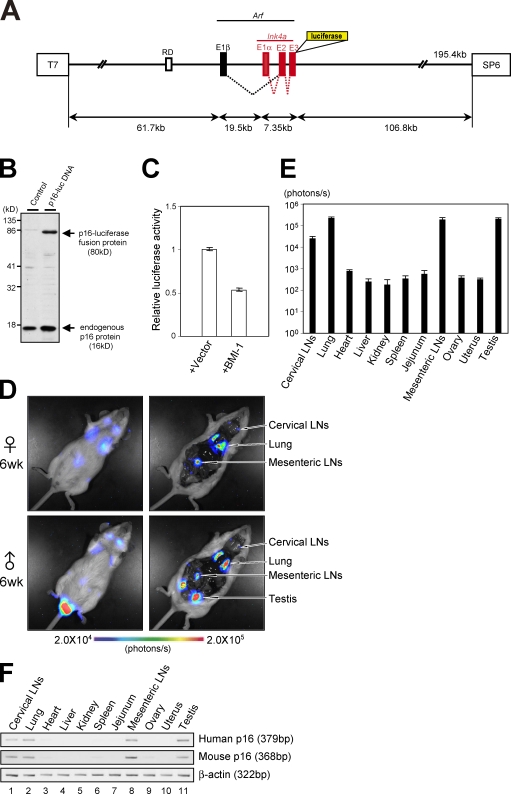
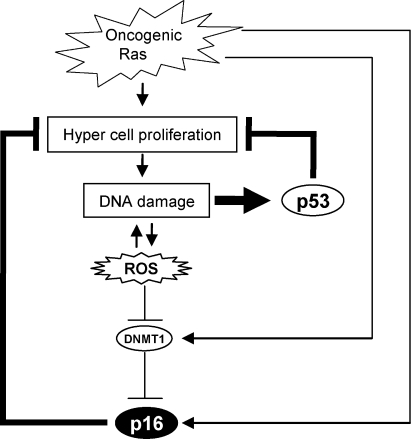
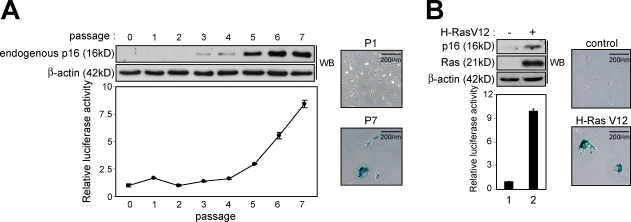
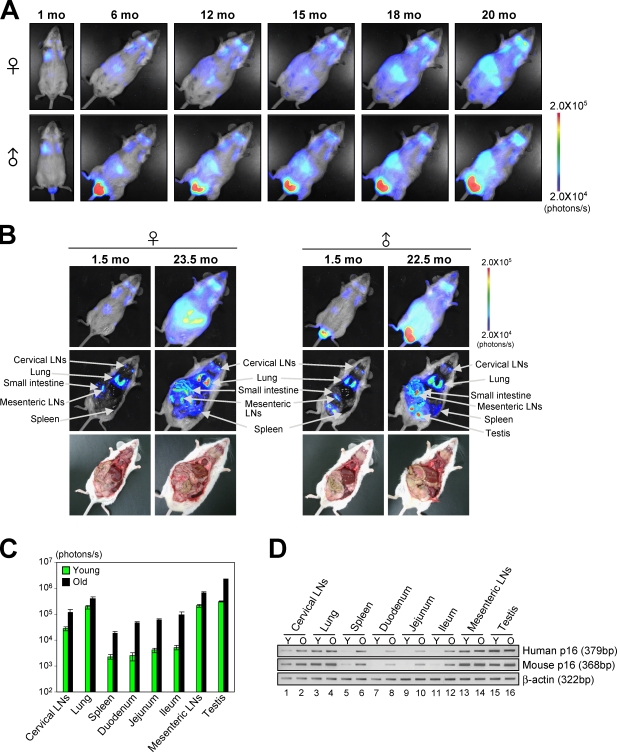
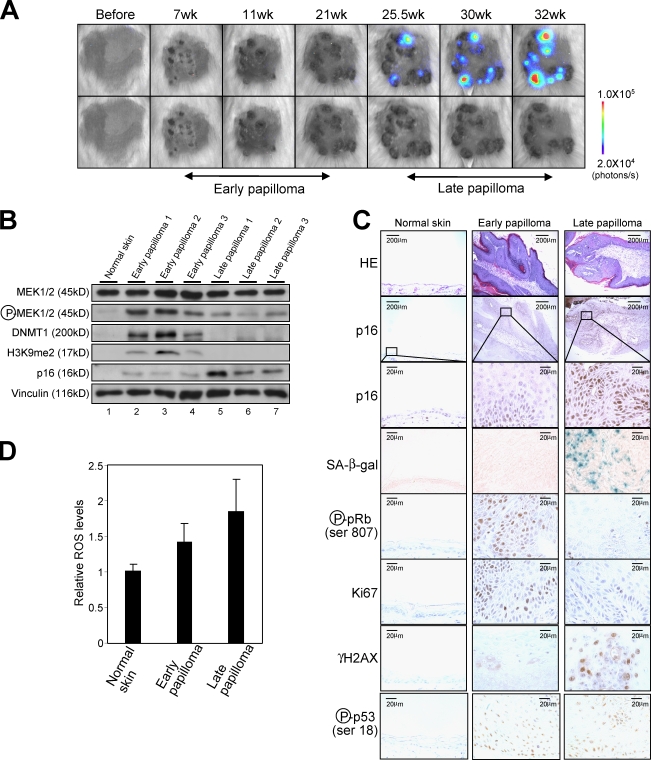
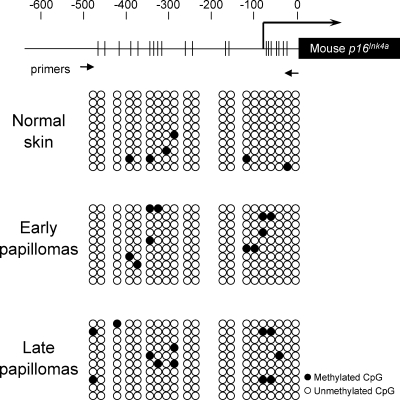
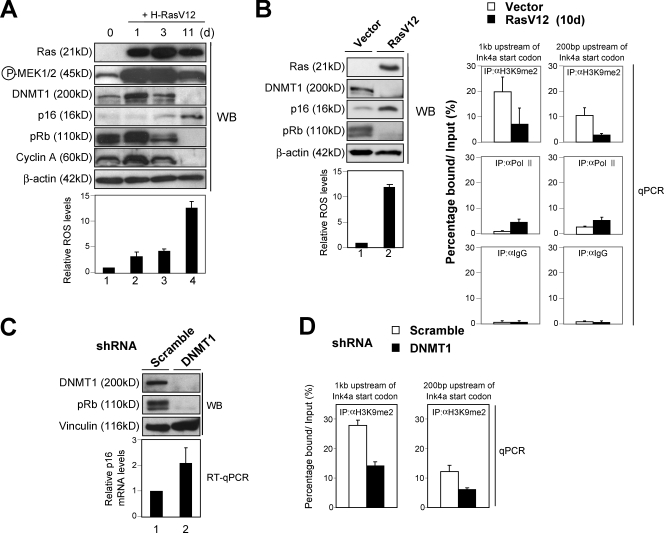
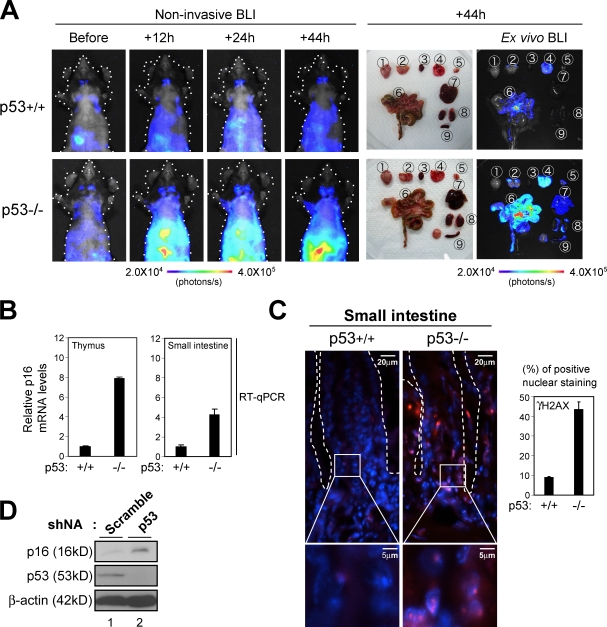
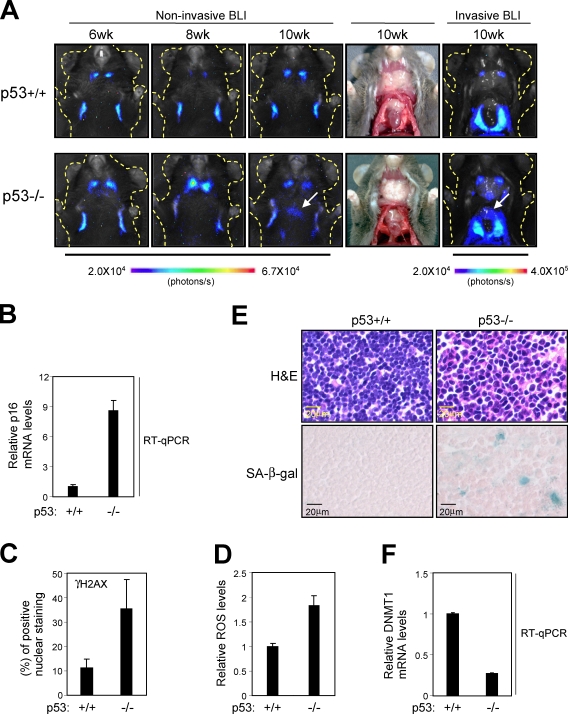
Expression of the p16(Ink4a) tumor suppressor gene, a sensor of oncogenic stress, is up-regulated by a variety of potentially oncogenic stimuli in cultured primary cells. However, because p16(Ink4a) expression is also induced by tissue culture stress, physiological mechanisms regulating p16(Ink4a) expression remain unclear. To eliminate any potential problems arising from tissue culture-imposed stress, we used bioluminescence imaging for noninvasive and real-time analysis of p16(Ink4a) expression under various physiological conditions in living mice. In this study, we show that oncogenic insults such as ras activation provoke epigenetic derepression of p16(Ink4a) expression through reduction of DNMT1 (DNA methyl transferase 1) levels as a DNA damage response in vivo. This pathway is accelerated in the absence of p53, indicating that p53 normally holds the p16(Ink4a) response in check. These results unveil a backup tumor suppressor role for p16(Ink4a) in the event of p53 inactivation, expanding our understanding of how p16(Ink4a) expression is regulated in vivo.
p16(Ink4a)肿瘤抑制基因作为致癌应激的一种感受器,其表达在培养的原代细胞中会被多种潜在致癌刺激上调。然而,由于p16(Ink4a)的表达也会被组织培养应激所诱导,因此调节p16(Ink4a)表达的生理机制仍不清楚。为了消除组织培养应激带来的任何潜在问题,我们利用生物发光成像技术对活体小鼠在各种生理条件下p16(Ink4a)的表达进行非侵入性实时分析。在本研究中,我们发现致癌性损伤(如ras激活)会通过降低DNMT1(DNA甲基转移酶1)水平,作为体内DNA损伤反应,引发p16(Ink4a)表达的表观遗传去抑制。在缺乏p53的情况下,这一途径会加速,表明p53通常会抑制p16(Ink4a)反应。这些结果揭示了在p53失活情况下p16(Ink4a)的备用肿瘤抑制作用,扩展了我们对p16(Ink4a)在体内表达调控方式的理解。