Winograd-Katz Sabina E, Itzkovitz Shalev, Kam Zvi, Geiger Benjamin
Department of Molecular Cell Biology, Weizmann Institute of Science, Rehovot 76100, Israel.
J Cell Biol. 2009 Aug 10;186(3):423-36. doi: 10.1083/jcb.200901105.
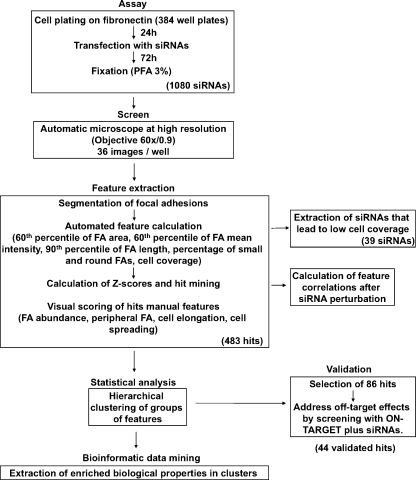
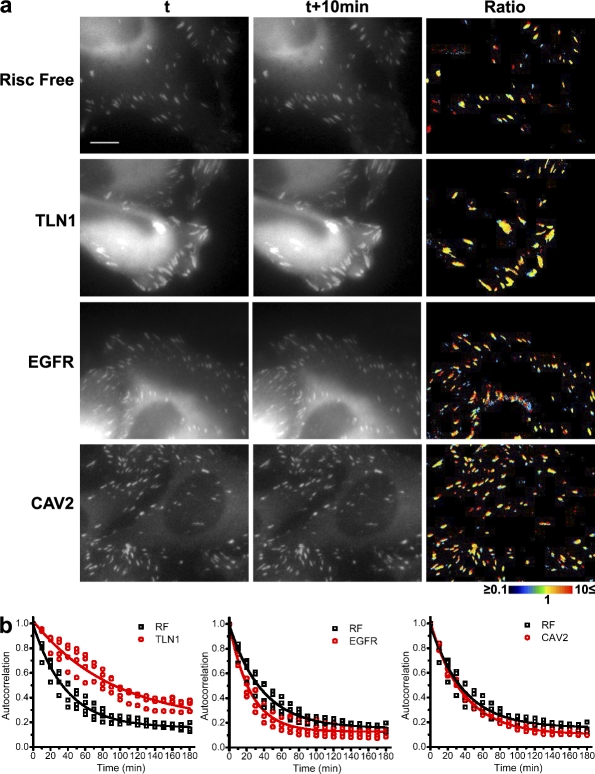
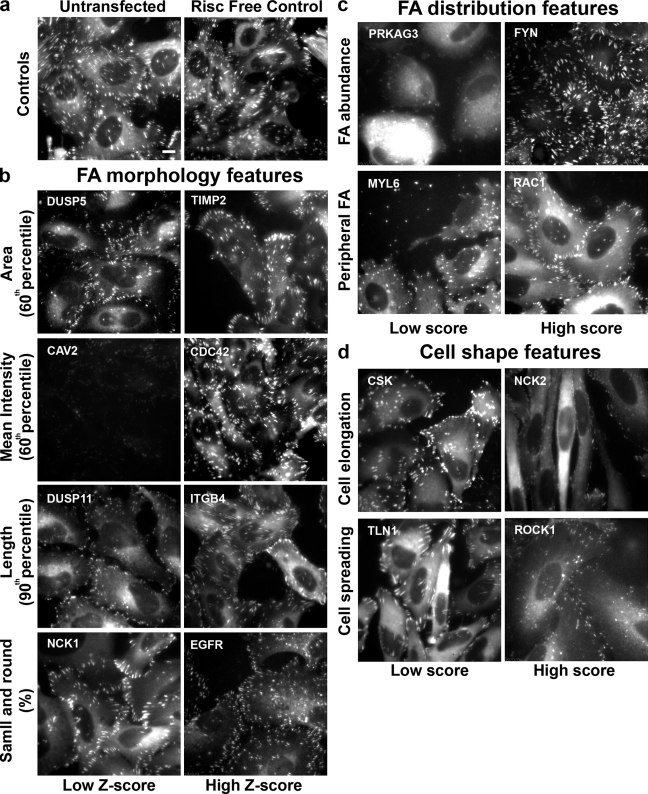
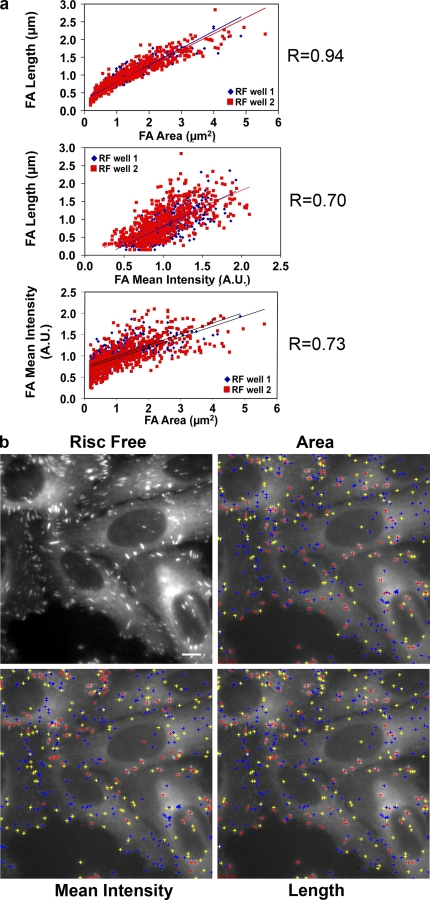
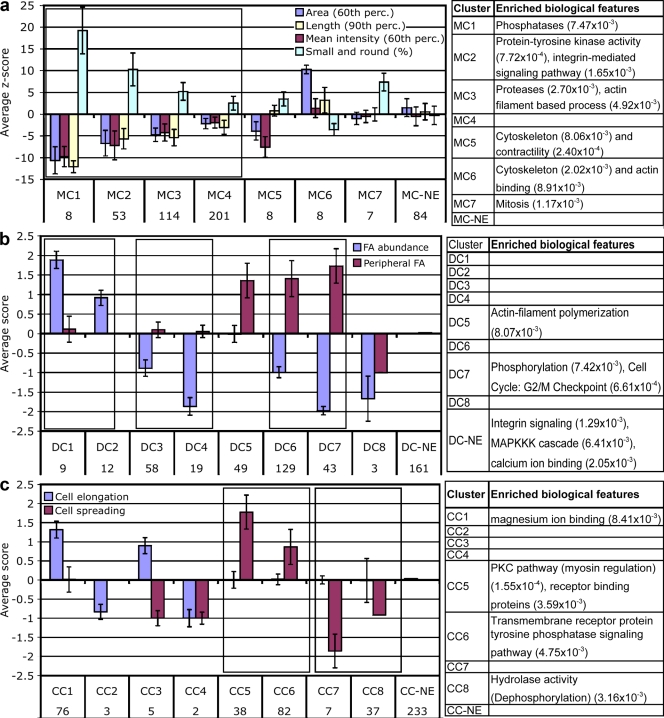
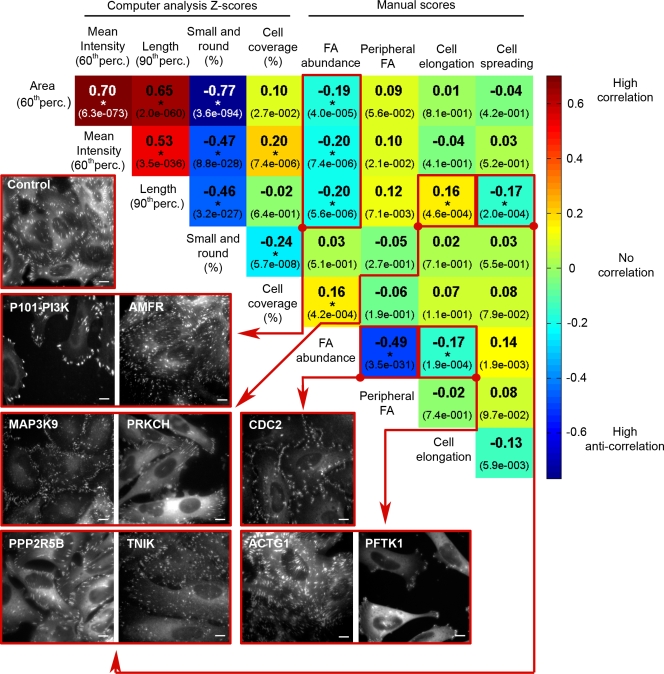
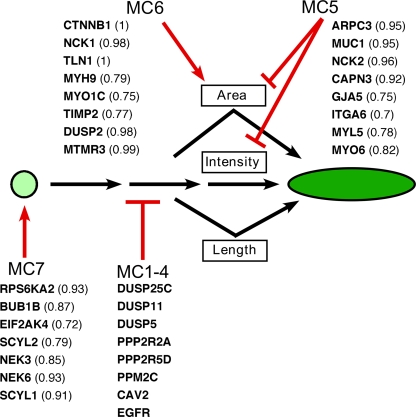
Cell adhesion to the extracellular matrix is mediated by elaborate networks of multiprotein complexes consisting of adhesion receptors, cytoskeletal components, signaling molecules, and diverse adaptor proteins. To explore how specific molecular pathways function in the assembly of focal adhesions (FAs), we performed a high-throughput, high-resolution, microscopy-based screen. We used small interfering RNAs (siRNAs) to target human kinases, phosphatases, and migration- and adhesion-related genes. Multiparametric image analysis of control and of siRNA-treated cells revealed major correlations between distinct morphological FA features. Clustering analysis identified different gene families whose perturbation induced similar effects, some of which uncoupled the interfeature correlations. Based on these findings, we propose a model for the molecular hierarchy of FA formation, and tested its validity by dynamic analysis of FA formation and turnover. This study provides a comprehensive information resource on the molecular regulation of multiple cell adhesion features, and sheds light on signaling mechanisms regulating the formation of integrin adhesions.
细胞与细胞外基质的黏附是由多蛋白复合物的精细网络介导的,这些复合物由黏附受体、细胞骨架成分、信号分子和多种衔接蛋白组成。为了探究特定分子途径在粘着斑(FAs)组装中的作用,我们进行了一项基于显微镜的高通量、高分辨率筛选。我们使用小干扰RNA(siRNAs)靶向人类激酶、磷酸酶以及与迁移和黏附相关的基因。对对照细胞和经siRNA处理的细胞进行多参数图像分析,揭示了不同形态学粘着斑特征之间的主要相关性。聚类分析确定了不同的基因家族,其扰动会产生相似的效应,其中一些效应解除了特征间的相关性。基于这些发现,我们提出了一个粘着斑形成的分子层次模型,并通过对粘着斑形成和周转的动态分析来检验其有效性。这项研究提供了关于多种细胞黏附特征分子调控的全面信息资源,并阐明了调节整合素黏附形成的信号机制。