Akagi Tadayuki, Ito Tetsuo, Kato Motohiro, Jin Zhe, Cheng Yulan, Kan Takatsugu, Yamamoto Go, Olaru Alexandru, Kawamata Norihiko, Boult Jessica, Soukiasian Harmik J, Miller Carl W, Ogawa Seishi, Meltzer Stephen J, Koeffler H Phillip
Division of Hematology and Oncology, Cedars-Sinai Medical Center, UCLA School of Medicine, Los Angeles, CA, USA.
Int J Cancer. 2009 Nov 15;125(10):2349-59. doi: 10.1002/ijc.24620.
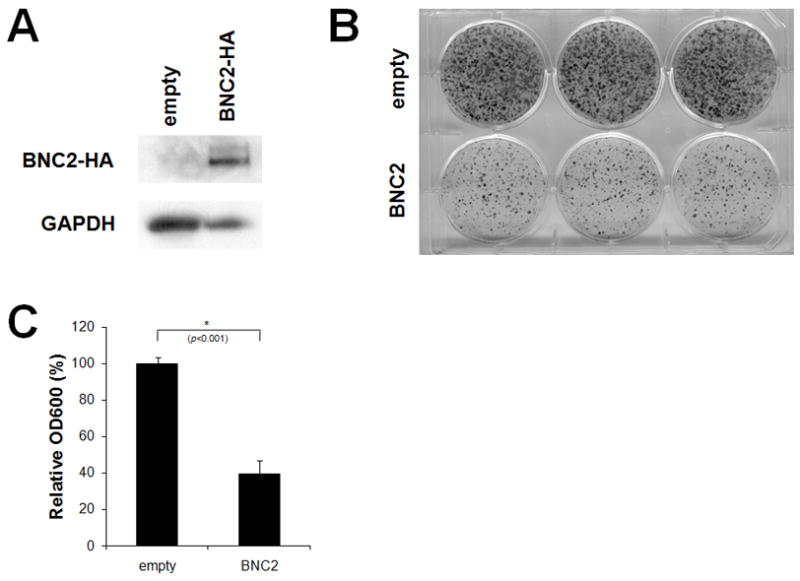
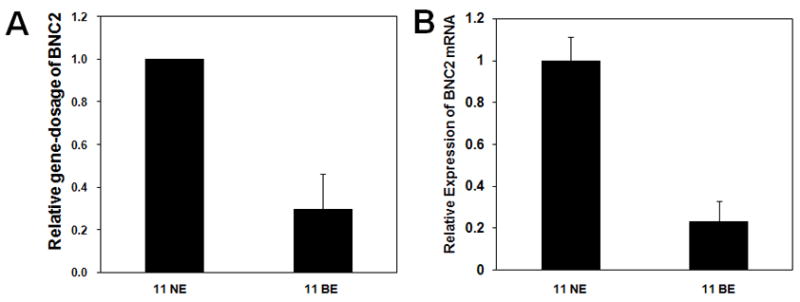
Barrett's esophagus (BE) is a metaplastic condition caused by chronic gastroesophageal reflux which represents an early step in the development of esophageal adenocarcinoma (EAC). Single-nucleotide polymorphism microarray (SNP-chip) analysis is a novel, precise, high-throughput approach to examine genomic alterations in neoplasia. Using 250K SNP-chips, we examined the neoplastic progression of BE to EAC, studying 11 matched sample sets: 6 sets of normal esophagus (NE), BE and EAC, 4 of NE and BE and 1 of NE and EAC. Six (60%) of 10 total BE samples and 4 (57%) of 7 total EAC samples exhibited 1 or more genomic abnormalities comprising deletions, duplications, amplifications and copy-number-neutral loss of heterozygosity (CNN-LOH). Several shared abnormalities were identified, including chromosome 9p CNN-LOH [2 BE samples (20%)], deletion of CDKN2A [4 BE samples (40%)] and amplification of 17q12-21.2 involving the ERBB2, RARA and TOP2A genes [3.1 Mb, 2 EAC (29%)]. Interestingly, 1 BE sample contained a homozygous deletion spanning 9p22.3-p22.2 (1.2 Mb): this region harbors only 1 known gene, basonuclin 2 (BNC2). Real-time PCR analysis confirmed the deletion of this gene and decreased the expression of BNC2 mRNA in the BE sample. Furthermore, transfection and stable expression of BNC2 caused growth arrest of OE33 EAC cells, suggesting that BNC2 functions as a tumor suppressor gene in the esophagus and that deletion of this gene occurs during the development of EAC. Thus, this SNP-chip analysis has identified several early cytogenetic events and novel candidate cancer-related genes that are potentially involved in the evolution of BE to EAC.
巴雷特食管(BE)是一种由慢性胃食管反流引起的化生状态,是食管腺癌(EAC)发展的早期阶段。单核苷酸多态性微阵列(SNP芯片)分析是一种用于检测肿瘤基因组改变的新型、精确、高通量方法。我们使用250K SNP芯片,研究了BE向EAC的肿瘤进展,分析了11组匹配样本:6组正常食管(NE)、BE和EAC样本,4组NE和BE样本,以及1组NE和EAC样本。在总共10个BE样本中有6个(60%),在总共7个EAC样本中有4个(57%)表现出1种或更多种基因组异常,包括缺失、重复、扩增以及拷贝数中性杂合性缺失(CNN-LOH)。我们鉴定出了几种共同的异常情况,包括9号染色体p臂CNN-LOH [2个BE样本(20%)]、CDKN2A缺失 [4个BE样本(40%)] 以及涉及ERBB2、RARA和TOP2A基因的17q12 - 21.2扩增 [3.1 Mb,2个EAC样本(29%)]。有趣的是,1个BE样本包含一个跨越9p22.3 - p22.2(1.2 Mb)的纯合缺失:该区域仅包含1个已知基因,即锌指蛋白2(BNC2)。实时PCR分析证实了该基因的缺失,并降低了BE样本中BNC2 mRNA的表达。此外,BNC2的转染和稳定表达导致OE33 EAC细胞生长停滞,这表明BNC2在食管中作为肿瘤抑制基因发挥作用,并且该基因的缺失发生在EAC的发展过程中。因此,这种SNP芯片分析鉴定出了几种早期细胞遗传学事件以及可能参与BE向EAC演变的新型候选癌症相关基因。