Mabuchi Seiji, Kawase Chiaki, Altomare Deborah A, Morishige Kenichirou, Sawada Kenjiro, Hayashi Masami, Tsujimoto Masahiko, Yamoto Mareo, Klein-Szanto Andres J, Schilder Russell J, Ohmichi Masahide, Testa Joseph R, Kimura Tadashi
Department of Obstetrics and Gynecology, Osaka University Graduate School of Medicine, Suita, Osaka, Japan.
Clin Cancer Res. 2009 Sep 1;15(17):5404-13. doi: 10.1158/1078-0432.CCR-09-0365. Epub 2009 Aug 18.
Mammalian target of rapamycin (mTOR) plays a central role in cell proliferation and is regarded as a promising target in cancer therapy, including for ovarian cancer. This study aimed to examine the role of mTOR as a therapeutic target in clear cell carcinoma of the ovary, which is regarded as an aggressive, chemoresistant histologic subtype.
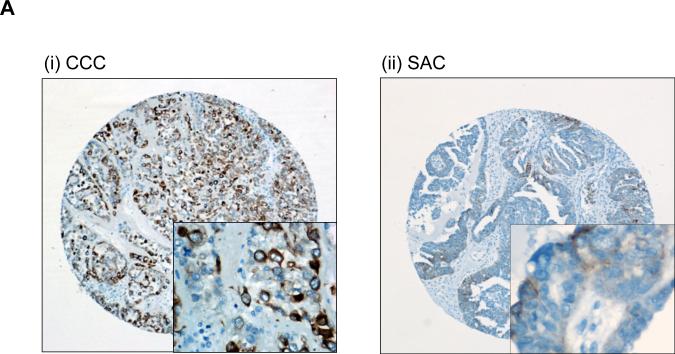
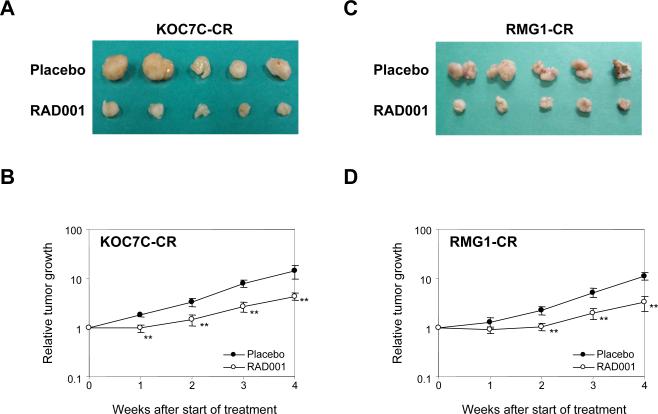
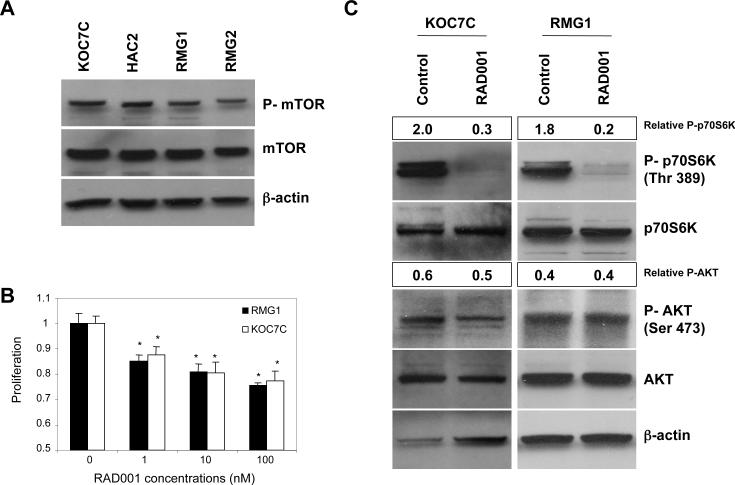
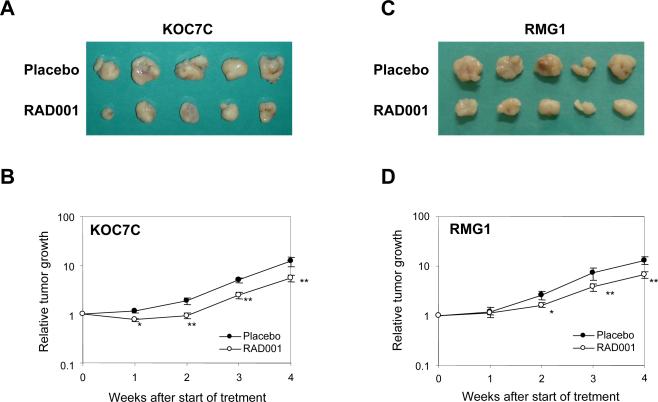
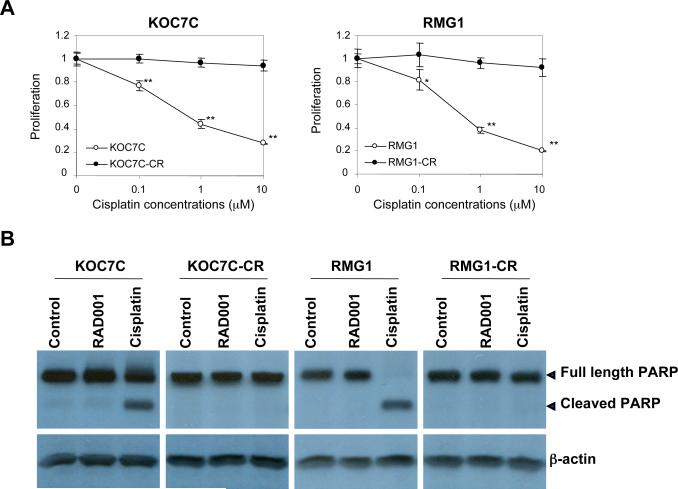
Using tissue microarrays of 98 primary ovarian cancers (52 clear cell carcinomas and 46 serous adenocarcinomas), the expression of phospho-mTOR was assessed by immunohistochemistry. Then, the growth-inhibitory effect of mTOR inhibition by RAD001 (everolimus) was examined using two pairs of cisplatin-sensitive parental (RMG1 and KOC7C) and cisplatin-resistant human clear cell carcinoma cell lines (RMG1-CR and KOC7C-CR) both in vitro and in vivo.
Immunohistochemical analysis showed that mTOR was more frequently activated in clear cell carcinomas than in serous adenocarcinomas (86.6% versus 50%). Treatment with RAD001 markedly inhibited the growth of both RMG1 and KOC7C cells both in vitro and in vivo. Increased expression of phospho-mTOR was observed in cisplatin-resistant RMG1-CR and KOC7C-CR cells, compared with the respective parental cells. This increased expression of phospho-mTOR in cisplatin-resistant cells was associated with increased activation of AKT. RMG1-CR and KOC7C-CR cells showed greater sensitivity to RAD001 than did parental RMG1 and KOC7C cells, respectively, in vitro and in vivo.
mTOR is frequently activated in clear cell carcinoma and can be a promising therapeutic target in the management of clear cell carcinoma. Moreover, mTOR inhibition by RAD001 may be efficacious as a second-line treatment of recurrent disease in patients previously treated with cisplatin.
雷帕霉素哺乳动物靶点(mTOR)在细胞增殖中起核心作用,被视为癌症治疗(包括卵巢癌治疗)中一个有前景的靶点。本研究旨在探讨mTOR作为治疗靶点在卵巢透明细胞癌中的作用,卵巢透明细胞癌被认为是一种侵袭性、化疗耐药的组织学亚型。
使用98例原发性卵巢癌(52例透明细胞癌和46例浆液性腺癌)的组织芯片,通过免疫组织化学评估磷酸化mTOR的表达。然后,使用两对顺铂敏感的亲本细胞系(RMG1和KOC7C)和顺铂耐药的人透明细胞癌细胞系(RMG1-CR和KOC7C-CR),在体外和体内研究RAD001(依维莫司)抑制mTOR的生长抑制作用。
免疫组织化学分析显示,mTOR在透明细胞癌中的激活频率高于浆液性腺癌(86.6%对50%)。RAD001治疗在体外和体内均显著抑制RMG1和KOC7C细胞的生长。与各自的亲本细胞相比,在顺铂耐药的RMG1-CR和KOC7C-CR细胞中观察到磷酸化mTOR的表达增加。顺铂耐药细胞中磷酸化mTOR的这种增加表达与AKT的激活增加有关。在体外和体内,RMG1-CR和KOC7C-CR细胞分别比亲本RMG1和KOC7C细胞对RAD001表现出更高的敏感性。
mTOR在透明细胞癌中频繁激活,可能是透明细胞癌治疗中有前景的靶点。此外,RAD001抑制mTOR作为先前接受顺铂治疗患者复发性疾病的二线治疗可能有效。