School of Life Sciences, Jawaharlal Nehru University, New Delhi, India.
PLoS One. 2009 Aug 27;4(8):e6805. doi: 10.1371/journal.pone.0006805.
Glyoxalase I is a metalloenzyme of the glyoxalase pathway that plays a central role in eliminating the toxic metabolite methyglyoxal. The protozoan parasite Leishmania donovani possesses a unique trypanothione dependent glyoxalase system.
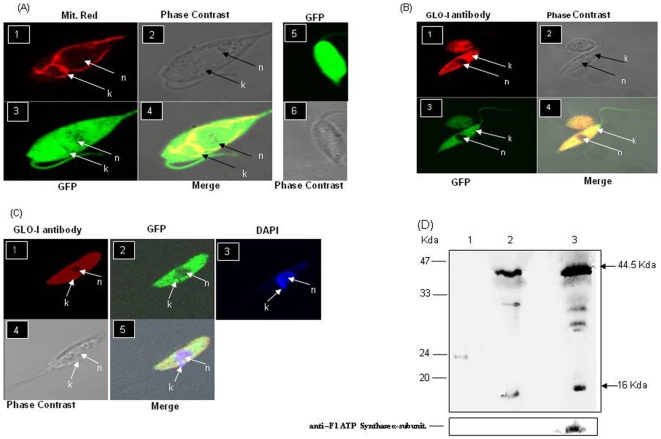
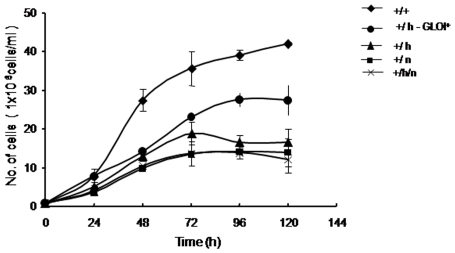
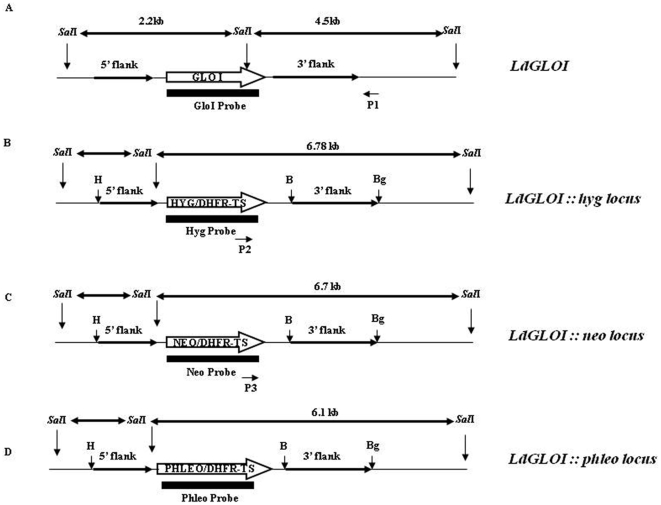
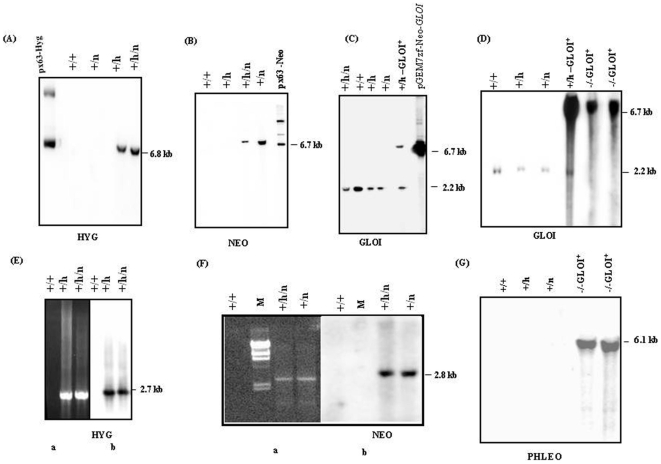
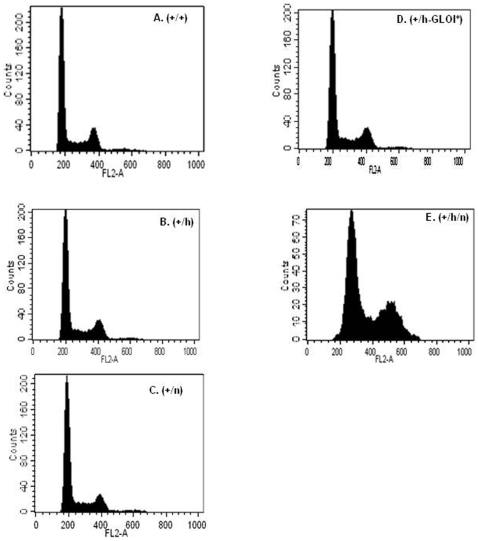
Analysis of the L. donovani GLOI sequence predicted a mitochondrial targeting sequence, suggesting that the enzyme is likely to be targeted to the mitochondria. In order to determine definitively the intracellular localization of GLOI in L. donovani, a full-length GLOI gene was fused to green fluorescent protein (GFP) gene to generate a chimeric construct. Confocal microscopy of L. donovani promastigotes carrying this chimeric construct and immunofluorescence microscopy using anti-GLOI antibodies demonstrated that GLOI is localized in the kinetoplast of the parasite apart from the cytosol. To study the physiological role of GLOI in Leishmania, we first created promastigote mutants heterozygous for GLOI by targeted gene replacement using either hygromycin or neomycin phosphotransferases as selectable markers. Heterozygous mutants of L. donovani display a slower growth rate, have lower glyoxalase I activity and have reduced ability to detoxify methylglyoxal in comparison to the wild-type parasites. Complementation of the heterozygous mutant with an episomal GLOI construct showed the restoration of heterozygous mutant phenotype nearly fully to that of the wild-type. Null mutants were obtained only after GLOI was expressed from an episome in heterozygous mutants.
We for the first time report localization of GLOI in L. donovani in the kinetoplast. To study the physiological role of GLOI in Leishmania, we have generated GLOI attenuated strains by targeted gene replacement and report that GLOI is likely to be an important gene since GLOI mutants in L. donovani showed altered phenotype. The present data supports that the GLOI plays an essential role in the survival of this pathogenic organism and that inhibition of the enzyme potentiates the toxicity of methylglyoxal.
糖氧还蛋白 I 是糖氧还酶途径中的一种金属酶,在消除有毒代谢物甲基乙二醛方面发挥着核心作用。原生动物寄生虫利什曼原虫具有独特的依赖于三磷酸鸟苷的糖氧还酶系统。
对 L. donovani GLOI 序列的分析预测了一个线粒体靶向序列,表明该酶可能被靶向到线粒体。为了明确确定 L. donovani 中 GLOI 的细胞内定位,将全长 GLOI 基因融合到绿色荧光蛋白(GFP)基因中,生成嵌合构建体。携带该嵌合构建体的 L. donovani 前鞭毛体的共聚焦显微镜和使用抗 GLOI 抗体的免疫荧光显微镜显示,GLOI 定位于寄生虫的动基体,而不是细胞质。为了研究 GLOI 在利什曼原虫中的生理作用,我们首先使用潮霉素或新霉素磷酸转移酶作为选择性标记物,通过靶向基因替换创建了 GLOI 杂合突变体的前鞭毛体突变体。与野生型寄生虫相比,L. donovani 的杂合突变体生长速度较慢,糖氧还酶 I 活性较低,解毒甲基乙二醛的能力降低。用外源性 GLOI 构建体对杂合突变体进行互补,显示杂合突变体表型几乎完全恢复到野生型。只有在 GLOI 从杂合突变体中的外源性表达后,才能获得 GLOI 的缺失突变体。
我们首次报道了 GLOI 在 L. donovani 中的动基体中的定位。为了研究 GLOI 在利什曼原虫中的生理作用,我们通过靶向基因替换生成了 GLOI 减弱的菌株,并报告 GLOI 可能是一个重要的基因,因为 L. donovani 的 GLOI 突变体表现出改变的表型。目前的数据支持 GLOI 在这种致病性生物体的存活中发挥着重要作用,并且抑制该酶增强了甲基乙二醛的毒性。