Van Slambrouck Severine, Hilkens John, Bisoffi Marco, Steelant Wim F A
Department of Chemistry, Laboratory of Biochemical and Biomedical Research, New Mexico Tech, Socorro, NM 87801, USA.
Int J Oncol. 2009 Oct;35(4):693-9. doi: 10.3892/ijo_00000381.
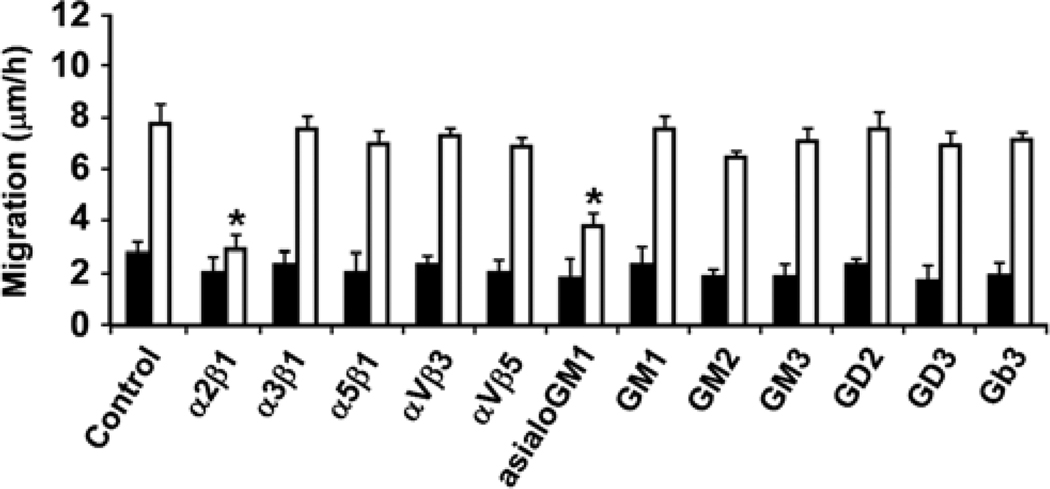
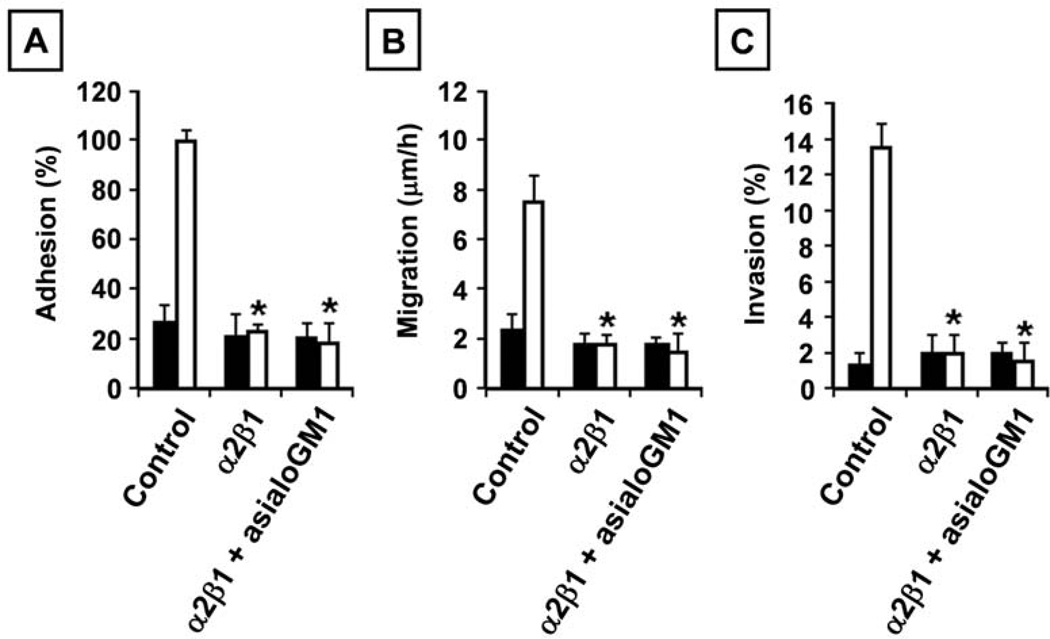
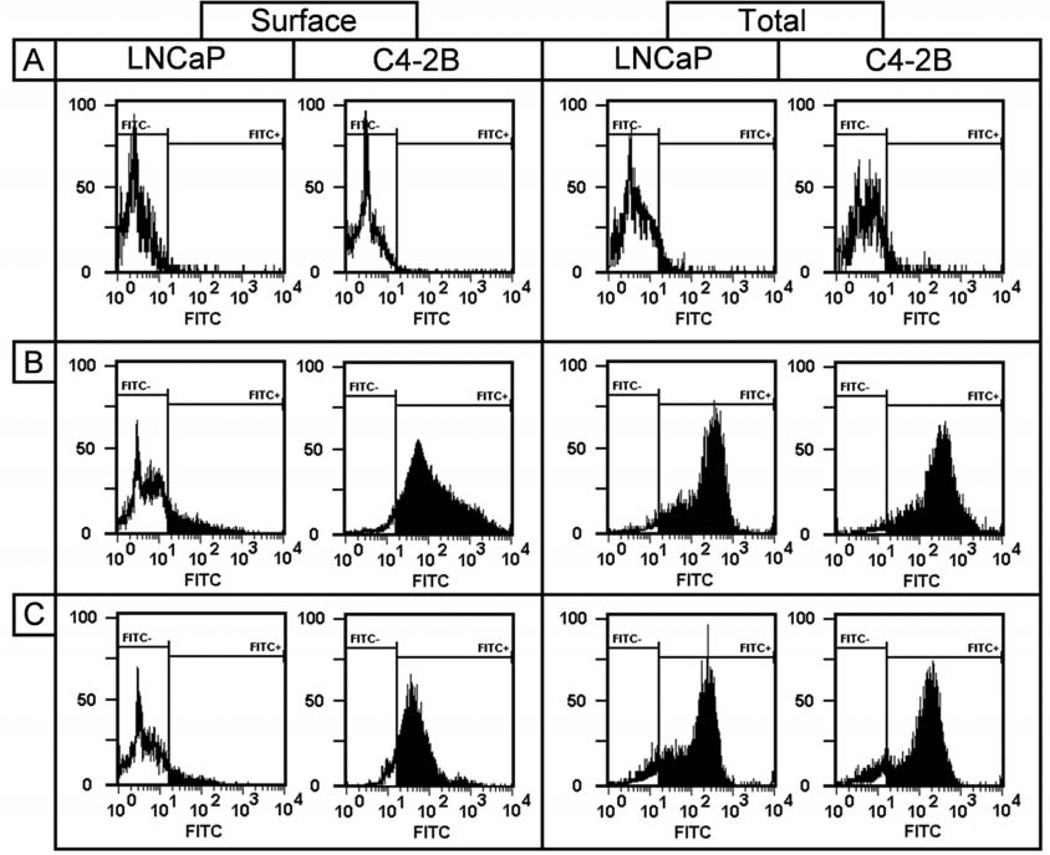
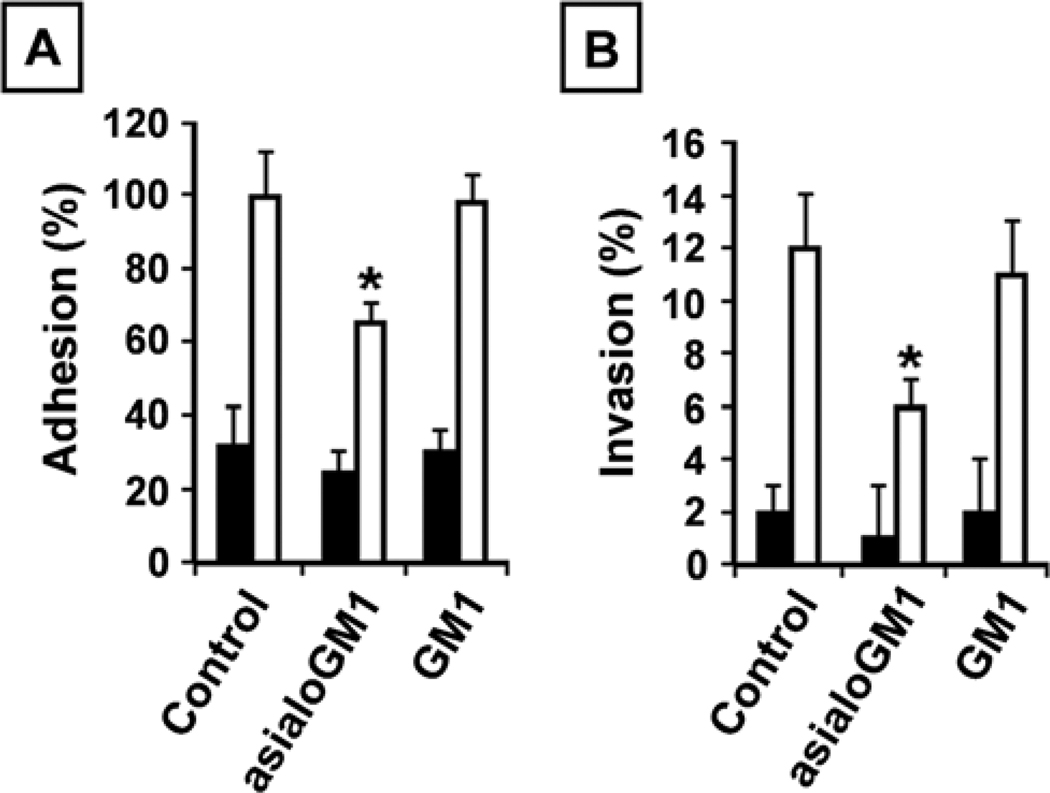
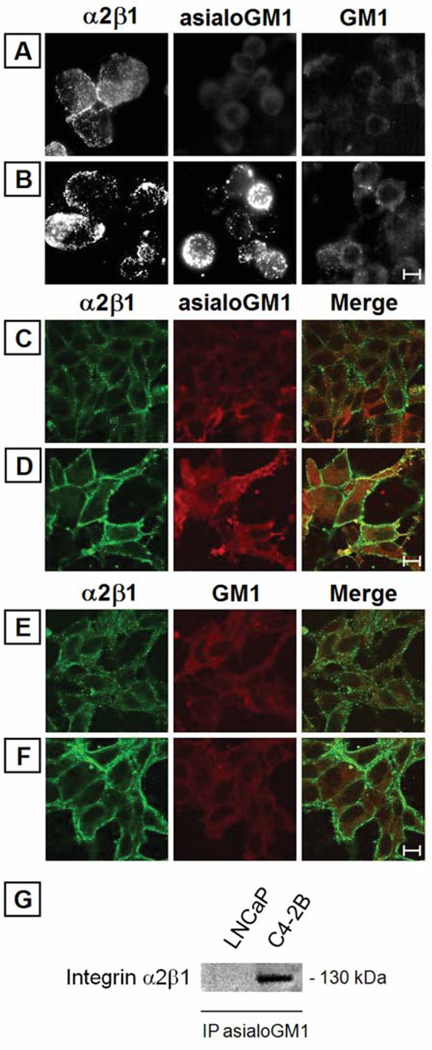
The most lethal aspect of cancer is the metastatic spread of primary tumors to distant sites. Any mechanism revealed is a target for therapy. In our previous studies, we reported that the invasive activity of the bone metastatic C4-2B prostate cancer cells could be ascribed to the reorganization of the alpha2beta1 integrin receptor and the alpha2 subunit-mediated association and activation of downstream signaling towards the activation of MMPs. In the present study, we demonstrate that expression of asialoGM1 in C4-2B cells correlates with cancer progression by influencing adhesion, migration and invasion, via reorganization of asialoGM1 and colocalization with integrin alpha2beta1. These observations reveal an uncharacterized complex of asialoGM1 with the integrin alpha2beta1 receptor promoting cancer metastatic potential through the previously identified integrin-mediated signaling pathway. The present findings promote further understanding of mechanisms by which glycosphingolipids modulate malignant properties and the results obtained here propose novel directions for future study.
癌症最致命的方面是原发性肿瘤向远处转移。任何被揭示的机制都是治疗的靶点。在我们之前的研究中,我们报道骨转移性C4-2B前列腺癌细胞的侵袭活性可归因于α2β1整合素受体的重组以及α2亚基介导的下游信号的关联和激活,进而激活基质金属蛋白酶。在本研究中,我们证明C4-2B细胞中脱唾液酸GM1的表达通过影响黏附、迁移和侵袭与癌症进展相关,其机制是脱唾液酸GM1的重组以及与整合素α2β1的共定位。这些观察结果揭示了一种未被描述的脱唾液酸GM1与整合素α2β1受体的复合物,该复合物通过先前确定的整合素介导的信号通路促进癌症转移潜能。本研究结果促进了对糖鞘脂调节恶性特性机制的进一步理解,此处获得的结果为未来研究提出了新的方向。