Gondi Christopher S, Talluri Lavanya, Dinh Dzung H, Gujrati Meena, Rao Jasti S
Department of Cancer Biology and Pharmacology, University of Illinois College of Medicine at Peoria, Peoria, IL 61605, USA.
Int J Oncol. 2009 Oct;35(4):851-9. doi: 10.3892/ijo_00000399.
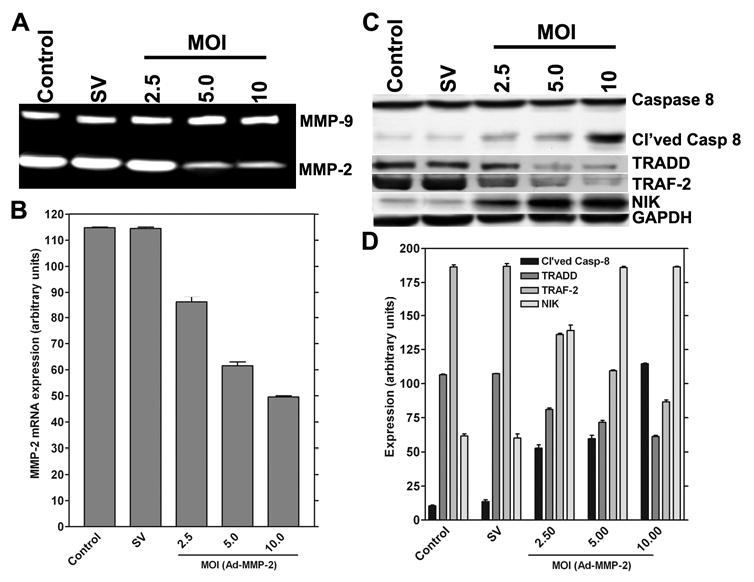
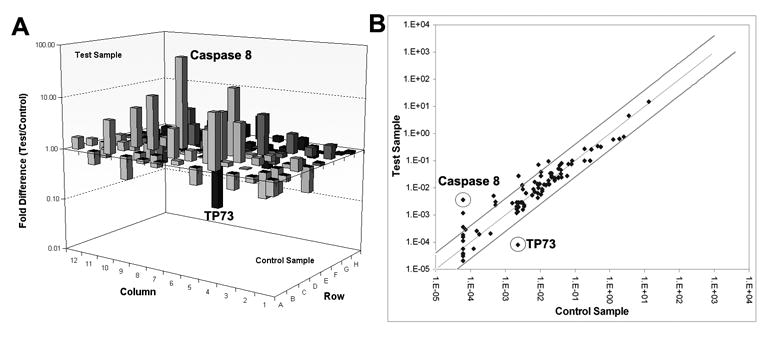
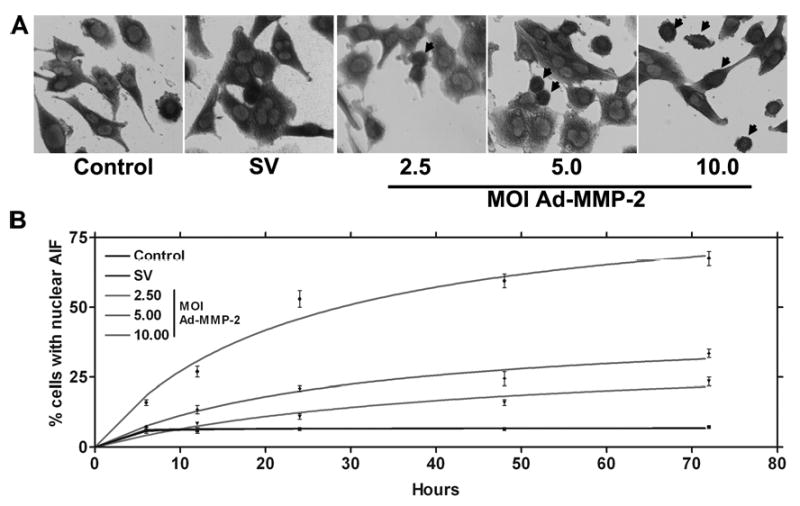
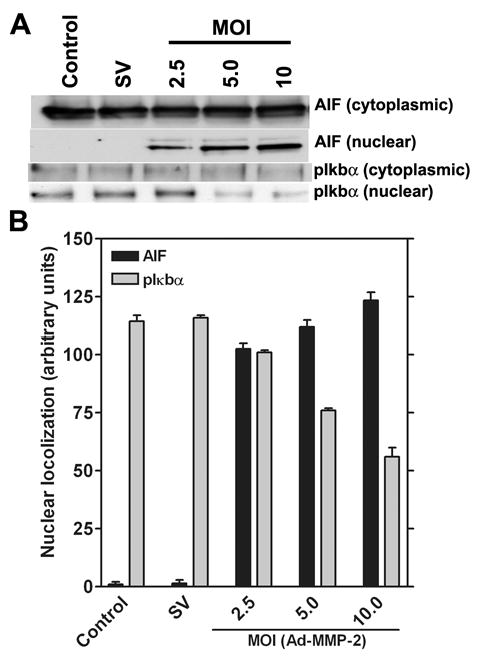
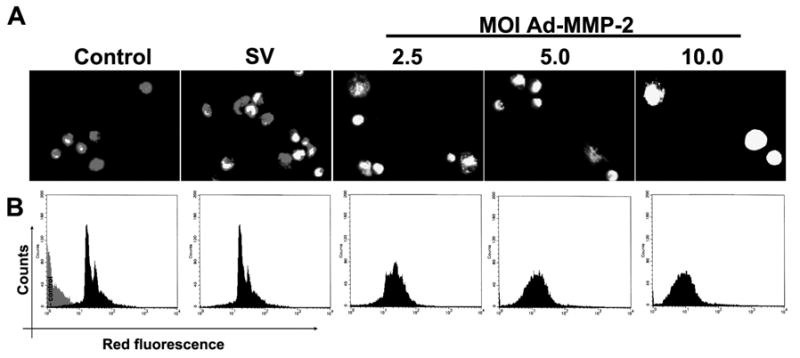
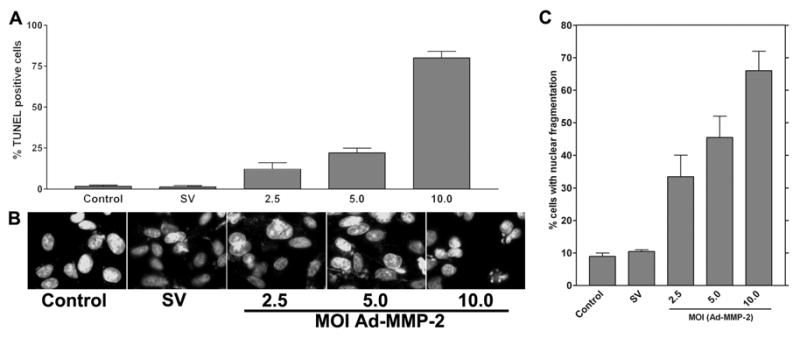
Malignant gliomas are characterized by invasive and infiltrative behavior that generally involves the destruction of normal brain tissue. Strategies to treat infiltrating gliomas, such as chemotherapy and gene therapy, have remained largely unsuccessful. The infiltrative nature of gliomas can be attributed largely to proteases, which include serine, metallo- and cysteine- proteases. Our previous work and that of others strongly suggest a relationship between the expression of uPAR, MMP-9, and MMP-2; this relationship is generally indicative of the infiltrative phenotype of gliomas. In the present study, we have demonstrated that the RNAi-mediated downregulation of MMP-2 induces apoptosis in the 4910 human glioma xenograft cell line. Using Western blot analysis, we observed that caspase-8 levels increased in MMP-2-downregulated cells whereas TRADD and TRAF-2 levels decreased. Further, NIK levels increased in MMP-2-downregulated cells. To determine the nuclear localization of AIF and IkappaBalpha, we analyzed the levels of AIF, IkappaBalpha and pIkappaBalpha in the cytosolic and nuclear fractions of MMP-2-downregulated cells. Western blot analysis revealed that MMP-2 downregulation resulted in the translocation of AIF to the nucleus and also inhibited the nuclear localization of pIkappaBalpha. To confirm the involvement of AIF, we performed FACS analysis to determine the integrity of the mitochondrial membrane using the MitoPT method. FACS analysis showed that the downregulation of MMP-2 caused a collapse in the mitochondrial cell membrane. Immunolocalization of AIF revealed that in MMP-2-downregulated cells, AIF translocates to the nucleus, thereby enabling the induction of apoptosis. RT-PCR analysis revealed that caspase-8 was overexpressed 57-fold, whereas p73 was downregulated 28-fold. Evidence of apoptosis was determined by TUNEL assay and visualization of nuclear fragmentation by DAPI staining. In summary, it is evident from our results that MMP-2 downregulation induces caspase-8 and AIF-mediated apoptosis and, as such, shows potential for glioma therapy.
恶性胶质瘤的特征是具有侵袭性和浸润性,通常会破坏正常脑组织。治疗浸润性胶质瘤的策略,如化疗和基因治疗,在很大程度上仍未成功。胶质瘤的浸润性主要归因于蛋白酶,包括丝氨酸蛋白酶、金属蛋白酶和半胱氨酸蛋白酶。我们之前的工作以及其他人的工作强烈表明尿激酶型纤溶酶原激活物受体(uPAR)、基质金属蛋白酶-9(MMP-9)和基质金属蛋白酶-2(MMP-2)的表达之间存在关联;这种关联通常表明胶质瘤的浸润表型。在本研究中,我们证明RNA干扰介导的MMP-2下调可诱导4910人胶质瘤异种移植细胞系凋亡。通过蛋白质免疫印迹分析,我们观察到在MMP-2下调的细胞中,半胱天冬酶-8(caspase-8)水平升高,而肿瘤坏死因子受体相关死亡结构域蛋白(TRADD)和肿瘤坏死因子受体相关因子2(TRAF-2)水平降低。此外,在MMP-2下调的细胞中,核因子κB诱导激酶(NIK)水平升高。为了确定凋亡诱导因子(AIF)和核因子κB抑制蛋白α(IkappaBalpha)的核定位,我们分析了MMP-2下调细胞的胞质和核部分中AIF、IkappaBalpha和磷酸化核因子κB抑制蛋白α(pIkappaBalpha)的水平。蛋白质免疫印迹分析显示,MMP-2下调导致AIF转位至细胞核,并且还抑制了pIkappaBalpha的核定位。为了证实AIF的参与,我们使用线粒体通透性转换孔(MitoPT)方法进行了流式细胞术分析以确定线粒体膜的完整性。流式细胞术分析表明,MMP-2下调导致线粒体细胞膜崩溃。AIF的免疫定位显示,在MMP-2下调的细胞中,AIF转位至细胞核,从而能够诱导凋亡。逆转录-聚合酶链反应(RT-PCR)分析显示,caspase-8过表达57倍,而p73下调28倍。通过末端脱氧核苷酸转移酶介导的缺口末端标记(TUNEL)测定和4',6-二脒基-2-苯基吲哚(DAPI)染色观察核碎裂来确定凋亡证据。总之,从我们的结果可以明显看出,MMP-2下调诱导caspase-8和AIF介导的凋亡,因此在胶质瘤治疗中显示出潜力。