Korboukh Victoria Korneeva, Li Ning, Barr Eric W, Bollinger J Martin, Krebs Carsten
Department of Chemistry, The Pennsylvania State University, University Park, Pennsylvania 16802, USA.
J Am Chem Soc. 2009 Sep 30;131(38):13608-9. doi: 10.1021/ja9064969.
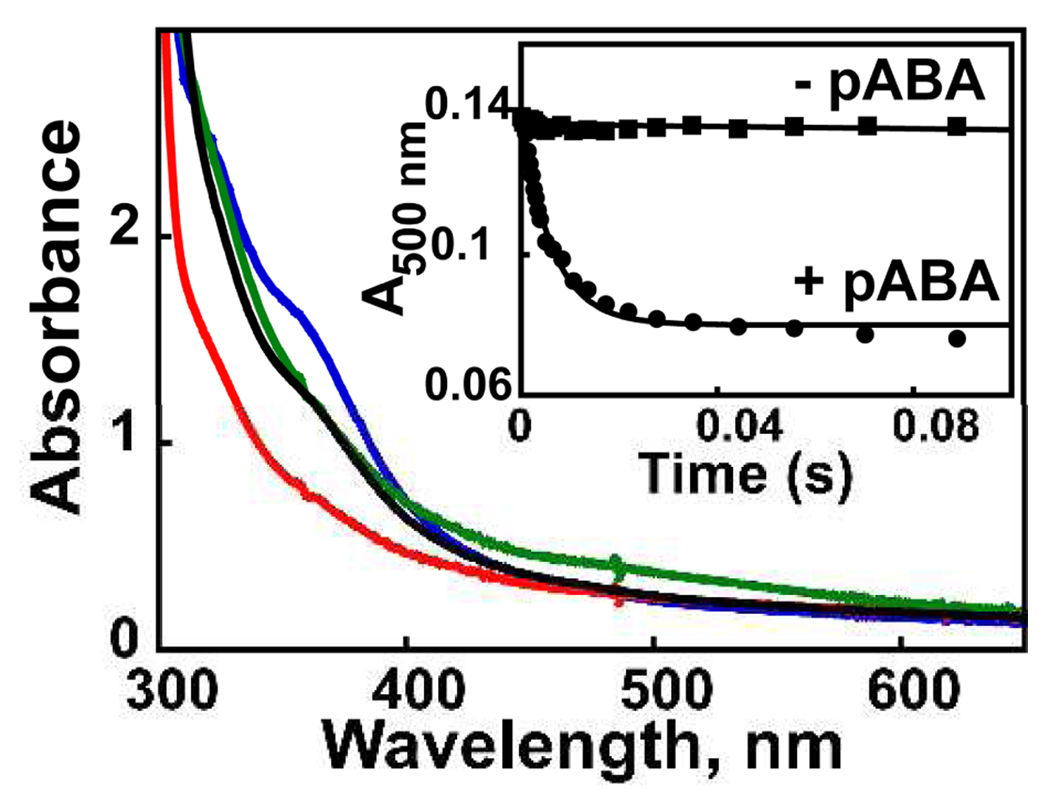
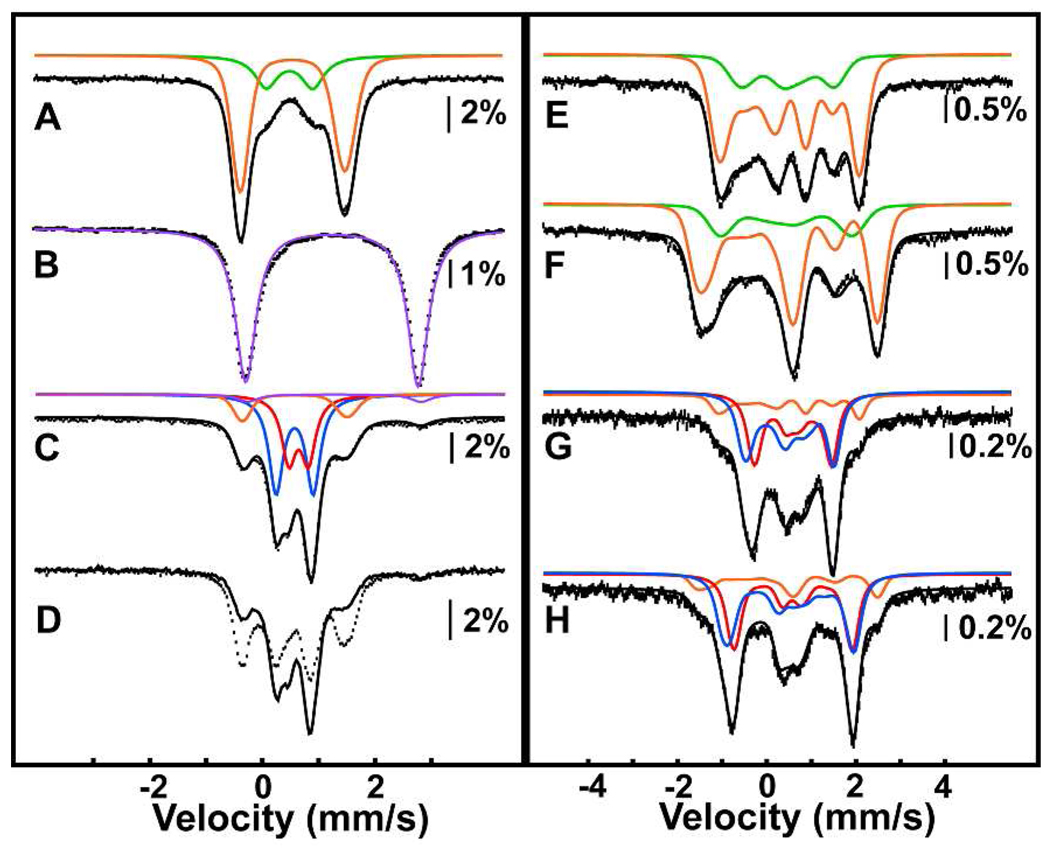
The amine oxygenase AurF from Streptomyces thioluteus catalyzes the six-electron oxidation of p-aminobenzoate (pABA) to p-nitrobenzoate (pNBA). In this work, we have studied the reaction of its reduced Fe(2)(II/II) cofactor with O(2), which results in generation of a peroxo-Fe(2)(III/III) intermediate. In the absence of substrate, this intermediate is unusually stable (t(1/2) = 7 min at 20 degrees C), allowing for its accumulation to almost stoichiometric amounts. Its decay is accelerated approximately 10(5)-fold by the substrate, pABA, implying that it is the complex that effects the two-electron oxidation of the amine to the hydroxylamine. The nearly quantitative conversion of pABA to pNBA by solutions containing an excess of the intermediate suggests that it may also be competent for the two subsequent two-electron oxidations leading to the product.
来自硫黄链霉菌的胺氧化酶AurF催化对氨基苯甲酸(pABA)的六电子氧化反应生成对硝基苯甲酸(pNBA)。在这项工作中,我们研究了其还原态的Fe(2)(II/II)辅因子与O(2)的反应,该反应会生成过氧-Fe(2)(III/III)中间体。在没有底物的情况下,这种中间体异常稳定(20℃时t(1/2)=7分钟),能够积累到几乎化学计量的量。底物pABA会使它的衰变加速约10^5倍,这意味着是该复合物将胺进行两电子氧化生成羟胺。含有过量中间体的溶液能将近定量地将pABA转化为pNBA,这表明它可能也能够进行随后导致产物生成的两步两电子氧化反应。