Nagasawa Hiroyuki, Okada Kyoji, Senma Seietsu, Chida Shuichi, Shimada Yoichi
Division of Orthopedic Surgery, Department of Neuro- and Locomotor Science, Akita University School of Medicine, Akita, Japan.
Ups J Med Sci. 2009;114(3):184-8. doi: 10.1080/03009730902931408.
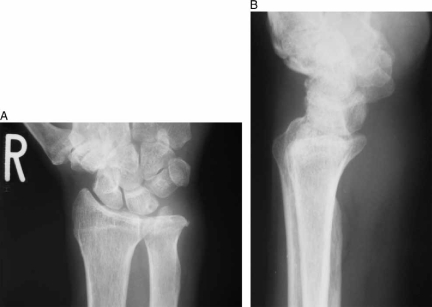
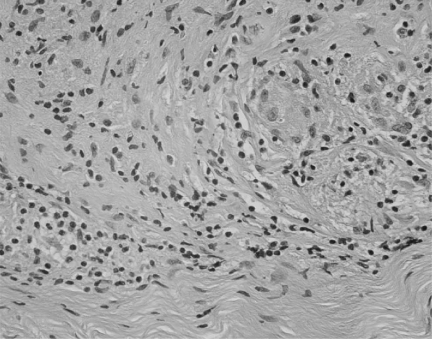
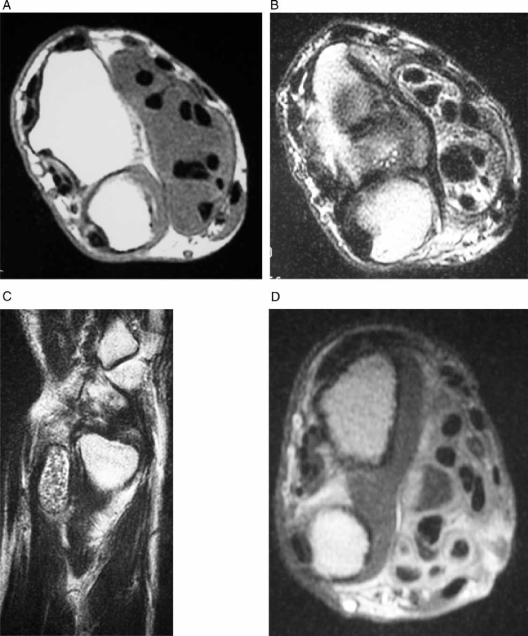
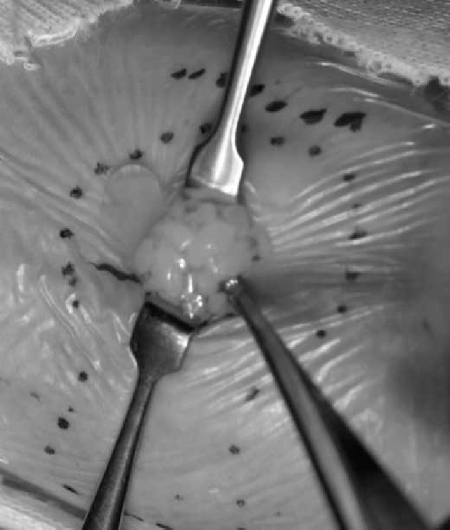
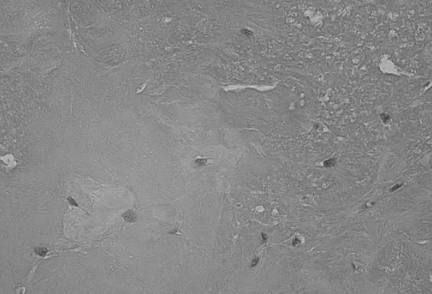
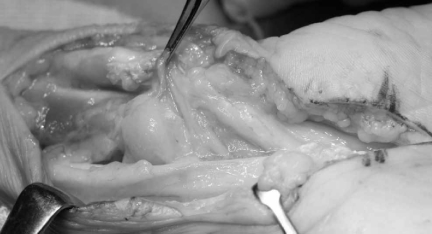
In this report, we present a 68-year-old man with rice body formation in the flexor tendon sheath of the fingers without any inflammatory diseases such as tuberculosis or rheumatoid arthritis. The patient visited our institute in March 2004 with a one-month history of swelling and pain of the right distal forearm. Laboratory data were within normal limits, and the rheumatoid factor was negative. He had no history of tuberculosis, and the tuberculin reaction was weakly positive. Magnetic resonance (MR) images showed a mass measuring 6 cm x 4 cm around the flexor tendons of the forearm. Many rice bodies had been erupted from a small hole of the fibrous wall of the mass at the time of incisional biopsy performed in June 2004. Histological diagnosis was synovitis with fibrous loose bodies. In July 2004, spontaneous ruptures of the right fourth and fifth flexor tendons occurred. Open repair was performed in August 2004. The patient regained good function of the operated fingers with no evidence of recurrence at the latest follow-up in March 2009.
在本报告中,我们介绍了一名68岁男性,其手指屈肌腱鞘内有米粒体形成,且无结核病或类风湿关节炎等任何炎症性疾病。该患者于2004年3月因右前臂远端肿胀疼痛1个月前来我院就诊。实验室检查数据在正常范围内,类风湿因子为阴性。他无结核病史,结核菌素反应弱阳性。磁共振(MR)图像显示前臂屈肌腱周围有一个6 cm×4 cm的肿块。2004年6月进行切开活检时,许多米粒体从肿块纤维壁的一个小孔中喷出。组织学诊断为伴有纤维性游离体的滑膜炎。2004年7月,右第四和第五屈肌腱发生自发性断裂。2004年8月进行了开放修复。在2009年3月的最新随访中,患者手术手指恢复了良好功能,无复发迹象。