Taleb Soraya, Romain Mélissa, Ramkhelawon Bhama, Uyttenhove Catherine, Pasterkamp Gerard, Herbin Olivier, Esposito Bruno, Perez Nicolas, Yasukawa Hideo, Van Snick Jacques, Yoshimura Akihiko, Tedgui Alain, Mallat Ziad
Institut National de la Santé et de la Recherche Médicale, Unit 970 and Université Paris Descartes, Paris Cardiovascular Research Center, 75015 Paris, France.
J Exp Med. 2009 Sep 28;206(10):2067-77. doi: 10.1084/jem.20090545. Epub 2009 Sep 8.
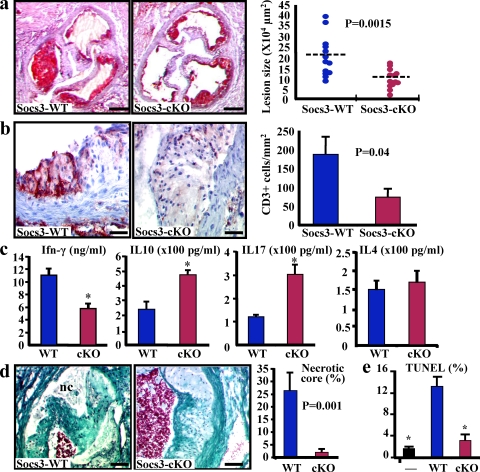
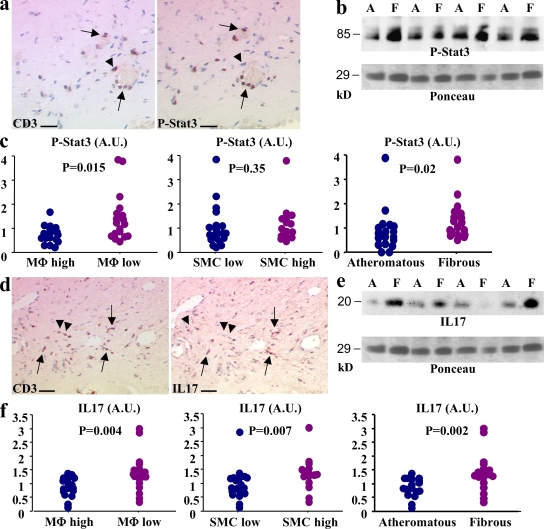
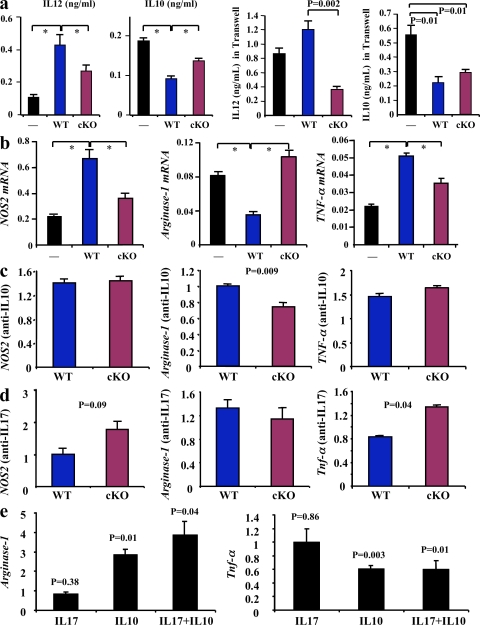
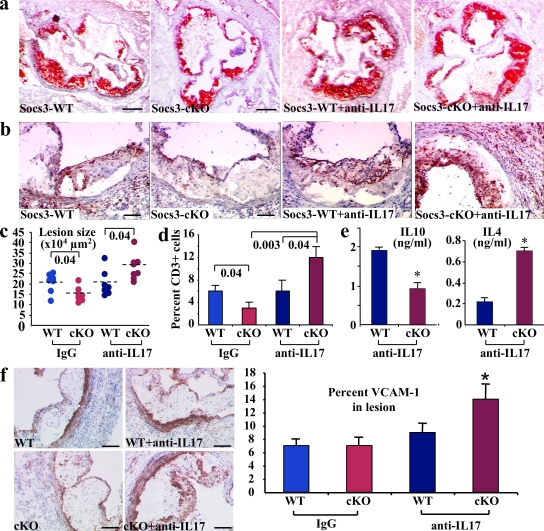
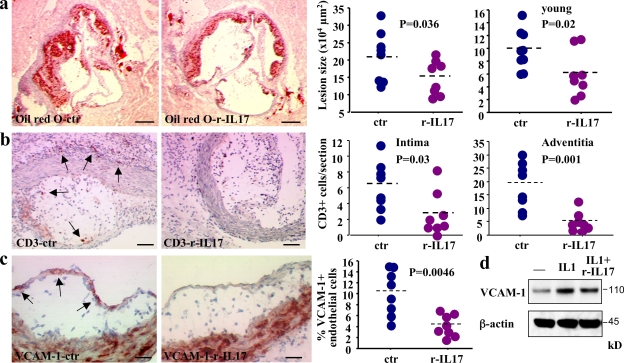
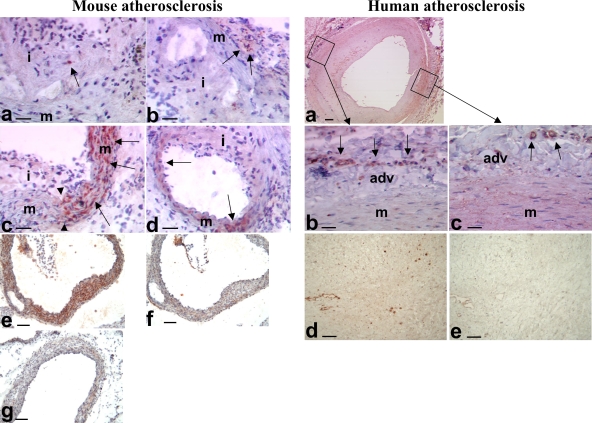
Atherosclerosis is an inflammatory vascular disease responsible for the first cause of mortality worldwide. Recent studies have clearly highlighted the critical role of the immunoinflammatory balance in the modulation of disease development and progression. However, the immunoregulatory pathways that control atherosclerosis remain largely unknown. We show that loss of suppressor of cytokine signaling (SOCS) 3 in T cells increases both interleukin (IL)-17 and IL-10 production, induces an antiinflammatory macrophage phenotype, and leads to unexpected IL-17-dependent reduction in lesion development and vascular inflammation. In vivo administration of IL-17 reduces endothelial vascular cell adhesion molecule-1 expression and vascular T cell infiltration, and significantly limits atherosclerotic lesion development. In contrast, overexpression of SOCS3 in T cells reduces IL-17 and accelerates atherosclerosis. We also show that in human lesions, increased levels of signal transducer and activator of transcription (STAT) 3 phosphorylation and IL-17 are associated with a stable plaque phenotype. These results identify novel SOCS3-controlled IL-17 regulatory pathways in atherosclerosis and may have important implications for the understanding of the increased susceptibility to vascular inflammation in patients with dominant-negative STAT3 mutations and defective Th17 cell differentiation.
动脉粥样硬化是一种炎症性血管疾病,是全球范围内首要的死亡原因。最近的研究已明确强调免疫炎症平衡在调节疾病发展和进程中的关键作用。然而,控制动脉粥样硬化的免疫调节途径在很大程度上仍不清楚。我们发现,T细胞中细胞因子信号抑制因子(SOCS)3缺失会增加白细胞介素(IL)-17和IL-10的产生,诱导抗炎性巨噬细胞表型,并导致病变发展和血管炎症出现意外的IL-17依赖性减少。体内给予IL-17可降低内皮血管细胞黏附分子-1表达和血管T细胞浸润,并显著限制动脉粥样硬化病变发展。相反,T细胞中SOCS3过表达会降低IL-17并加速动脉粥样硬化。我们还表明,在人类病变中,信号转导和转录激活因子(STAT)3磷酸化水平和IL-17升高与稳定斑块表型相关。这些结果确定了动脉粥样硬化中由SOCS3控制的新型IL-17调节途径,可能对理解具有显性负性STAT3突变和Th17细胞分化缺陷的患者血管炎症易感性增加具有重要意义。