Walker Kerry M M, Schnupp Jan W H, Hart-Schnupp Sheelah M B, King Andrew J, Bizley Jennifer K
Department of Physiology, Anatomy and Genetics, Sherrington Building, Parks Road, University of Oxford, Oxfordshire, United Kingdom.
J Acoust Soc Am. 2009 Sep;126(3):1321-35. doi: 10.1121/1.3179676.
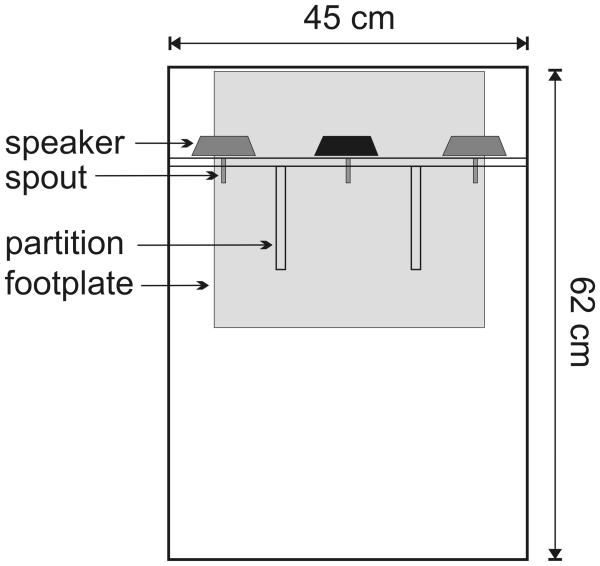
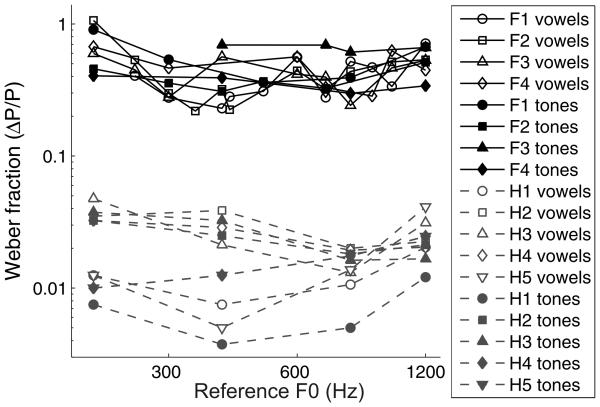
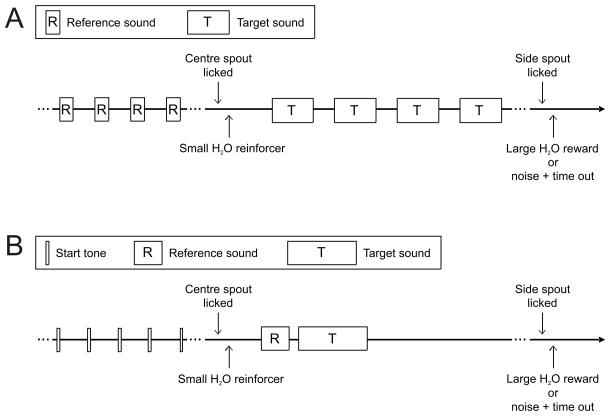
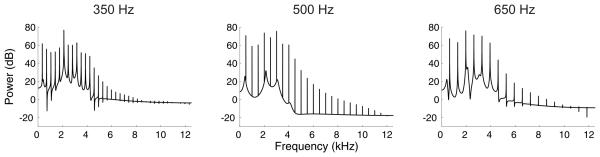
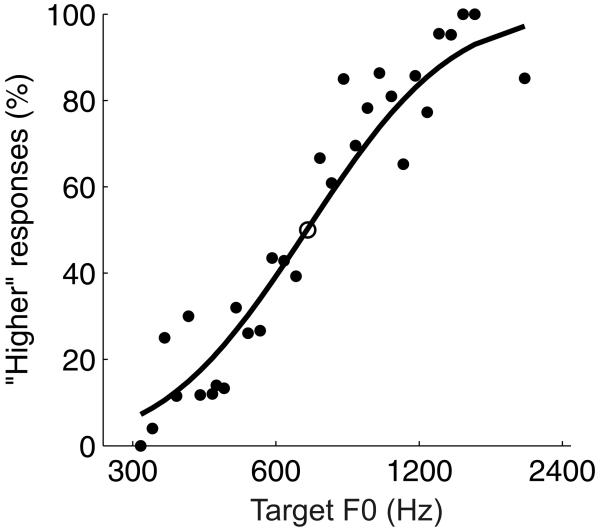
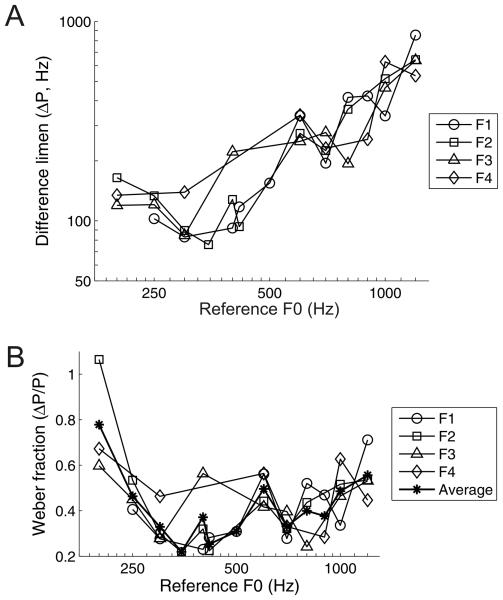
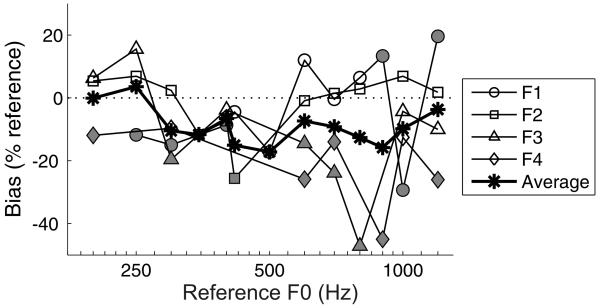
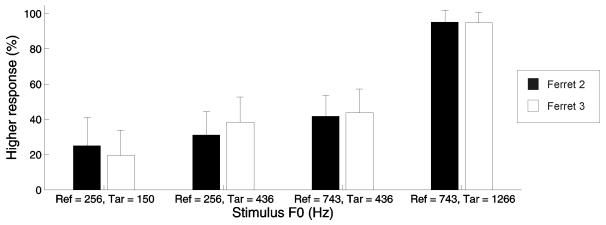
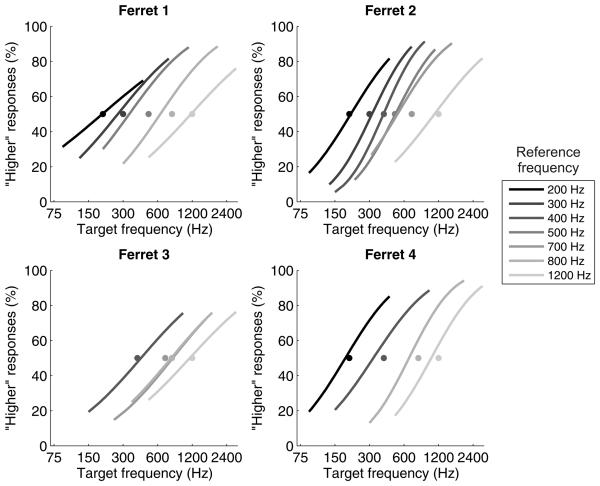
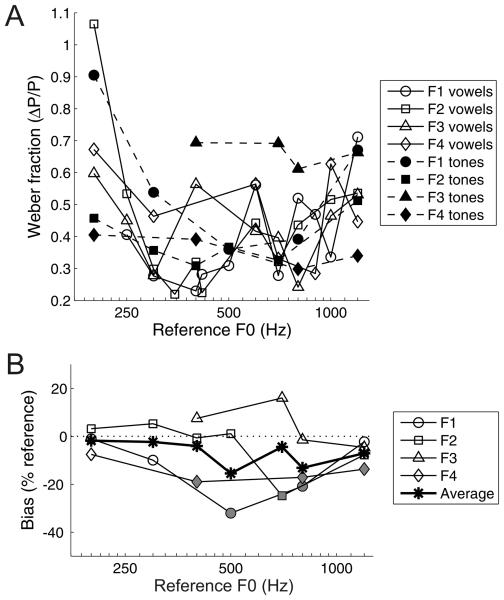
Although many studies have examined the performance of animals in detecting a frequency change in a sequence of tones, few have measured animals' discrimination of the fundamental frequency (F0) of complex, naturalistic stimuli. Additionally, it is not yet clear if animals perceive the pitch of complex sounds along a continuous, low-to-high scale. Here, four ferrets (Mustela putorius) were trained on a two-alternative forced choice task to discriminate sounds that were higher or lower in F0 than a reference sound using pure tones and artificial vowels as stimuli. Average Weber fractions for ferrets on this task varied from approximately 20% to 80% across references (200-1200 Hz), and these fractions were similar for pure tones and vowels. These thresholds are approximately ten times higher than those typically reported for other mammals on frequency change detection tasks that use go/no-go designs. Naive human listeners outperformed ferrets on the present task, but they showed similar effects of stimulus type and reference F0. These results suggest that while non-human animals can be trained to label complex sounds as high or low in pitch, this task may be much more difficult for animals than simply detecting a frequency change.
尽管许多研究考察了动物在检测一系列音调中的频率变化时的表现,但很少有研究测量动物对复杂自然主义刺激的基频(F0)的辨别能力。此外,动物是否沿着连续的从低到高的尺度感知复杂声音的音高尚不清楚。在此,对四只雪貂(白鼬)进行了二选一强迫选择任务训练,以使用纯音和人工元音作为刺激,辨别F0高于或低于参考声音的声音。雪貂在这项任务中的平均韦伯分数在不同参考频率(200 - 1200赫兹)下从约20%到80%不等,并且纯音和元音的这些分数相似。这些阈值大约比使用是/否设计的频率变化检测任务中通常报道的其他哺乳动物的阈值高十倍。在当前任务中,未经训练的人类听众表现优于雪貂,但他们也表现出类似的刺激类型和参考F0的影响。这些结果表明,虽然非人类动物可以被训练将复杂声音标记为高音或低音,但这项任务对动物来说可能比简单地检测频率变化要困难得多。