Department of Physiology, Anatomy & Genetics, University of Oxford, Oxford, United Kingdom.
Department of Brain and Cognitive Sciences, Massachusetts Institute of Technology, Cambridge, United States.
Elife. 2019 Mar 15;8:e41626. doi: 10.7554/eLife.41626.
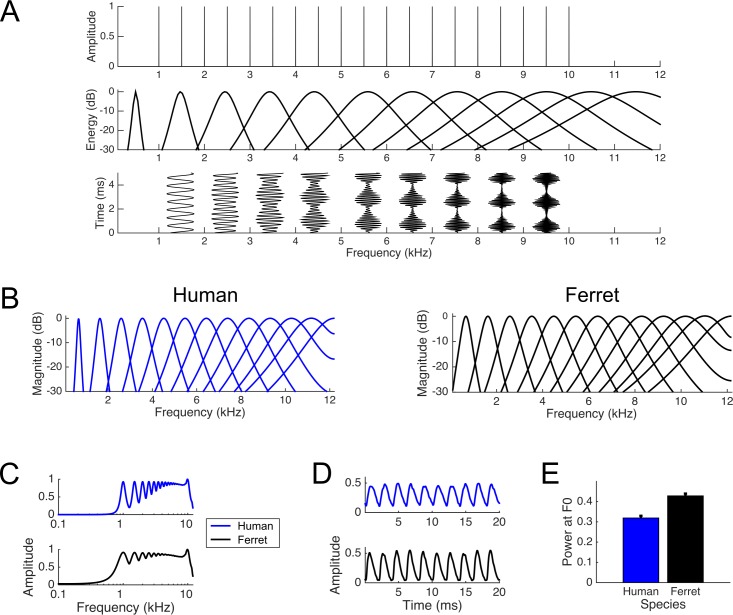
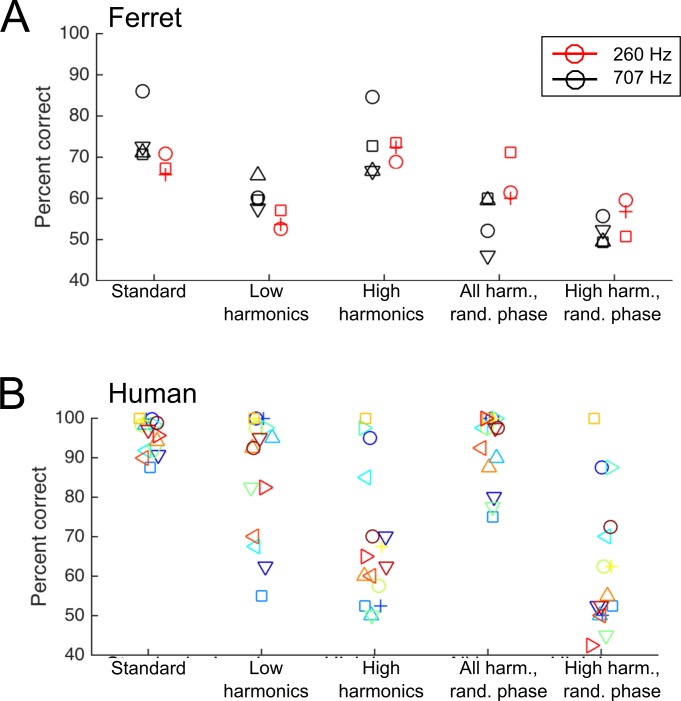
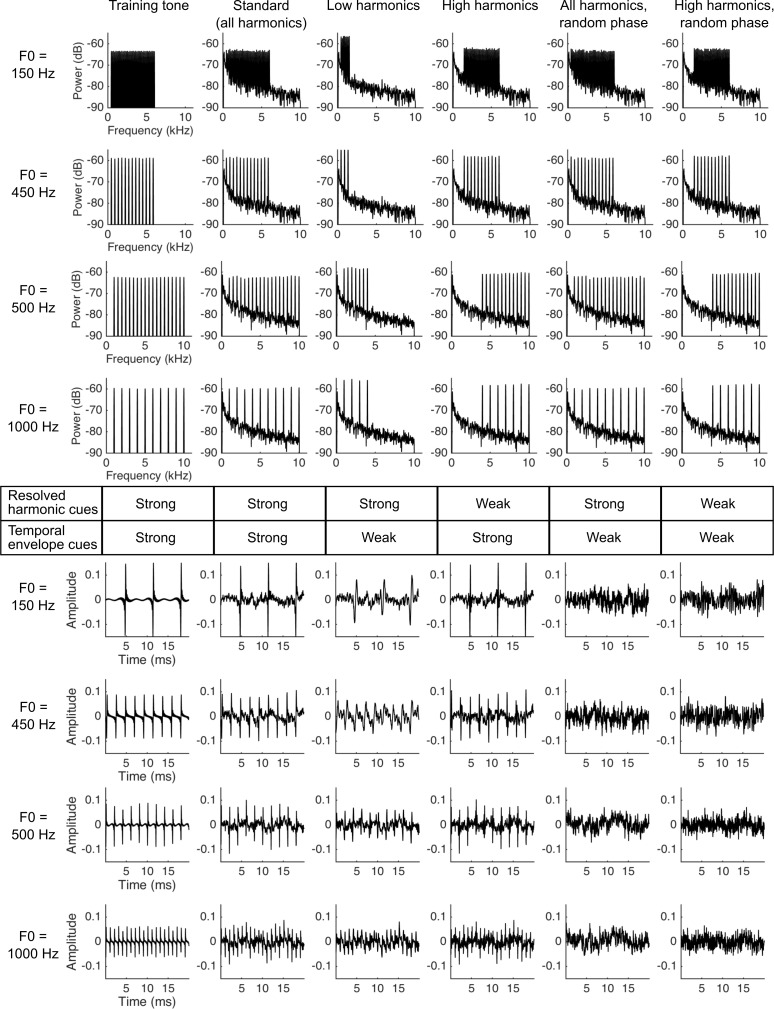
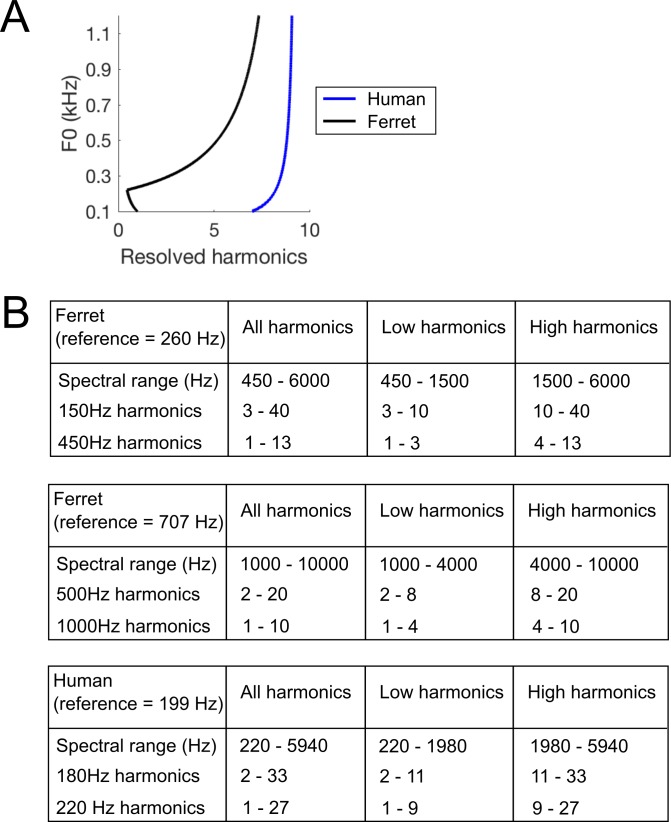
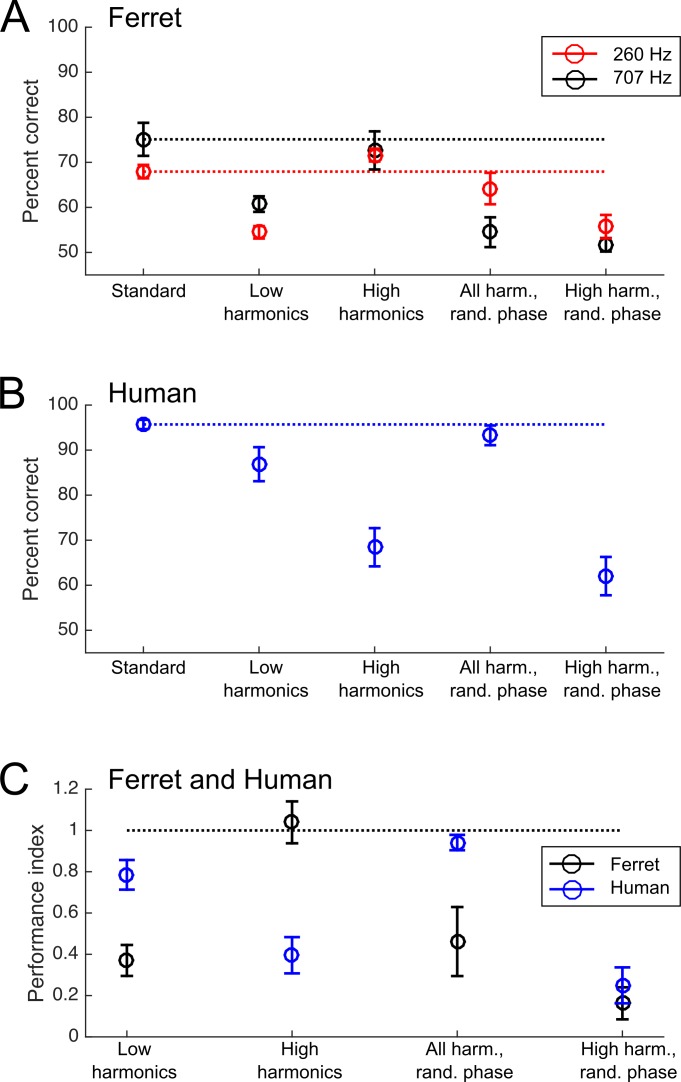
Pitch perception is critical for recognizing speech, music and animal vocalizations, but its neurobiological basis remains unsettled, in part because of divergent results across species. We investigated whether species-specific differences exist in the cues used to perceive pitch and whether these can be accounted for by differences in the auditory periphery. Ferrets accurately generalized pitch discriminations to untrained stimuli whenever temporal envelope cues were robust in the probe sounds, but not when resolved harmonics were the main available cue. By contrast, human listeners exhibited the opposite pattern of results on an analogous task, consistent with previous studies. Simulated cochlear responses in the two species suggest that differences in the relative salience of the two pitch cues can be attributed to differences in cochlear filter bandwidths. The results support the view that cross-species variation in pitch perception reflects the constraints of estimating a sound's fundamental frequency given species-specific cochlear tuning.
音高感知对于识别言语、音乐和动物叫声至关重要,但它的神经生物学基础仍未确定,部分原因是不同物种的结果存在分歧。我们研究了在用于感知音高的线索上是否存在物种特异性差异,以及这些差异是否可以用听觉外围的差异来解释。无论探测音中是否存在可靠的时域包络线索,只要可分辨的谐波是主要可用线索,雪貂就能准确地将音高辨别推广到未受过训练的刺激上;但人类听众在类似的任务中表现出相反的结果,这与之前的研究一致。在这两个物种中模拟的耳蜗反应表明,两种音高线索的相对显著性差异可以归因于耳蜗滤波带宽的差异。研究结果支持了这样一种观点,即跨物种音高感知的变化反映了在特定于物种的耳蜗调谐的情况下估计声音基频的限制。