Yeh Chau-Ting, Kuo Chia-Jung, Lai Ming-Wei, Chen Tse-Ching, Lin Chun-Yen, Yeh Ta-Sen, Lee Wei-Chen
Liver Research Unit, Department of Hepato-Gastroenterology, Chang Gung Memorial Hospital, Taipei, Taiwan, ROC.
BMC Cancer. 2009 Sep 11;9:324. doi: 10.1186/1471-2407-9-324.
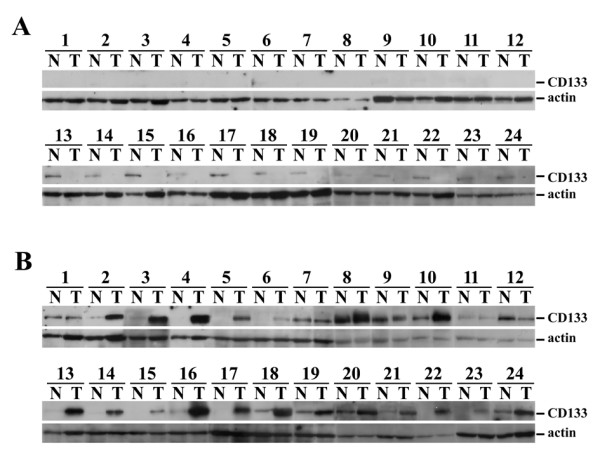
CD133 was detected in several types of cancers including hepatocellular carcinoma (HCC), which raised the possibility of stem cell origin in a subset of cancers. However, reappearance of embryonic markers in de-differentiated malignant cells was commonly observed. It remained to be elucidated whether CD133-positive HCCs were indeed of stem cell origin or they were just a group of poorly differentiated cells acquiring an embryonic marker. The aim of this study was to investigate the significance of CD133 expression in HCC in an area endemic for hepatitis B virus (HBV) infection to gain insights on this issue.
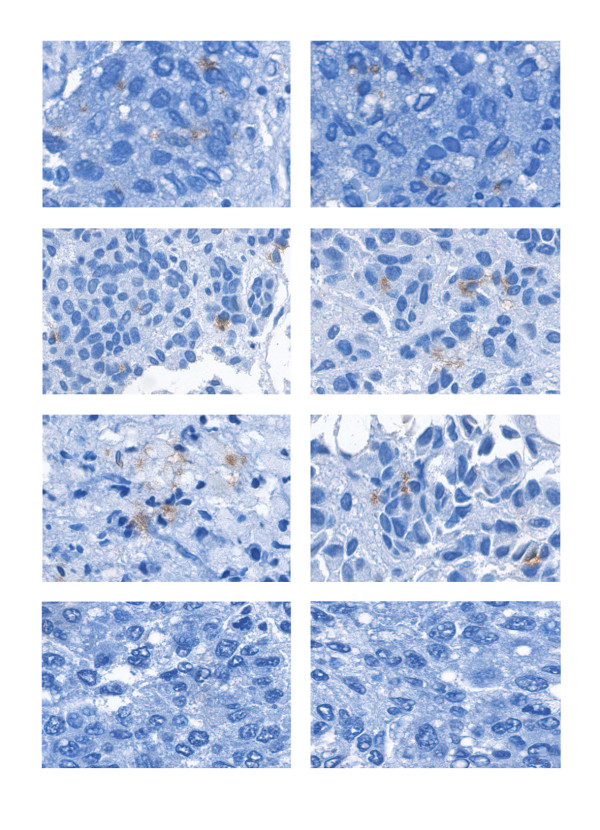
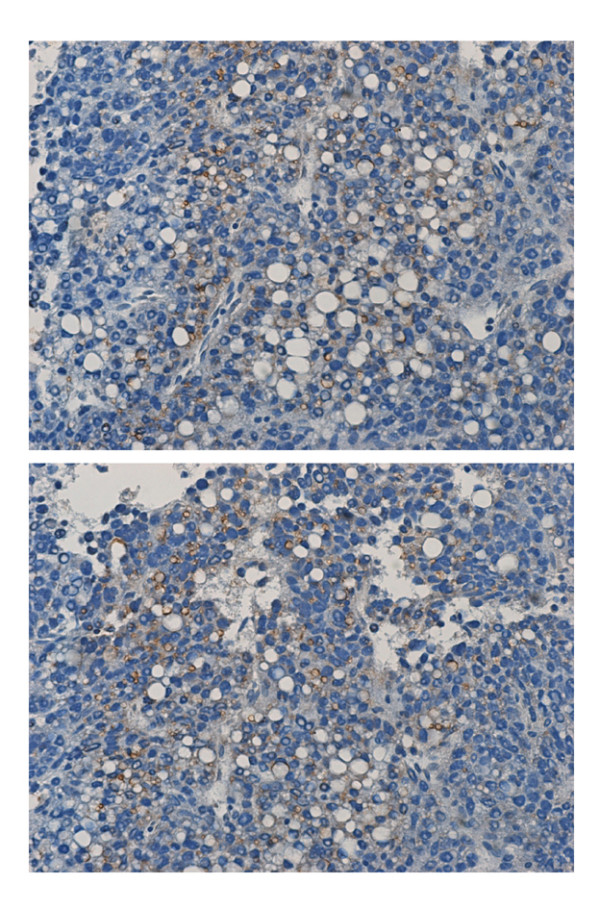
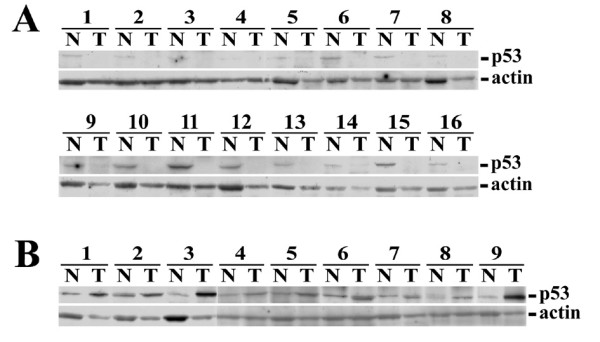
154 HCC patients receiving total removal of HCCs were included. 104 of them (67.5%) were positive for HBV infection. The cancerous and adjacent non-cancerous liver tissues were subjected for Western blot and immunohistochemistry analysis for CD133 expression. The data were correlated with clinical parameters, patient survivals, and p53 expression.
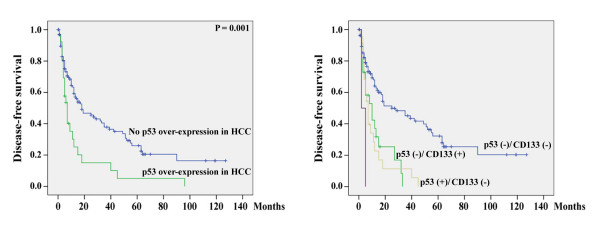
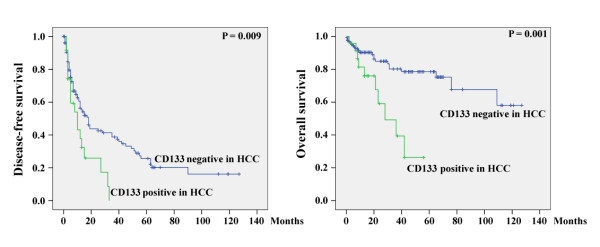
Of 154 patients, 24 (15.6%) had CD133 expression in HCC. Univariate and multivariate logistic regression analysis revealed that CD133 expression was negatively correlated with the presence of hepatitis B surface antigen (HBsAg). The unadjusted and adjusted odds ratios were 0.337 (95%CI 0.126 - 0.890) and 0.084 (95%CI 0.010 - 0.707), respectively. On the other hand, p53 expression was positively associated with the presence of HBsAg in univariate analysis. The unadjusted odds ratio was 4.203 (95%CI 1.110 - 18.673). Survival analysis indicated that both CD133 and p53 expression in HCC predicted poor disease-free survival (P = 0.009 and 0.001, respectively), whereas only CD133 expression predicted poor overall survival (P = 0.001). Cox proportional hazard model showed that p53 and CD133 expression were two independent predictors for disease-free survival. The hazard ratios were 1.697 (95% CI 1.318 - 2.185) and 2.559 (95% CI 1.519 - 4.313), respectively (P < 0.001 for both).
In area where HBV infection accounts for the major attributive risk of HCC, CD133 expression in HCC was negatively associated with the presence of HBsAg, implicating a non-viral origin of CD133-positive HCC. Additionally, CD133 expression predicted poor disease-free survival independently of p53 expression, arguing for two distinguishable hepatocarcinogenesis pathways.
在包括肝细胞癌(HCC)在内的多种癌症中检测到了CD133,这增加了一部分癌症起源于干细胞的可能性。然而,在去分化的恶性细胞中胚胎标志物的重新出现是普遍观察到的现象。CD133阳性的肝癌是真正起源于干细胞还是仅仅是一群获得胚胎标志物的低分化细胞,仍有待阐明。本研究的目的是在乙型肝炎病毒(HBV)感染流行地区调查CD133在肝癌中的表达意义,以深入了解这一问题。
纳入154例接受肝癌全切术的患者。其中104例(67.5%)HBV感染呈阳性。对癌组织和癌旁非癌肝组织进行Western印迹和免疫组化分析,检测CD133表达。将数据与临床参数、患者生存率及p53表达进行关联分析。
154例患者中,24例(15.6%)肝癌组织中有CD133表达。单因素和多因素逻辑回归分析显示,CD133表达与乙型肝炎表面抗原(HBsAg)的存在呈负相关。未调整和调整后的比值比分别为0.337(95%可信区间0.126 - 0.890)和0.084(95%可信区间0.010 - 0.707)。另一方面,单因素分析中p53表达与HBsAg的存在呈正相关。未调整的比值比为4.203(95%可信区间1.110 - 18.673)。生存分析表明,肝癌组织中CD133和p53表达均预示无病生存期较差(分别为P = 0.009和0.001),而只有CD133表达预示总生存期较差(P = 0.001)。Cox比例风险模型显示,p53和CD133表达是无病生存期的两个独立预测因素。风险比分别为1.697(95%可信区间1.318 - 2.185)和2.559(95%可信区间1.519 - 4.313)(两者P < 0.001)。
在HBV感染是肝癌主要归因风险的地区,肝癌组织中CD133表达与HBsAg的存在呈负相关,提示CD133阳性肝癌的非病毒起源。此外,CD133表达独立于p53表达预示无病生存期较差,表明存在两条可区分的肝癌发生途径。