Lineberger Comprehensive Cancer Center, University of North Carolina, Chapel Hill, North Carolina, USA.
PLoS One. 2009 Sep 10;4(9):e6992. doi: 10.1371/journal.pone.0006992.
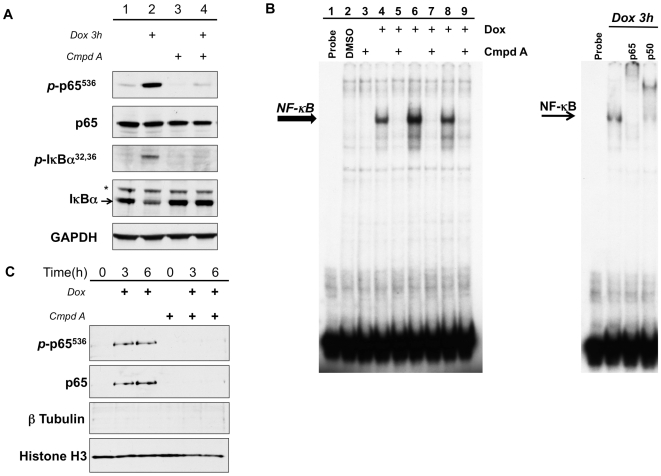
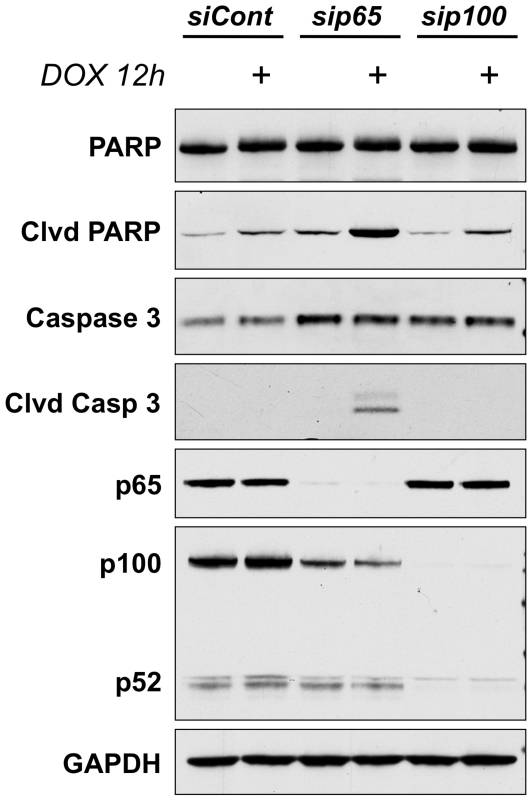
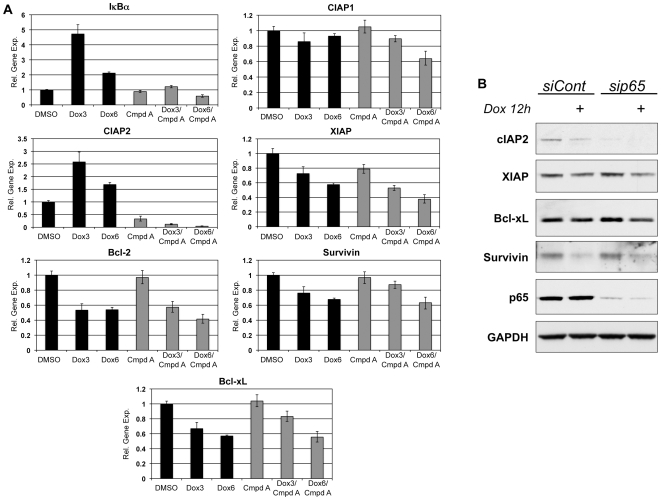
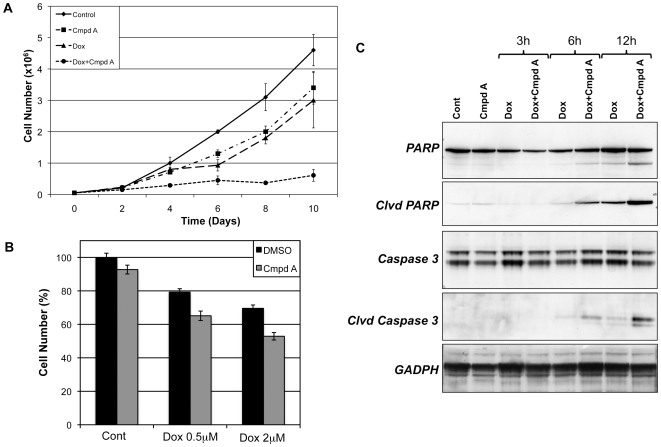
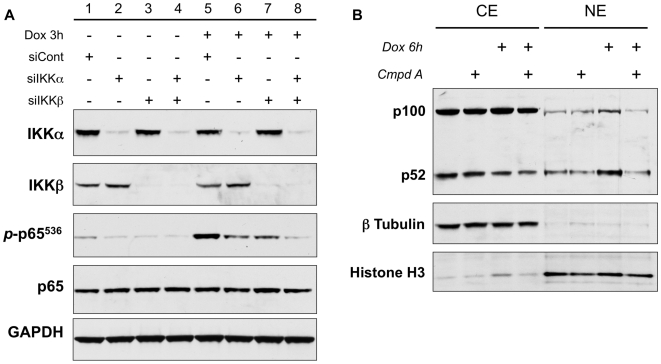
The ability of the transcription factor NF-kappaB to upregulate anti-apoptotic proteins has been linked to the chemoresistance of solid tumors to standard chemotherapy. In contrast, recent studies have proposed that, in response to doxorubicin, NF-kappaB can be pro-apoptotic through repression of anti-apoptotic target genes. However, there is little evidence analyzing the outcome of NF-kappaB inhibition on the cytotoxicity of doxorubicin in studies describing pro-apoptotic NF-kappaB activity. In this study, we further characterize the activation of NF-kappaB in response to doxorubicin and evaluate its role in chemotherapy-induced cell death in sarcoma cells where NF-kappaB is reported to be pro-apoptotic. Doxorubicin treatment in U2OS cells induced canonical NF-kappaB activity as evidenced by increased nuclear accumulation of phosphorylated p65 at serine 536 and increased DNA-binding activity. Co-treatment with a small molecule IKKbeta inhibitor, Compound A, abrogated this response. RT-PCR evaluation of anti-apoptotic gene expression revealed that doxorubicin-induced transcription of cIAP2 was inhibited by Compound A, while doxorubicin-induced repression of other anti-apoptotic genes was unaffected by Compound A or siRNA to p65. Furthermore, the combination of doxorubicin and canonical NF-kappaB inhibition with Compound A or siRNA to p65 resulted in decreased cell viability measured by trypan blue staining and MTS assay and increased apoptosis measured by cleaved poly (ADP-ribose) polymerase and cleaved caspase 3 when compared to doxorubicin alone. Our results demonstrate that doxorubicin-induced canonical NF-kappaB activity associated with phosphorylated p65 is anti-apoptotic in its function and that doxorubicin-induced repression of anti-apoptotic genes occurs independent of p65. Therefore, combination therapies incorporating NF-kappaB inhibitors together with standard chemotherapies remains a viable method to improve the clinical outcomes in patients with advanced stage malignancies.
转录因子 NF-κB 上调抗凋亡蛋白的能力与实体瘤对标准化疗的耐药性有关。相比之下,最近的研究表明,在阿霉素的作用下,NF-κB 可以通过抑制抗凋亡靶基因来促进凋亡。然而,在描述 NF-κB 活性促进凋亡的研究中,很少有证据分析 NF-κB 抑制对阿霉素细胞毒性的影响。在这项研究中,我们进一步研究了 NF-κB 对阿霉素的反应激活,并评估了其在肉瘤细胞中化疗诱导细胞死亡中的作用,据报道 NF-κB 在这些细胞中具有促凋亡作用。U2OS 细胞中阿霉素处理诱导了经典 NF-κB 活性,这表现为磷酸化 p65 丝氨酸 536 核内积累增加和 DNA 结合活性增加。用小分子 IKKβ抑制剂 Compound A 共同处理可阻断这种反应。抗凋亡基因表达的 RT-PCR 评估表明,阿霉素诱导的 cIAP2 转录被 Compound A 抑制,而阿霉素诱导的其他抗凋亡基因的抑制不受 Compound A 或 p65 的 siRNA 影响。此外,与阿霉素单独处理相比,阿霉素与经典 NF-κB 抑制(用 Compound A 或 p65 的 siRNA)联合应用导致通过台盼蓝染色和 MTS 测定法测量的细胞活力降低,以及通过 cleaved poly(ADP-ribose)polymer 和 cleaved caspase 3 测量的凋亡增加。我们的结果表明,阿霉素诱导的与磷酸化 p65 相关的经典 NF-κB 活性在功能上是抗凋亡的,而阿霉素诱导的抗凋亡基因抑制独立于 p65 发生。因此,将 NF-κB 抑制剂与标准化疗相结合的联合治疗仍然是提高晚期恶性肿瘤患者临床疗效的可行方法。