Subramanian Senthil, Cho Un-Haing, Keyes Carol, Yu Oliver
Donald Danforth Plant Science Center, St Louis, MO, 63132, USA.
BMC Plant Biol. 2009 Sep 21;9:119. doi: 10.1186/1471-2229-9-119.
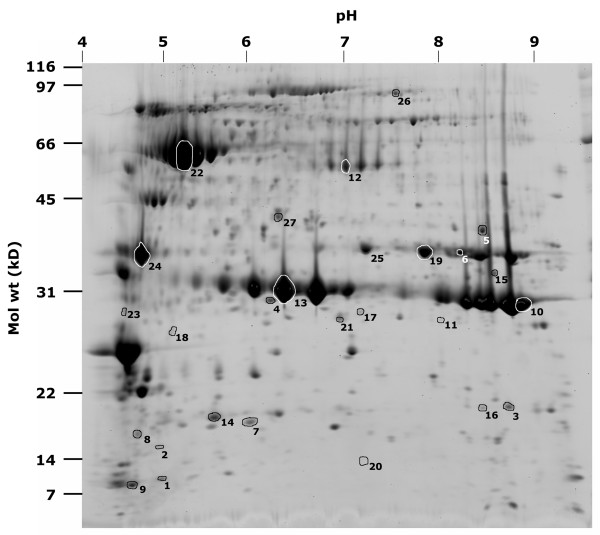
Plant systemic signaling characterized by the long distance transport of molecules across plant organs involves the xylem and phloem conduits. Root-microbe interactions generate systemic signals that are transported to aerial organs via the xylem sap. We analyzed the xylem sap proteome of soybean seedlings in response to pathogenic and symbiotic interactions to identify systemic signaling proteins and other differentially expressed proteins.
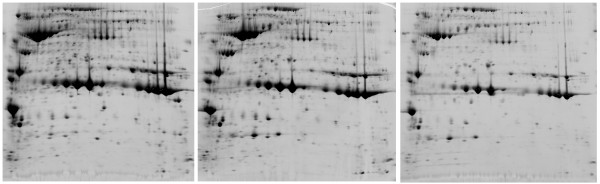
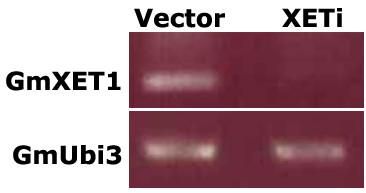
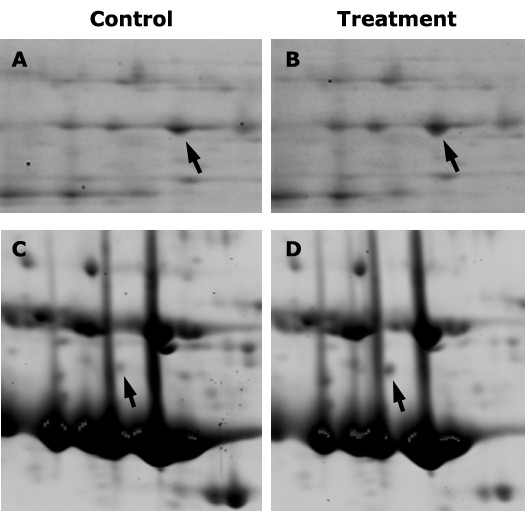
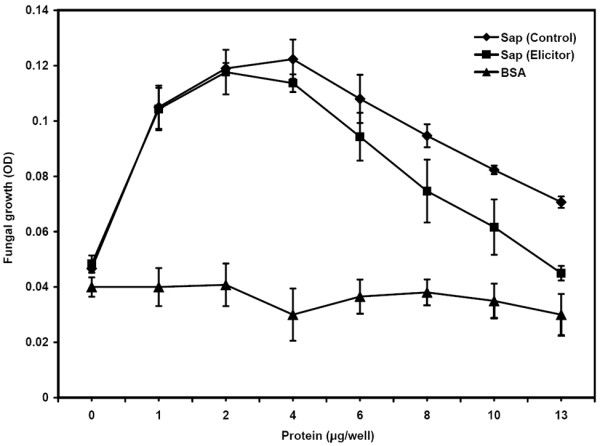
We observed the increase of a serine protease and peroxidase in the xylem sap in response to Phytophthora sojae elicitor treatment. The high molecular weight fraction of soybean xylem sap was found to promote the growth of Neurospora crassa in vitro at lower concentrations and inhibit growth at higher concentrations. Sap from soybean plants treated with a P. sojae elicitor had a significantly higher inhibitory effect than sap from control soybean plants. When soybean seedlings were inoculated with the symbiont Bradyrhizobium japonicum, the abundance of a xyloglucan transendoglycosyl transferase protein increased in the xylem sap. However, RNAi-mediated silencing of the corresponding gene did not significantly affect nodulation in soybean hairy root composite plants.
Our study identified a number of sap proteins from soybean that are differentially induced in response to B. japonicum and P. sojae elicitor treatments and a majority of them were secreted proteins.
植物系统信号传导的特征是分子跨植物器官的长距离运输,涉及木质部和韧皮部导管。根与微生物的相互作用会产生系统信号,这些信号通过木质部汁液运输到地上器官。我们分析了大豆幼苗木质部汁液蛋白质组对致病和共生相互作用的响应,以鉴定系统信号蛋白和其他差异表达蛋白。
我们观察到,经大豆疫霉激发子处理后,木质部汁液中的丝氨酸蛋白酶和过氧化物酶增加。发现大豆木质部汁液的高分子量部分在较低浓度下能促进体外粗糙脉孢菌的生长,而在较高浓度下则抑制生长。用大豆疫霉激发子处理的大豆植株的汁液比对照大豆植株的汁液具有显著更高的抑制作用。当大豆幼苗接种共生体日本慢生根瘤菌时,木质部汁液中木葡聚糖内转糖基酶蛋白的丰度增加。然而,RNAi介导的相应基因沉默对大豆毛状根复合植株的结瘤没有显著影响。
我们的研究鉴定了大豆中一些在响应日本慢生根瘤菌和大豆疫霉激发子处理时差异诱导的汁液蛋白,其中大多数是分泌蛋白。