Apold J, Eiken H G, Odland E, Fredriksen A, Bakken A, Lorens J B, Boman H
Department of Medical Genetics, University of Bergen, Norway.
Am J Hum Genet. 1990 Dec;47(6):1002-7.
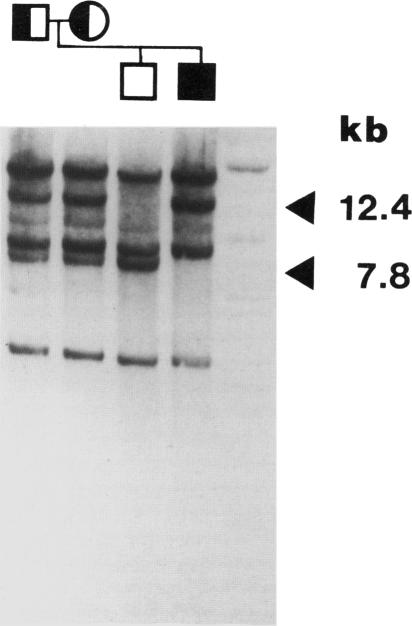
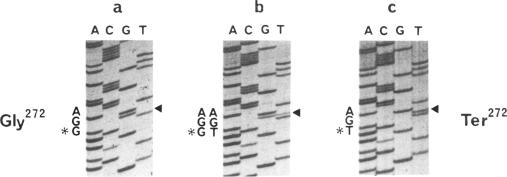
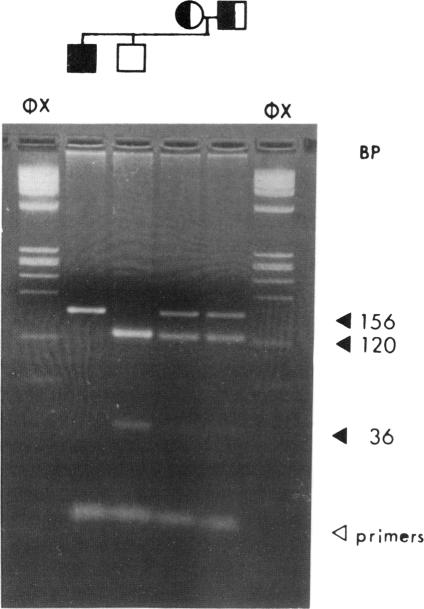
RFLPs in the phenylalanine hydroxylase (PAH) gene locus were determined in 47 Norwegian nuclear families that had at least one child with phenylketonuria (PKU). The PKU haplotype distribution differed somewhat from that of other European populations. Mutant haplotype 7 is relatively rare in other populations but constituted 20% of all mutant haplotypes in Norway. In 14 of the 17 mutant haplotypes 7, a previously unreported deletion of the BamHI restriction site in exon 7 of the PAH gene was observed. The abrogation of the BamHI site was shown to be due to a G-to-T transversion, changing Gly 272 to Ter 272 in exon 7 of the gene, thus directly identifying the PKU mutation. Unlike the families of the other PKU patients, the families with this mutation clustered along the southeastern coast of Norway, suggesting a founder effect for this mutation.
在47个挪威核心家庭中确定了苯丙氨酸羟化酶(PAH)基因座中的限制性片段长度多态性(RFLP),这些家庭中至少有一个患有苯丙酮尿症(PKU)的孩子。PKU单倍型分布与其他欧洲人群的分布略有不同。突变单倍型7在其他人群中相对罕见,但在挪威所有突变单倍型中占20%。在17个突变单倍型7中的14个中,观察到PAH基因第7外显子中BamHI限制性位点以前未报告的缺失。BamHI位点的缺失被证明是由于G到T的颠换,导致该基因第7外显子中的甘氨酸272变为终止密码子272,从而直接确定了PKU突变。与其他PKU患者的家庭不同,具有这种突变的家庭聚集在挪威东南沿海地区,表明这种突变存在奠基者效应。