Mueller Yvonne M, Do Duc H, Boyer Jean D, Kader Muhamuda, Mattapallil Joseph J, Lewis Mark G, Weiner David B, Katsikis Peter D
Department of Microbiology and Immunology, and Center for Immunology and Vaccine Sciences, Drexel University College of Medicine, Philadelphia, PA 19129, USA.
J Immunol. 2009 Oct 15;183(8):5006-12. doi: 10.4049/jimmunol.0900141. Epub 2009 Sep 28.
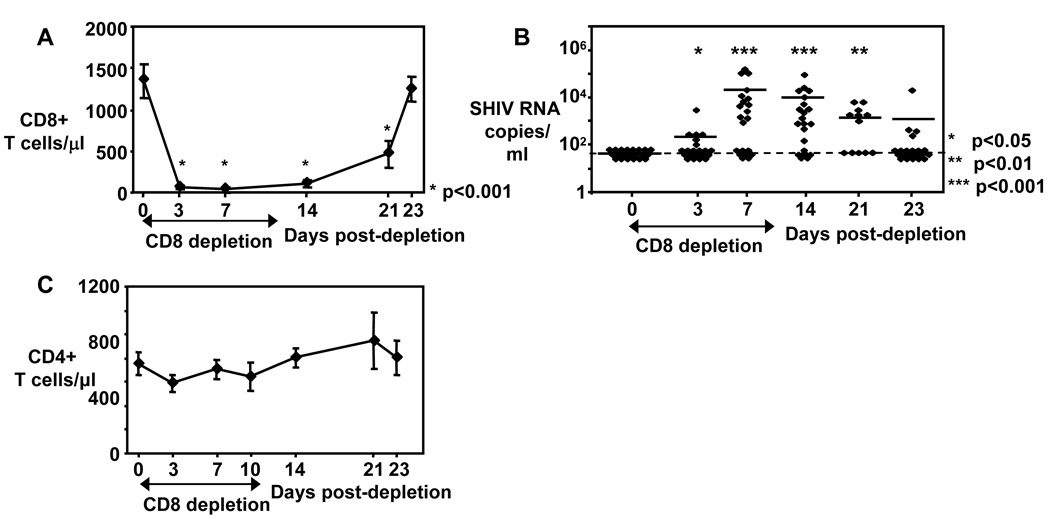
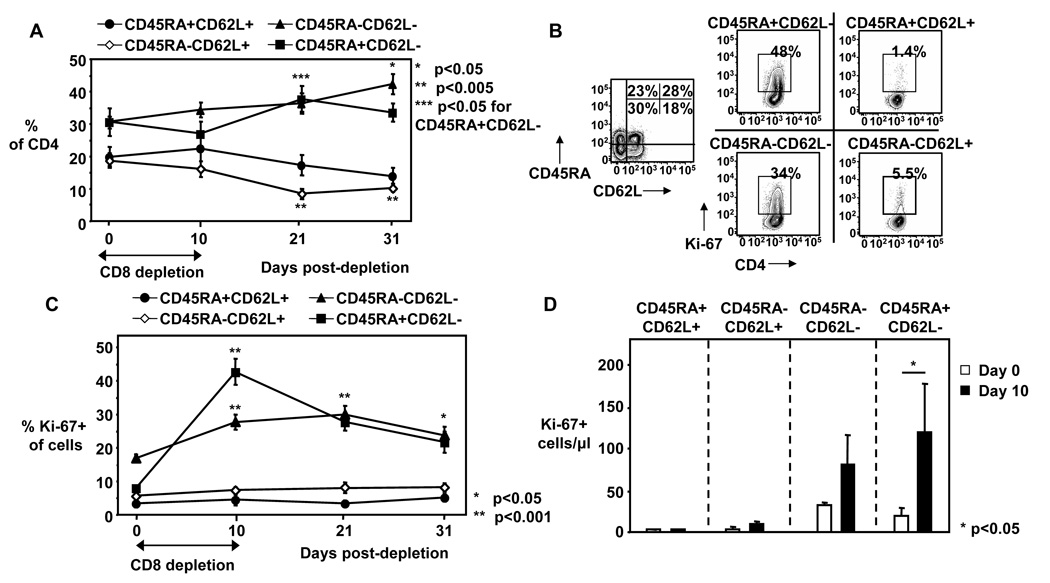
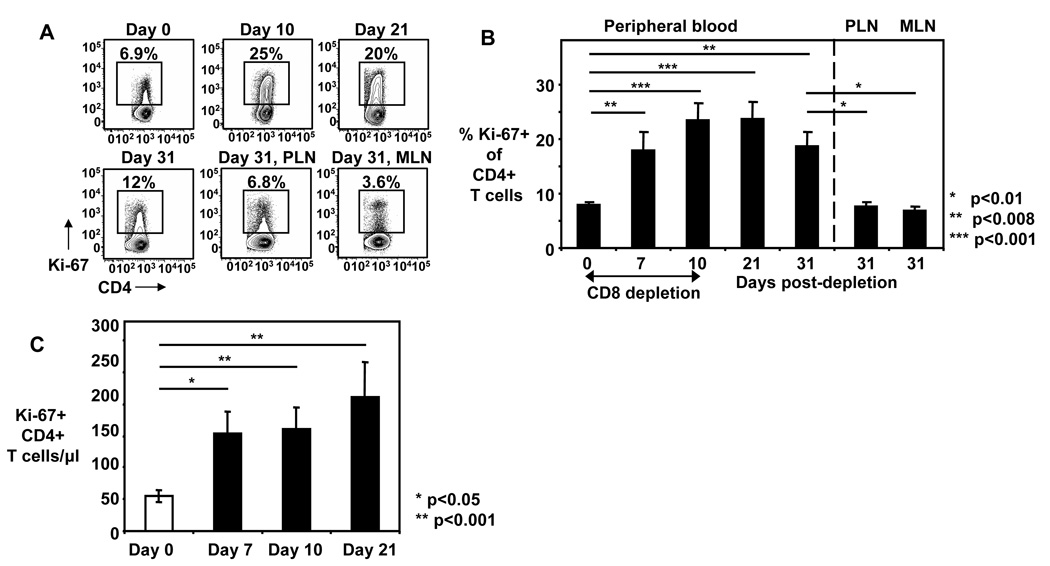
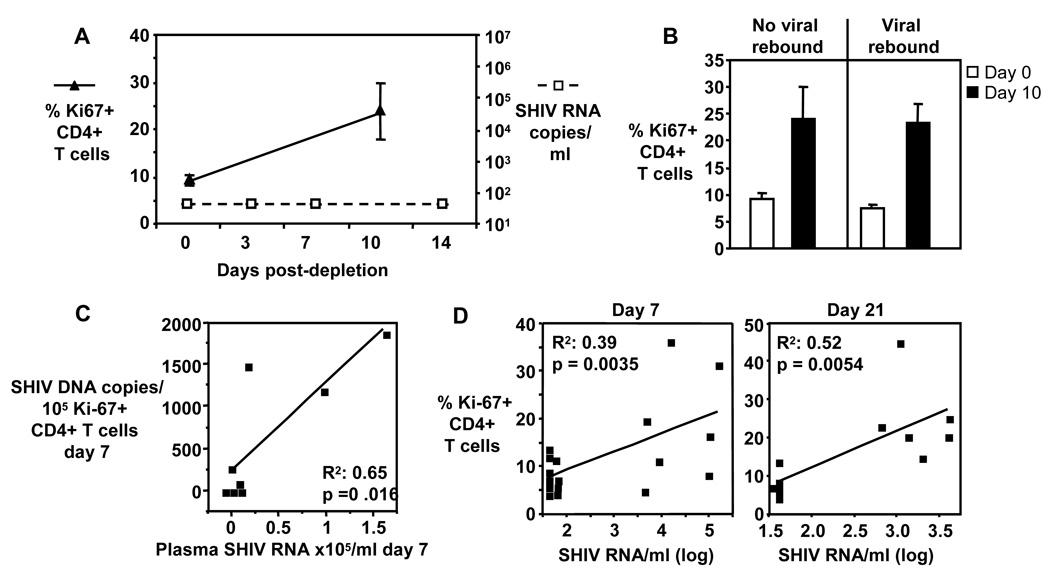
Previous studies have shown that depletion of CD8(+) cells during acute and chronic simian immunodeficiency virus (SIV) infection leads to increased viral replication, morbidity, and mortality, which have been attributed to loss of CD8(+) T cell-mediated control of SIV. However, these studies did not exclude that CD8(+) cell depletion increased homeostatic proliferation of CD4(+) T cells, resulting in increased viral targets and, therefore, viral rebound. Chronically SHIV89.6P-infected cynomolgus macaques were CD8(+) cell-depleted, and the frequency, cell number, and phenotype of CD4(+) T cells and viral infection were examined using flow cytometry and quantitative real-time PCR. The frequency and number of Ki-67-expressing CD4(+) T cells were increased with CD8(+) cell depletion. This proliferation of CD4(+) T cells occurred even in animals with no rebound of viral loads. Most of the proliferating cells were effector memory CD4(+) T cells. Plasma simian HIV (SHIV) RNA copies positively correlated with proliferating CD4(+) T cells and SHIV DNA copies in Ki-67(+) CD4(+) T cells. Although this study does not exclude an important role for virus-specific CD8(+) T cells in SIV and SHIV infection, our data suggest that homeostatic proliferation is an important contributor to increases in plasma viremia that follow CD8(+) cell depletion.
先前的研究表明,在急性和慢性猴免疫缺陷病毒(SIV)感染期间CD8(+)细胞的耗竭会导致病毒复制增加、发病率和死亡率上升,这被归因于CD8(+) T细胞介导的对SIV控制作用的丧失。然而,这些研究并未排除CD8(+)细胞耗竭会增加CD4(+) T细胞的稳态增殖,从而导致病毒靶标增加,进而引起病毒反弹。对慢性感染SHIV89.6P的食蟹猴进行CD8(+)细胞耗竭,并使用流式细胞术和定量实时PCR检测CD4(+) T细胞的频率、细胞数量、表型以及病毒感染情况。随着CD8(+)细胞的耗竭,表达Ki-67的CD4(+) T细胞的频率和数量增加。即使在病毒载量没有反弹的动物中,CD4(+) T细胞也会发生这种增殖。大多数增殖细胞是效应记忆CD4(+) T细胞。血浆猴免疫缺陷病毒(SHIV)RNA拷贝数与增殖的CD4(+) T细胞以及Ki-67(+) CD4(+) T细胞中的SHIV DNA拷贝数呈正相关。尽管本研究并未排除病毒特异性CD8(+) T细胞在SIV和SHIV感染中的重要作用,但我们的数据表明,稳态增殖是CD8(+)细胞耗竭后血浆病毒血症增加的一个重要因素。