St John Maie A, Dohadwala Mariam, Luo Jie, Wang Guanyu, Lee Gina, Shih Hubert, Heinrich Eileen, Krysan Kostantyn, Walser Tonya, Hazra Saswati, Zhu Li, Lai Chi, Abemayor Elliot, Fishbein Michael, Elashoff David A, Sharma Sherven, Dubinett Steven M
Division of Head and Neck Surgery, Department of Surgery, David Geffen School of Medicine at UCLA, Los Angeles, California 90095, USA.
Clin Cancer Res. 2009 Oct 1;15(19):6018-27. doi: 10.1158/1078-0432.CCR-09-0011. Epub 2009 Sep 29.
Inflammatory cytokines have been implicated in the progression of head and neck squamous cell carcinoma (HNSCC). Herein we investigate the mechanisms by which interleukin-1beta (IL-1beta) might contribute to Epithelial-Mesenchymal Transition (EMT) in HNSCC.
We evaluated the effect of IL-1beta on the molecular events of EMT in surgical specimens and HNSCC cell lines. We examined the correlation with tumor histologic features, and a SCID xenograft model was used to assess the effects of Snail overexpression.
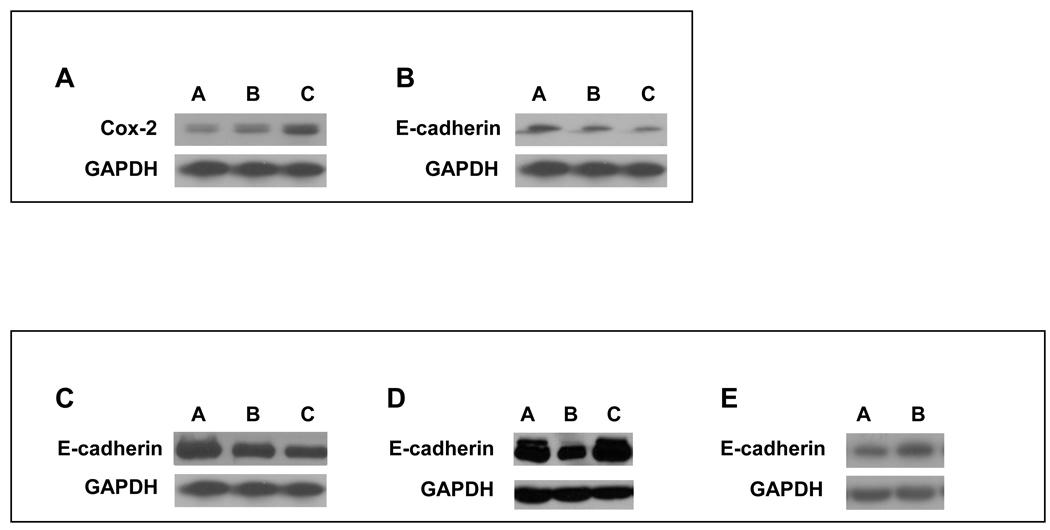
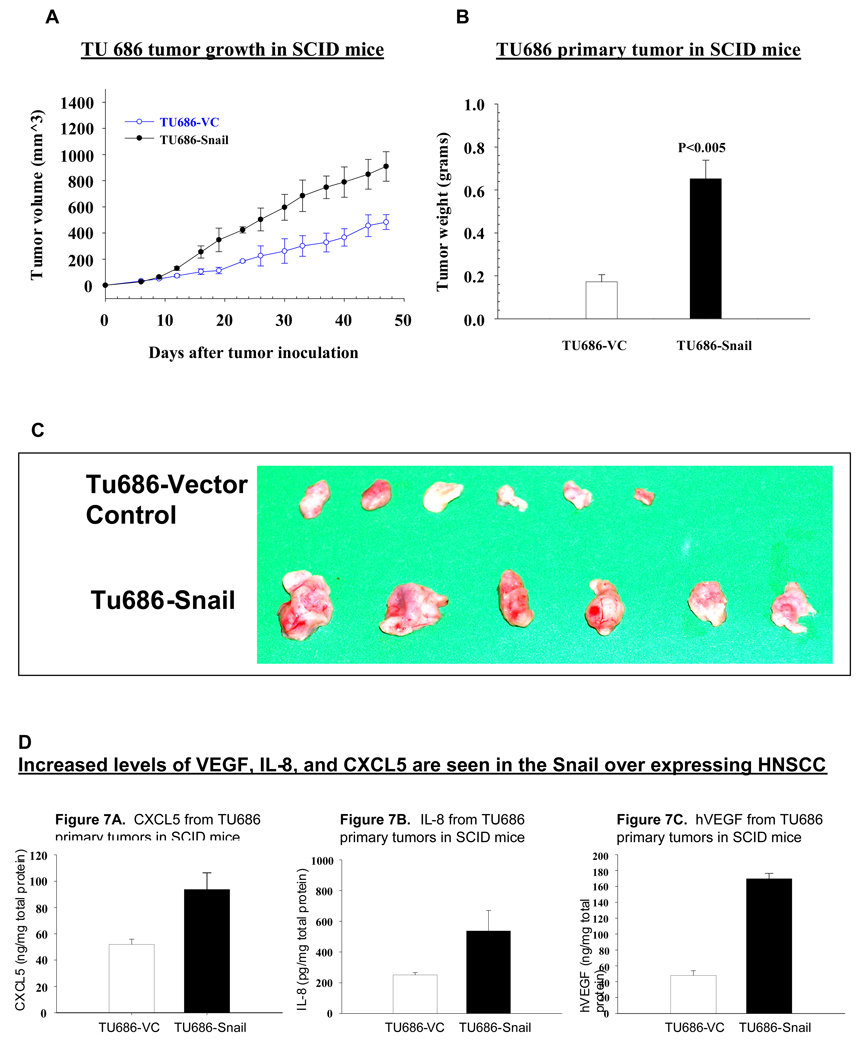
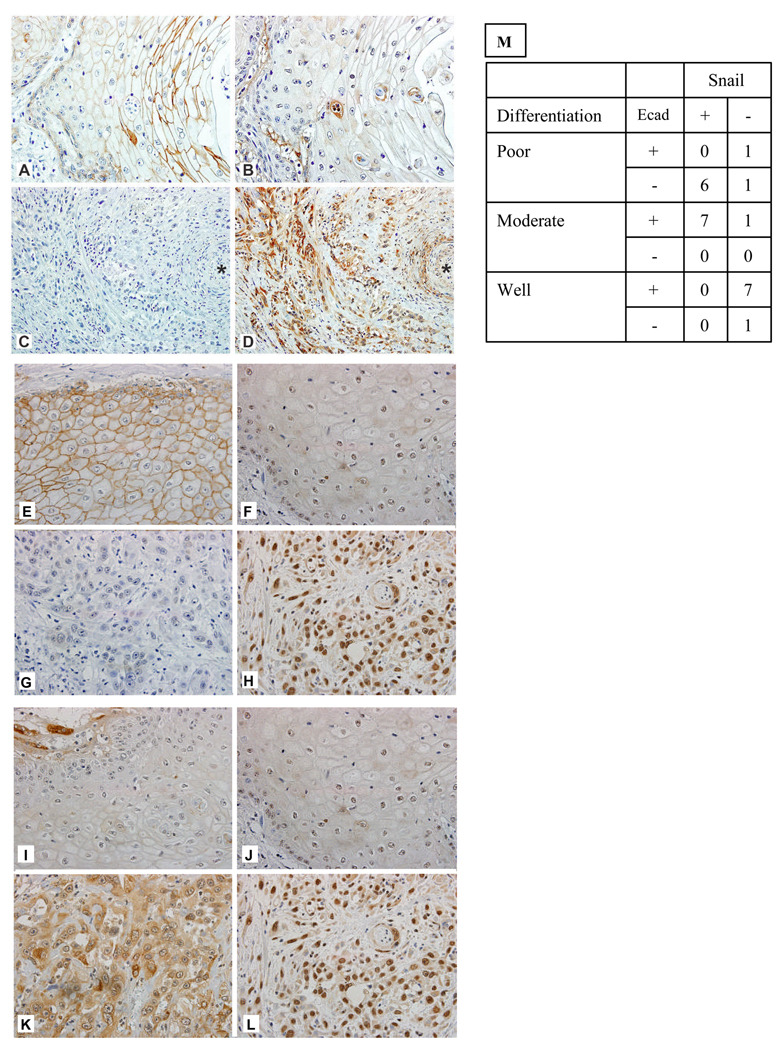
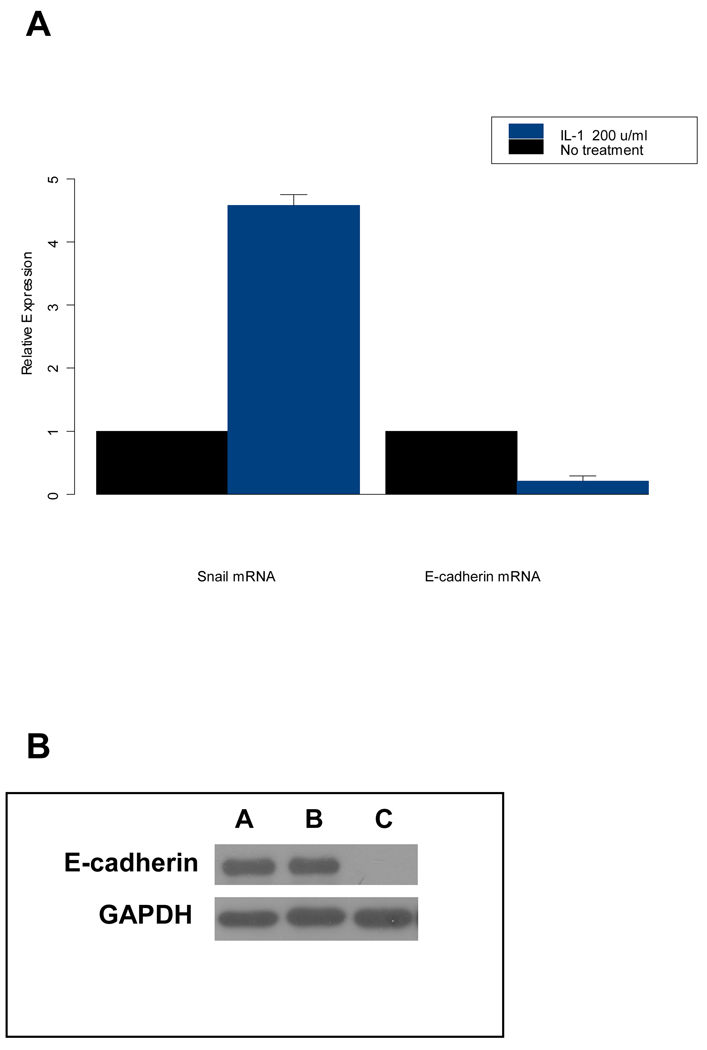
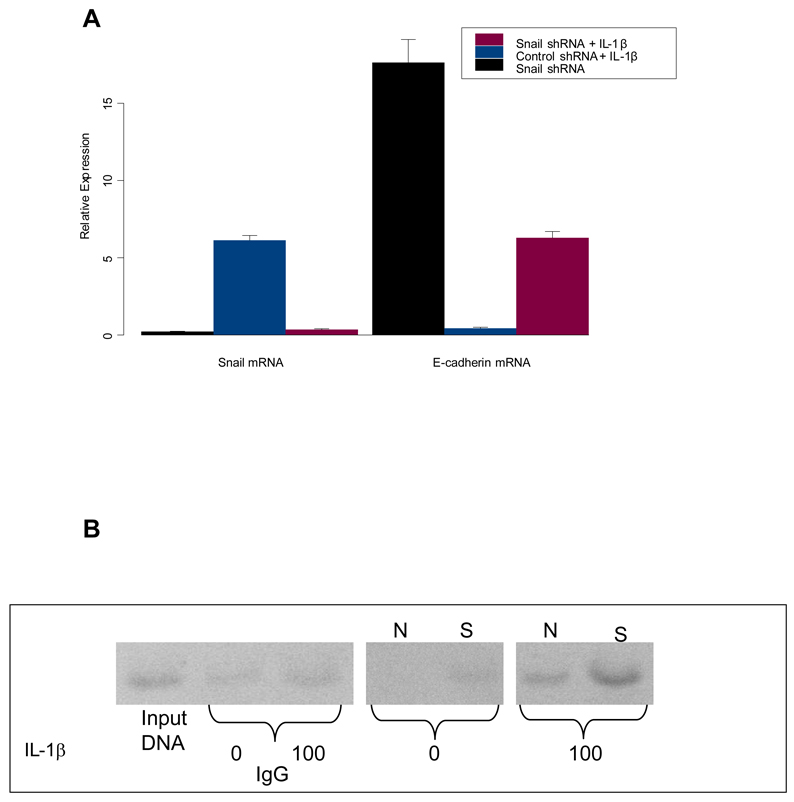
Cyclooxygenase-2 (COX-2)-dependent pathways contribute to the modulation of E-cadherin expression in HNSCC. An inverse relationship between COX-2 and E-cadherin was shown in situ by double immunohistochemical staining of human HNSCC tissue sections. Treatment of HNSCC cells with IL-1beta caused the downregulation of E-cadherin expression and upregulation of COX-2 expression. This effect was blocked in the presence of COX-2 small hairpin RNA. IL-1beta-treated HNSCC cell lines showed a significant decrease in E-cadherin mRNA and an increase in the mRNA expression of the transcriptional repressor Snail. IL-1beta exposure led to enhanced Snail binding at the chromatin level. Small hairpin RNA-mediated knockdown of Snail interrupted the capacity of IL-1beta to downregulate E-cadherin. In a SCID xenograft model, HNSCC Snail-overexpressing cells showed significantly increased primary and metastatic tumor burdens.
IL-1beta modulates Snail and thereby regulates COX-2-dependent E-cadherin expression in HNSCC. This is the first report indicating the role of Snail in the inflammation-induced promotion of EMT in HNSCC. This newly defined pathway for transcriptional regulation of E-cadherin in HNSCC has important implications for targeted chemoprevention and therapy.
炎症细胞因子与头颈部鳞状细胞癌(HNSCC)的进展有关。在此,我们研究白细胞介素-1β(IL-1β)可能促进HNSCC上皮-间质转化(EMT)的机制。
我们评估了IL-1β对手术标本和HNSCC细胞系中EMT分子事件的影响。我们研究了其与肿瘤组织学特征的相关性,并使用SCID异种移植模型评估Snail过表达的影响。
环氧化酶-2(COX-2)依赖性途径参与调节HNSCC中E-钙黏蛋白的表达。通过对人HNSCC组织切片进行双重免疫组化染色,原位显示了COX-2与E-钙黏蛋白之间的负相关关系。用IL-1β处理HNSCC细胞导致E-钙黏蛋白表达下调和COX-2表达上调。在存在COX-2小发夹RNA的情况下,这种作用被阻断。经IL-1β处理的HNSCC细胞系显示E-钙黏蛋白mRNA显著减少,转录抑制因子Snail的mRNA表达增加。IL-1β暴露导致染色质水平上Snail结合增强。小发夹RNA介导的Snail敲低中断了IL-1β下调E-钙黏蛋白的能力。在SCID异种移植模型中,过表达HNSCC Snail的细胞显示原发性和转移性肿瘤负担显著增加。
IL-1β调节Snail,从而调节HNSCC中COX-2依赖性E-钙黏蛋白的表达。这是首次报道Snail在炎症诱导的HNSCC EMT促进中的作用。这种新定义的HNSCC中E-钙黏蛋白转录调控途径对靶向化学预防和治疗具有重要意义。