Department of Neurodegenerative Diseases, UCL Institute of Neurology, London, UK.
Neurogenetics. 2010 May;11(2):185-91. doi: 10.1007/s10048-009-0219-8. Epub 2009 Oct 1.
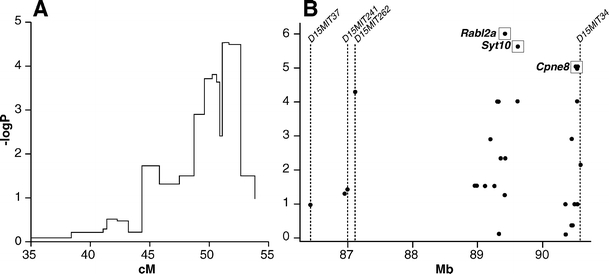
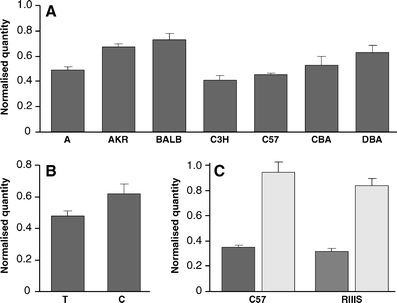
Prion disease incubation time in mice is determined by many factors including genetic background. The prion gene itself plays a major role in incubation time; however, other genes are also known to be important. Whilst quantitative trait loci (QTL) studies have identified multiple loci across the genome, these regions are often large, and with the exception of Hectd2 on Mmu19, no quantitative trait genes or nucleotides for prion disease incubation time have been demonstrated. In this study, we use the Northport heterogeneous stock of mice to reduce the size of a previously identified QTL on Mmu15 from approximately 25 to 1.2 cM. We further characterised the genes in this region and identify Cpne8, a member of the copine family, as the most promising candidate gene. We also show that Cpne8 mRNA is upregulated at the terminal stage of disease, supporting a role in prion disease. Applying these techniques to other loci will facilitate the identification of key pathways in prion disease pathogenesis.
朊病毒病在小鼠中的潜伏期受多种因素的影响,包括遗传背景。朊病毒基因本身在潜伏期起主要作用;然而,其他基因也被认为是重要的。虽然数量性状基因座(QTL)研究已经确定了基因组上的多个位点,但这些区域通常很大,除了 Mmu19 上的 Hectd2 之外,没有证明与朊病毒病潜伏期有关的数量性状基因或核苷酸。在这项研究中,我们使用 Northport 异质品系的小鼠将先前在 Mmu15 上确定的一个 QTL 的大小从大约 25cM 缩小到 1.2cM。我们进一步研究了该区域的基因,并确定了 Copine 家族的成员 Cpne8 是最有希望的候选基因。我们还表明,Cpne8 mRNA 在疾病的终末期上调,支持其在朊病毒病中的作用。将这些技术应用于其他基因座将有助于确定朊病毒病发病机制中的关键途径。