Moody Cary A, Laimins Laimonis A
Department of Microbiology and Immunology, Feinberg School of Medicine, Northwestern University, Chicago, Illinois, United States of America.
PLoS Pathog. 2009 Oct;5(10):e1000605. doi: 10.1371/journal.ppat.1000605. Epub 2009 Oct 2.
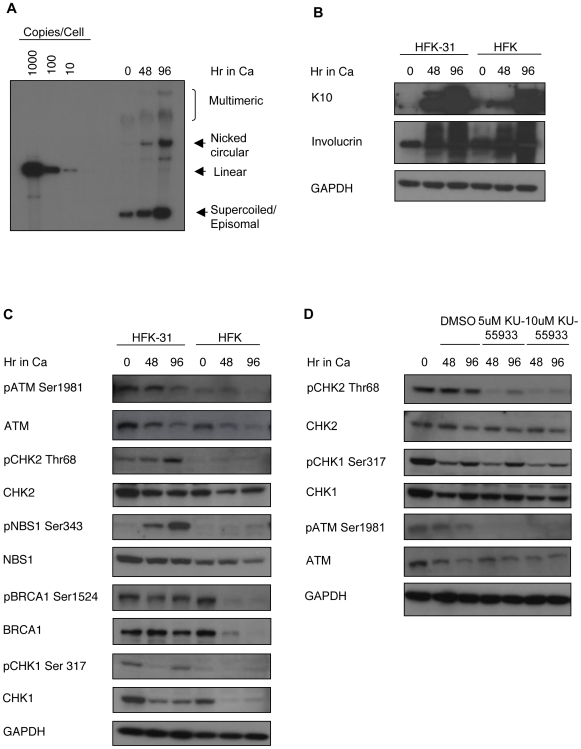
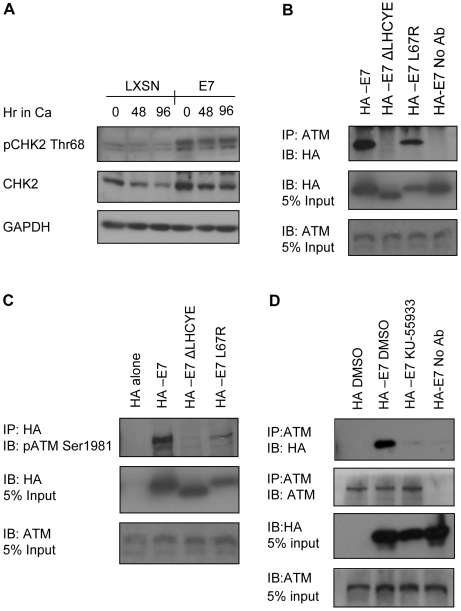
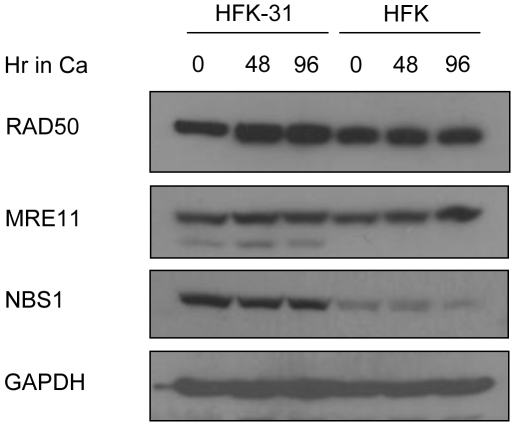
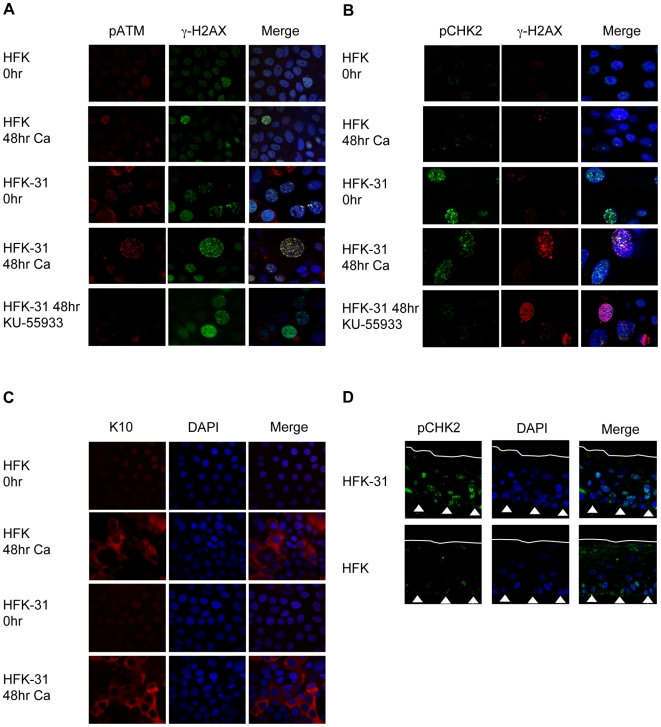
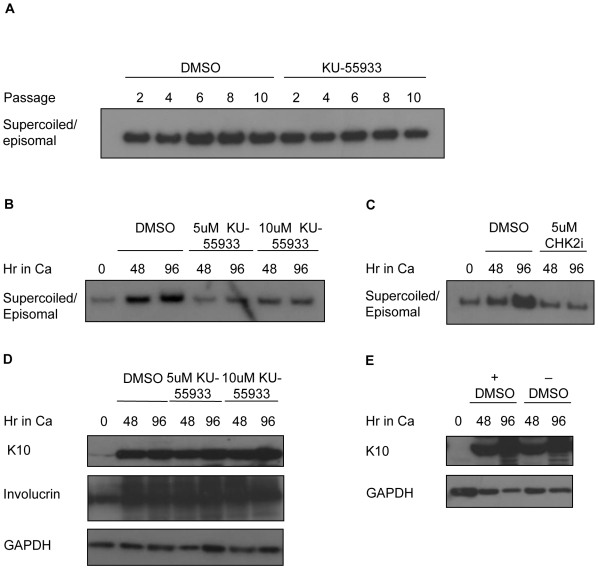
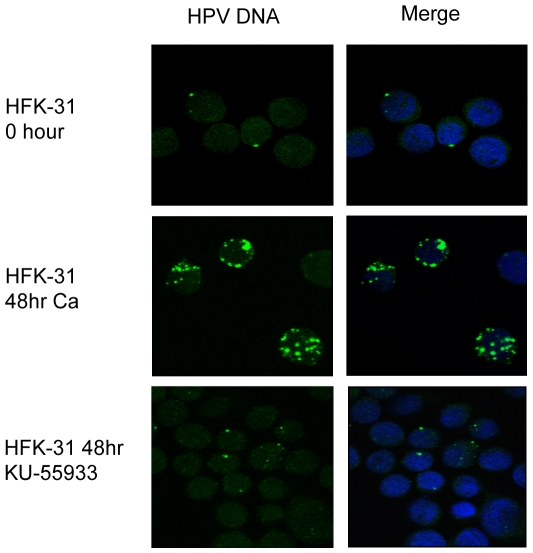
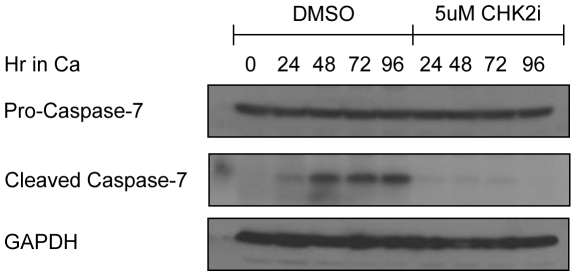
Human papillomaviruses (HPV) are the causative agents of cervical cancers. The infectious HPV life cycle is closely linked to the differentiation state of the host epithelia, with viral genome amplification, late gene expression and virion production restricted to suprabasal cells. The E6 and E7 proteins provide an environment conducive to DNA synthesis upon differentiation, but little is known concerning the mechanisms that regulate productive viral genome amplification. Using keratinocytes that stably maintain HPV-31 episomes, and chemical inhibitors, we demonstrate that viral proteins activate the ATM DNA damage response in differentiating cells, as indicated by phosphorylation of CHK2, BRCA1 and NBS1. This activation is necessary for viral genome amplification, as well as for formation of viral replication foci. In contrast, inhibition of ATM kinase activity in undifferentiated keratinocytes had no effect on the stable maintenance of viral genomes. Previous studies have shown that HPVs induce low levels of caspase 3/7 activation upon differentiation and that this is important for cleavage of the E1 replication protein and genome amplification. Our studies demonstrate that caspase cleavage is induced upon differentiation of HPV positive cells through the action of the DNA damage protein kinase CHK2, which may be activated as a result of E7 binding to the ATM kinase. These findings identify a major regulatory mechanism responsible for productive HPV replication in differentiating cells. Our results have potential implications for the development of anti-viral therapies to treat HPV infections.
人乳头瘤病毒(HPV)是宫颈癌的致病因子。感染性HPV的生命周期与宿主上皮细胞的分化状态密切相关,病毒基因组扩增、晚期基因表达和病毒粒子产生仅限于基底上层细胞。E6和E7蛋白在分化时提供有利于DNA合成的环境,但关于调节病毒基因组有效扩增的机制知之甚少。利用稳定维持HPV-31游离基因的角质形成细胞和化学抑制剂,我们证明病毒蛋白在分化细胞中激活了ATM DNA损伤反应,CHK2、BRCA1和NBS1的磷酸化表明了这一点。这种激活对于病毒基因组扩增以及病毒复制灶的形成是必需的。相比之下,在未分化的角质形成细胞中抑制ATM激酶活性对病毒基因组的稳定维持没有影响。先前的研究表明,HPV在分化时诱导低水平的caspase 3/7激活,这对于E1复制蛋白的切割和基因组扩增很重要。我们的研究表明,HPV阳性细胞在分化时通过DNA损伤蛋白激酶CHK2的作用诱导caspase切割,CHK2可能因E7与ATM激酶结合而被激活。这些发现确定了一种负责HPV在分化细胞中有效复制的主要调节机制。我们的结果对开发治疗HPV感染的抗病毒疗法具有潜在意义。