J Cell Commun Signal. 2009 Dec;3(3-4):337-47. doi: 10.1007/s12079-009-0065-3. Epub 2009 Oct 2.
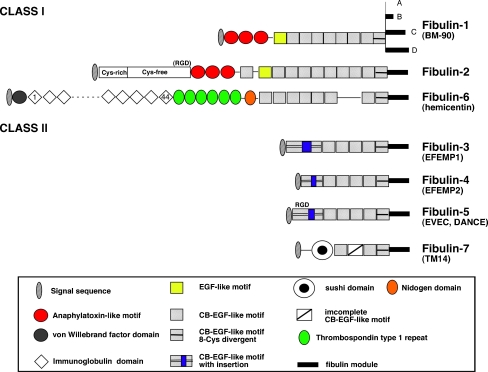
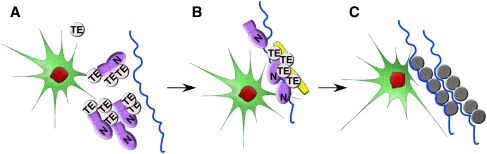
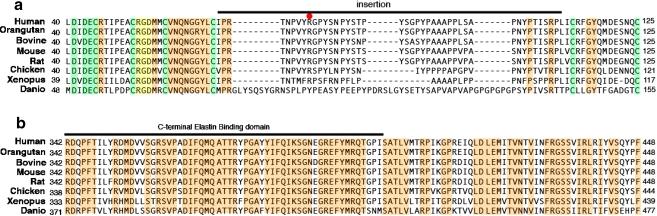
Interactions between the extracellular matrix (ECM) and cells are critical in embryonic development, tissue homeostasis, physiological remodeling, and tumorigenesis. Matricellular proteins, a group of ECM components, mediate cell-ECM interactions. One such molecule, Fibulin-5 is a 66-kDa glycoprotein secreted by various cell types, including vascular smooth muscle cells (SMCs), fibroblasts, and endothelial cells. Fibulin-5 contributes to the formation of elastic fibers by binding to structural components including tropoelastin and fibrillin-1, and to cross-linking enzymes, aiding elastic fiber assembly. Mice deficient in the fibulin-5 gene (Fbln5) exhibit systemic elastic fiber defects with manifestations of loose skin, tortuous aorta, emphysematous lung and genital prolapse. Although Fbln5 expression is down-regulated after birth, following the completion of elastic fiber formation, expression is reactivated upon tissue injury, affecting diverse cellular functions independent of its elastogenic function. Fibulin-5 contains an evolutionally conserved arginine-glycine-aspartic acid (RGD) motif in the N-terminal region, which mediates binding to a subset of integrins, including alpha5beta1, alphavbeta3, and alphavbeta5. Fibulin-5 enhances substrate attachment of endothelial cells, while inhibiting migration and proliferation in a cell type- and context-dependent manner. The antagonistic function of fibulin-5 in angiogenesis has been demonstrated in vitro and in vivo; fibulin-5 may block angiogenesis by inducing the anti-angiogenic molecule thrompospondin-1, by antagonizing VEGF(165)-mediated signaling, and/or by antagonizing fibronectin-mediated signaling through directly binding and blocking the alpha5beta1 fibronectin receptor. The overall effect of fibulin-5 on tumor growth depends on the balance between the inhibitory property of fibulin-5 on angiogenesis and the direct effect of fibulin-5 on proliferation and migration of tumor cells. However, the effect of tumor-derived versus host microenvironment-derived fibulin-5 remains to be evaluated.
细胞外基质 (ECM) 与细胞之间的相互作用对于胚胎发育、组织稳态、生理重塑和肿瘤发生至关重要。细胞外基质成分中的基质细胞外蛋白分子介导细胞-细胞外基质相互作用。一种这样的分子,纤连蛋白-5 是一种 66kDa 的糖蛋白,由多种细胞类型分泌,包括血管平滑肌细胞 (SMCs)、成纤维细胞和内皮细胞。纤连蛋白-5 通过与结构成分包括原弹性蛋白和原纤维蛋白-1 以及交联酶结合,有助于弹性纤维的组装,从而促进弹性纤维的形成。纤连蛋白-5 基因 (Fbln5) 缺失的小鼠表现出全身性弹性纤维缺陷,表现为皮肤松弛、主动脉扭曲、肺气肿和生殖器脱垂。尽管 Fbln5 的表达在出生后下调,即在弹性纤维形成完成后,但在组织损伤时会重新激活表达,从而影响其弹性蛋白功能之外的多种细胞功能。纤连蛋白-5 在其 N 端区域含有一个进化上保守的精氨酸-甘氨酸-天冬氨酸 (RGD) 基序,该基序介导与一组整合素的结合,包括 alpha5beta1、alphavbeta3 和 alphavbeta5。纤连蛋白-5 增强内皮细胞的底物附着,同时以细胞类型和上下文依赖的方式抑制迁移和增殖。纤连蛋白-5 在体外和体内均表现出抗血管生成作用;纤连蛋白-5 可能通过诱导抗血管生成分子血栓调节蛋白-1、通过拮抗 VEGF(165)介导的信号转导、以及/或通过直接结合和阻断 alpha5beta1 纤连蛋白受体来拮抗纤连蛋白介导的信号转导,从而阻断血管生成。纤连蛋白-5 对肿瘤生长的总体影响取决于纤连蛋白-5 对血管生成的抑制特性与纤连蛋白-5 对肿瘤细胞增殖和迁移的直接作用之间的平衡。然而,肿瘤衍生的纤连蛋白-5 与宿主微环境衍生的纤连蛋白-5 的作用仍有待评估。