Department of Medicine, Division of Infectious Diseases, Albert Einstein College of Medicine, Bronx, NY 10461, USA.
Biomaterials. 2010 Feb;31(4):669-79. doi: 10.1016/j.biomaterials.2009.09.087. Epub 2009 Oct 9.
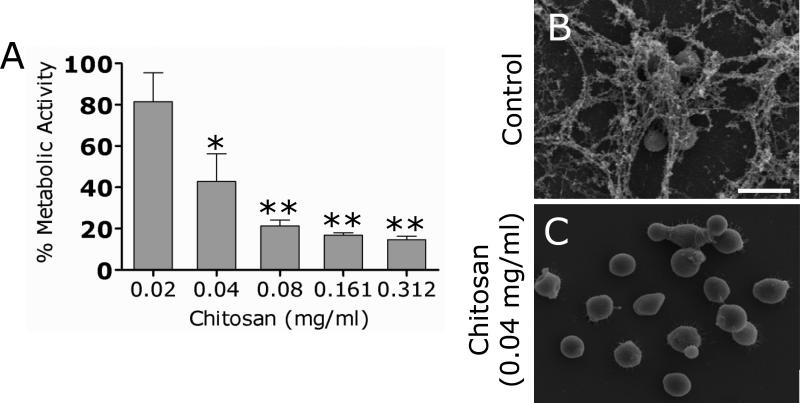
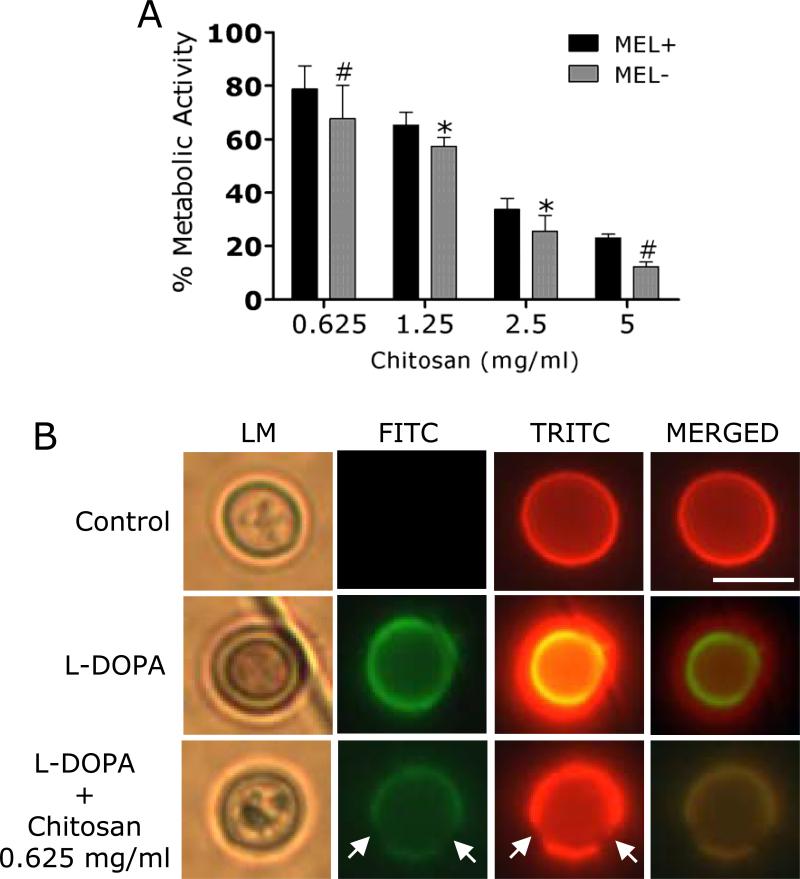
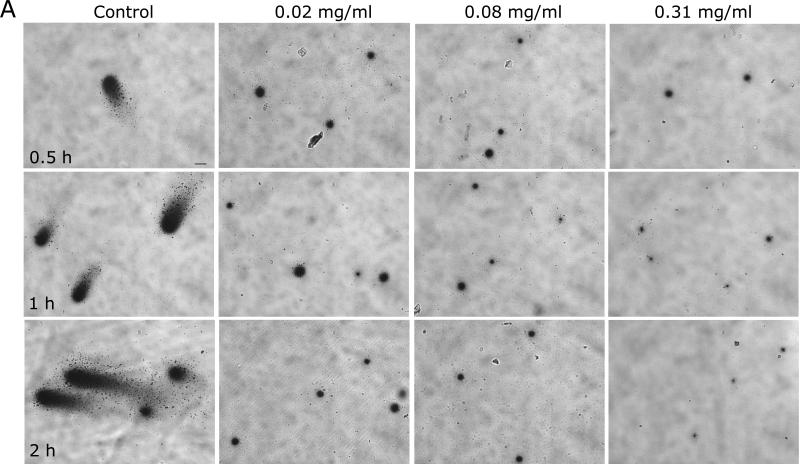
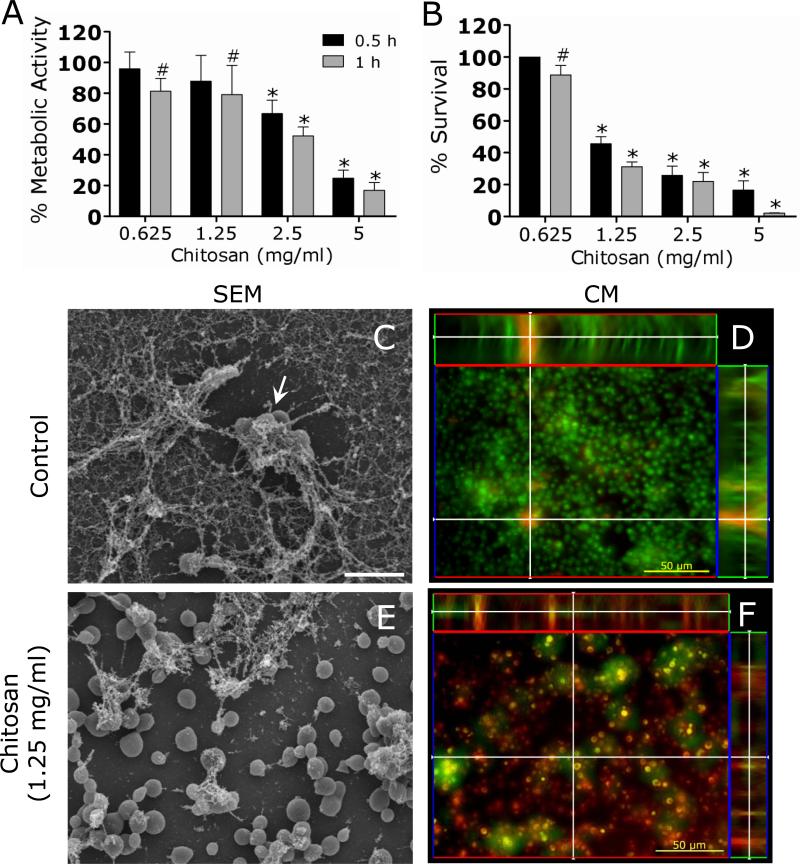
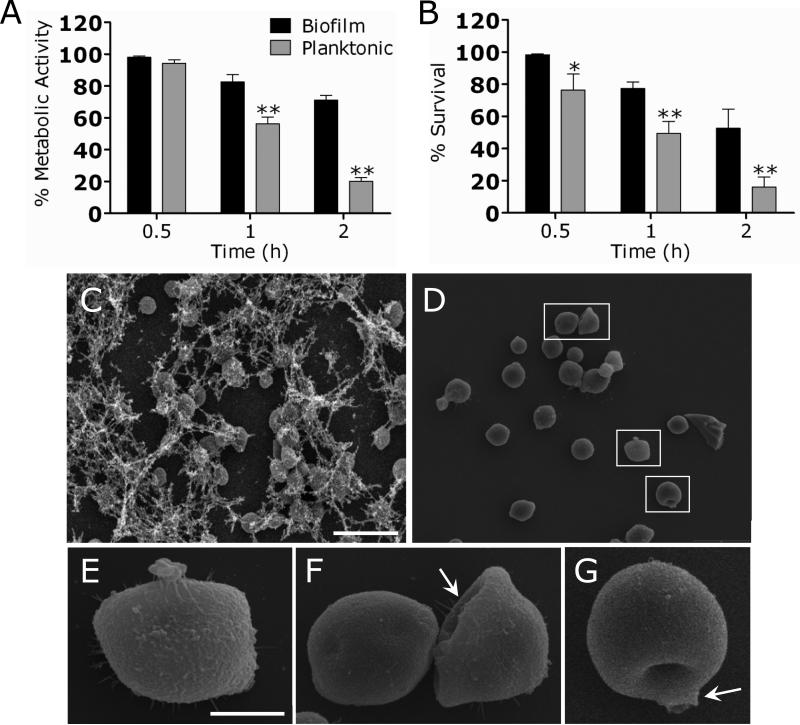
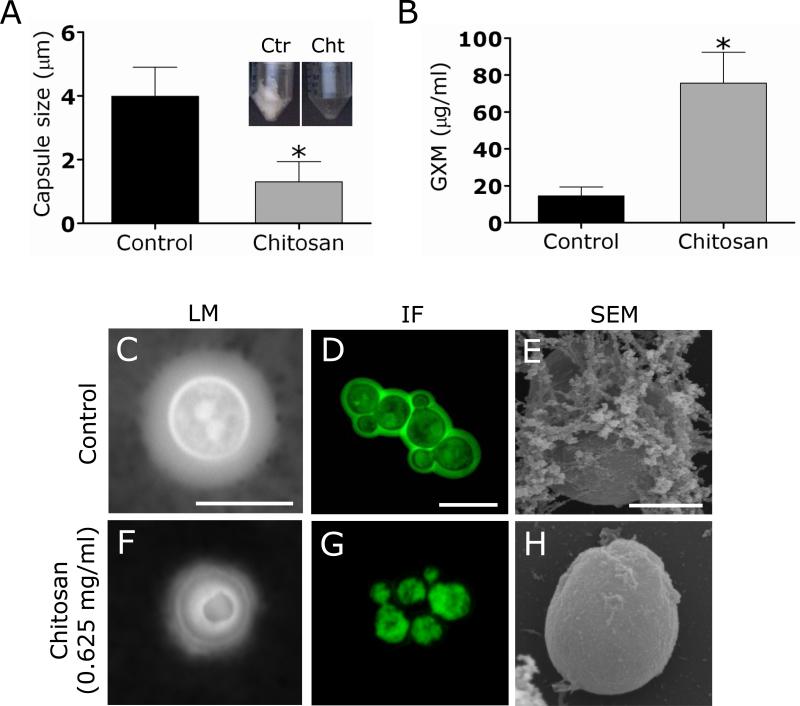
The use of indwelling medical devices (e.g. pacemakers, prosthetic joints, catheters, etc) continues to increase, yet these devices are all too often complicated by infections with biofilm-forming microbes with increased resistance to antimicrobial agents and host defense mechanisms. We investigated the ability of chitosan, a polymer isolated from crustacean exoskeletons, to damage biofilms formed by the pathogenic fungus Cryptococcus neoformans. Using 2,3-bis(2-methoxy-4-nitro-5-sulfophenyl)-5-[(phenylamino) carbonyl]-2H-tetrazolium-hydroxide (XTT) reduction assay and CFU determinations, we showed that chitosan significantly reduced both the metabolic activity of the biofilms and cell viability, respectively. We further demonstrated that chitosan penetrated biofilms and damaged fungal cells using confocal and scanning electron microscopy. Notably, melanization, an important virulence determinant of C. neoformans, did not protect cryptococcal biofilms against chitosan. The chitosan concentrations used in this study to evaluate fungal biofilm susceptibility were not toxic to human endothelial cells. Our results indicate that cryptococcal biofilms are susceptible to treatment with chitosan, suggesting an option for the prevention or treatment of fungal biofilms on indwelling medical devices.
留置医疗设备(如起搏器、假体关节、导管等)的使用不断增加,但这些设备往往容易受到生物膜形成微生物的感染,这些微生物对抗生素和宿主防御机制的耐药性增加。我们研究了壳聚糖(一种从甲壳类动物外骨骼中分离出的聚合物)破坏致病性真菌新生隐球菌形成的生物膜的能力。使用 2,3-双(2-甲氧基-4-硝基-5-磺苯基)-5-[(苯氨基)羰基]-2H-四唑基-氢氧化氢(XTT)还原测定和 CFU 测定,我们表明壳聚糖分别显著降低生物膜的代谢活性和细胞活力。我们进一步证明壳聚糖通过共聚焦和扫描电子显微镜穿透生物膜并破坏真菌细胞。值得注意的是,黑色素沉着,新生隐球菌的一个重要毒力决定因素,并没有保护隐球菌生物膜免受壳聚糖的侵害。在这项研究中用于评估真菌生物膜易感性的壳聚糖浓度对人内皮细胞没有毒性。我们的结果表明,隐球菌生物膜易受壳聚糖治疗,这为预防或治疗留置医疗设备上的真菌生物膜提供了一种选择。