Corsi Daniel J, Bassani Diego G, Kumar Rajesh, Awasthi Shally, Jotkar Raju, Kaur Navkiran, Jha Prabhat
Centre for Global Health Research, St, Michael's Hospital, University of Toronto, Toronto, ON, M5C 1N8, Canada.
BMC Int Health Hum Rights. 2009 Oct 14;9 Suppl 1(Suppl 1):S3. doi: 10.1186/1472-698X-9-S1-S3.
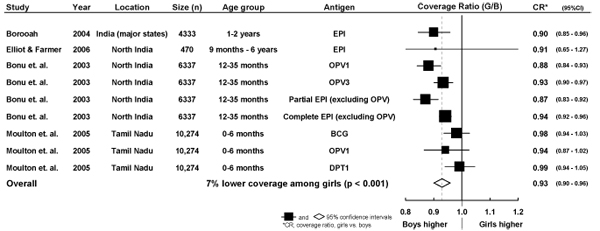
A variety of studies have considered the affects of India's son preference on gender differences in child mortality, sex ratio at birth, and access to health services. Less research has focused on the affects of son preference on gender inequities in immunization coverage and how this may have varied with time, and across regions and with sibling compositions. We present a systematic examination of trends in immunization coverage in India, with a focus on inequities in coverage by gender, birth order, year of birth, and state.
We analyzed data from three consecutive rounds of the Indian National Family Health Survey undertaken between 1992 and 2006. All children below five years of age with complete immunization histories were included in the analysis. Age-appropriate immunization coverage was determined for the following antigens: bacille Calmette-Guérin (BCG), oral polio (OPV), diphtheria, pertussis (whooping cough) and tetanus (DPT), and measles.
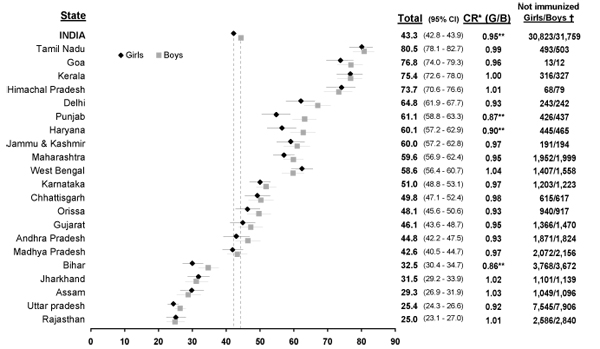
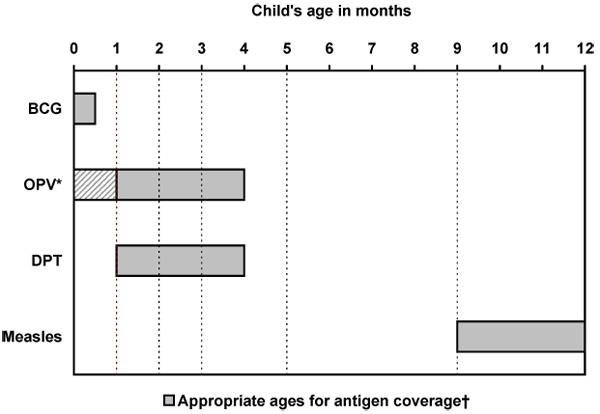
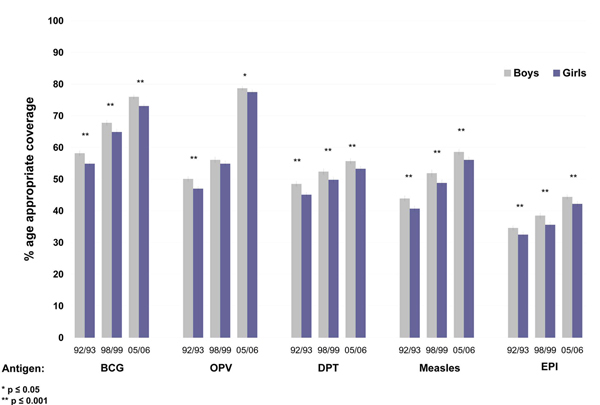
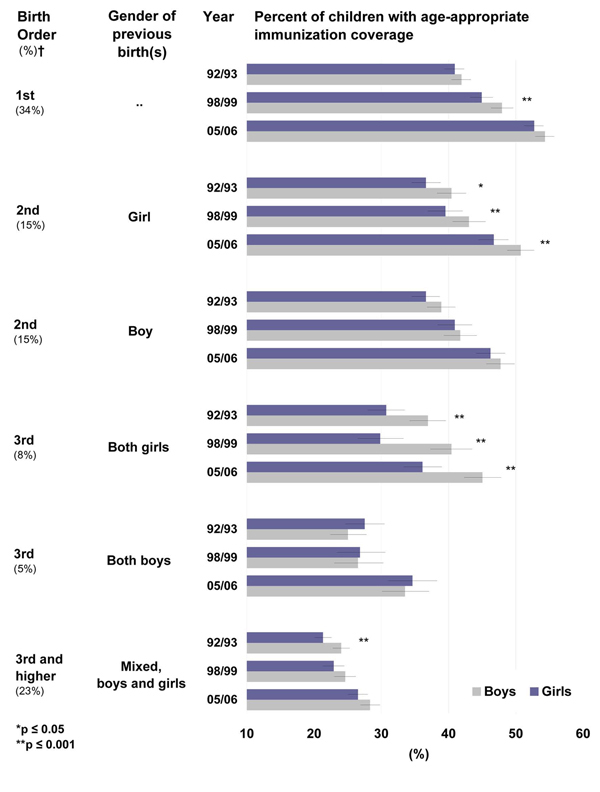
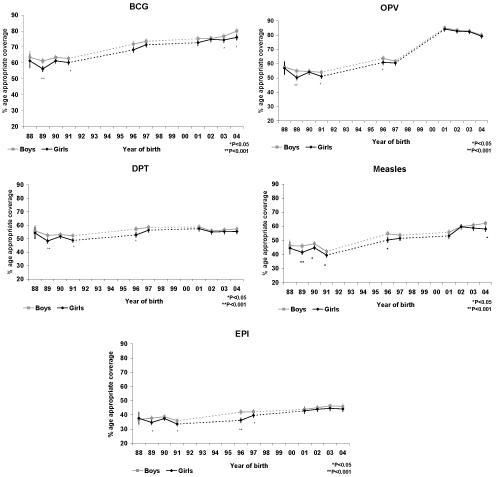
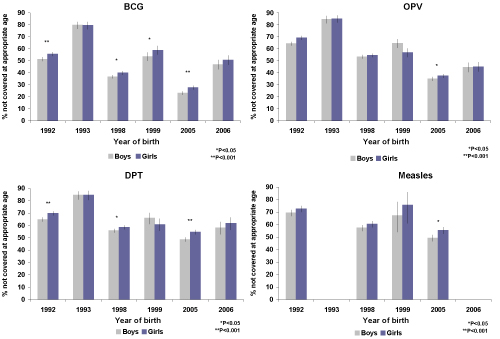
Immunization coverage in India has increased since the early 1990s, but complete, age-appropriate coverage is still under 50% nationally. Girls were found to have significantly lower immunization coverage (p<0.001) than boys for BCG, DPT, and measles across all three surveys. By contrast, improved coverage of OPV suggests a narrowing of the gender differences in recent years. Girls with a surviving older sister were less likely to be immunized compared to boys, and a large proportion of all children were found to be immunized considerably later than recommended.
Gender inequities in immunization coverage are prevalent in India. The low immunization coverage, the late immunization trends and the gender differences in coverage identified in our study suggest that risks of child mortality, especially for girls at higher birth orders, need to be addressed both socially and programmatically. ABSTRACT IN HINDI : See the full article online for a translation of this abstract in Hindi.
多项研究探讨了印度重男轻女观念对儿童死亡率、出生性别比及获得卫生服务方面性别差异的影响。较少有研究关注重男轻女观念对免疫接种覆盖率方面性别不平等的影响,以及这种影响如何随时间、地区和兄弟姐妹构成的不同而变化。我们对印度免疫接种覆盖率的趋势进行了系统研究,重点关注按性别、出生顺序、出生年份和邦划分的覆盖率不平等情况。
我们分析了1992年至2006年间连续三轮印度全国家庭健康调查的数据。分析纳入了所有五岁以下且有完整免疫接种史的儿童。针对以下抗原确定了适龄免疫接种覆盖率:卡介苗(BCG)、口服脊髓灰质炎疫苗(OPV)、白喉、百日咳(百日咳)和破伤风(DPT)以及麻疹。
自20世纪90年代初以来,印度的免疫接种覆盖率有所提高,但全国范围内完整的适龄覆盖率仍低于50%。在所有三项调查中,发现女孩在卡介苗、DPT和麻疹的免疫接种覆盖率方面显著低于男孩(p<0.001)。相比之下,OPV覆盖率的提高表明近年来性别差异有所缩小。与男孩相比,有存活姐姐的女孩接种疫苗的可能性较小,并且发现所有儿童中有很大一部分接种疫苗的时间比建议时间晚得多。
免疫接种覆盖率方面的性别不平等在印度普遍存在。我们研究中发现的低免疫接种覆盖率、延迟接种趋势和覆盖率方面的性别差异表明,儿童死亡风险,尤其是高出生顺序女孩的死亡风险,需要从社会和项目层面加以解决。印地语摘要:可在线查看本文全文以获取该摘要的印地语翻译。