Rajpar M Helen, McDermott Ben, Kung Louise, Eardley Rachel, Knowles Lynette, Heeran Mel, Thornton David J, Wilson Richard, Bateman John F, Poulsom Richard, Arvan Peter, Kadler Karl E, Briggs Michael D, Boot-Handford Raymond P
Wellcome Trust Centre for Cell-Matrix Research, Faculty of Life Sciences, The University of Manchester, Manchester, United Kingdom.
PLoS Genet. 2009 Oct;5(10):e1000691. doi: 10.1371/journal.pgen.1000691. Epub 2009 Oct 16.
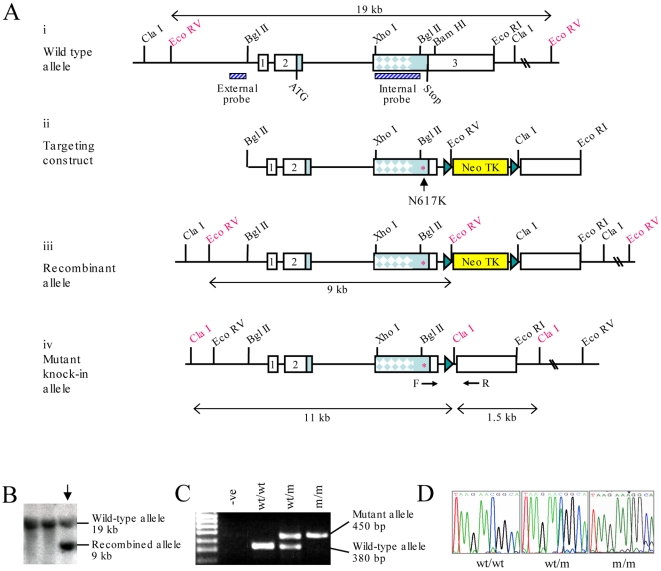
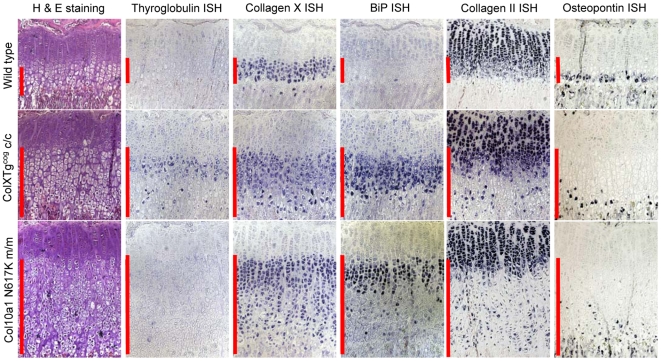
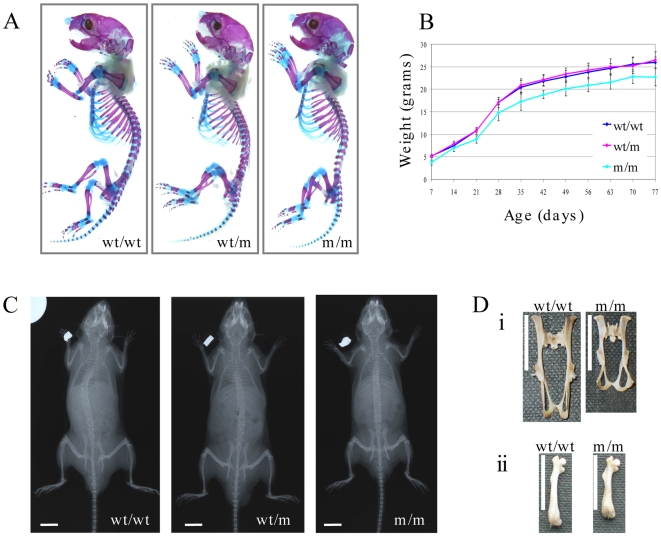
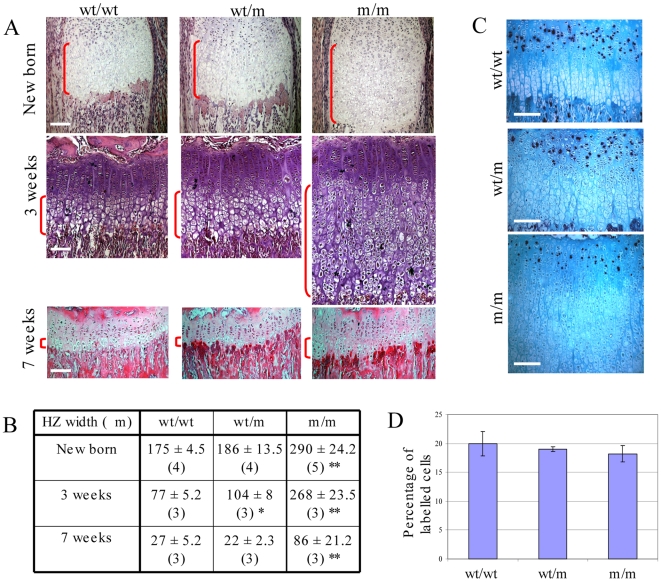
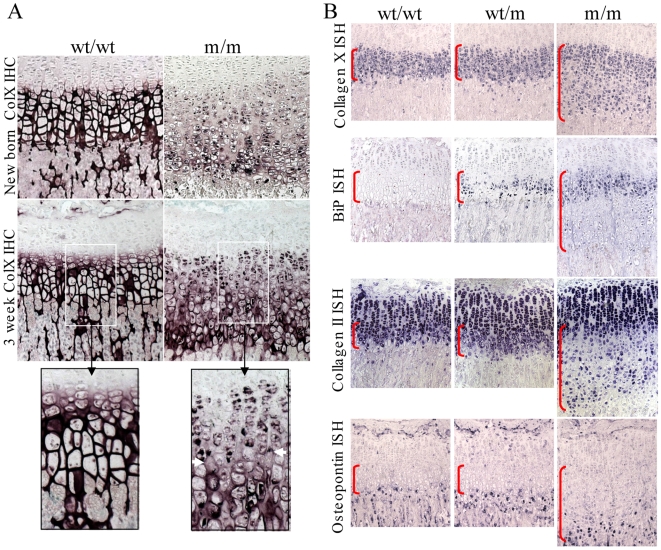
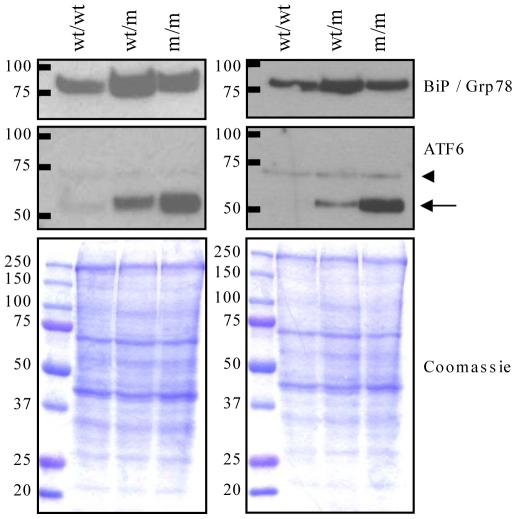
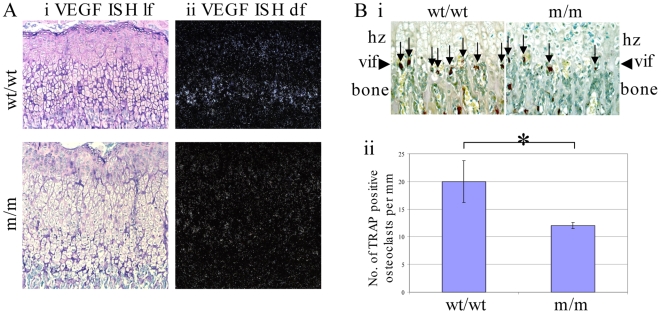
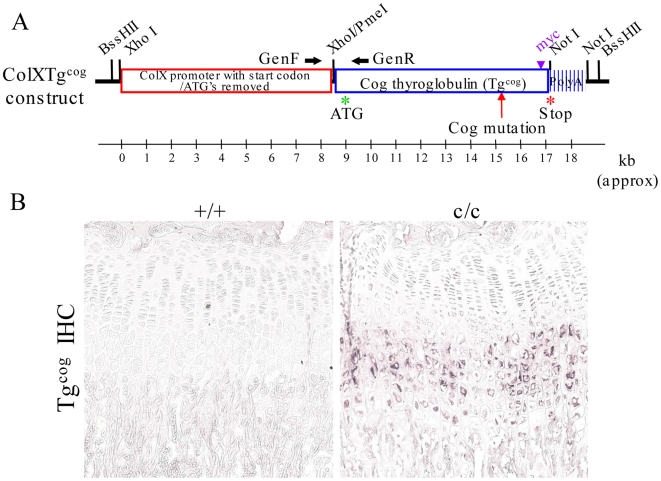
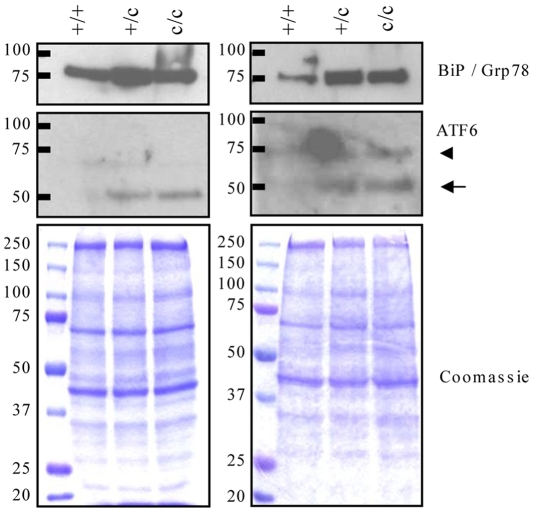
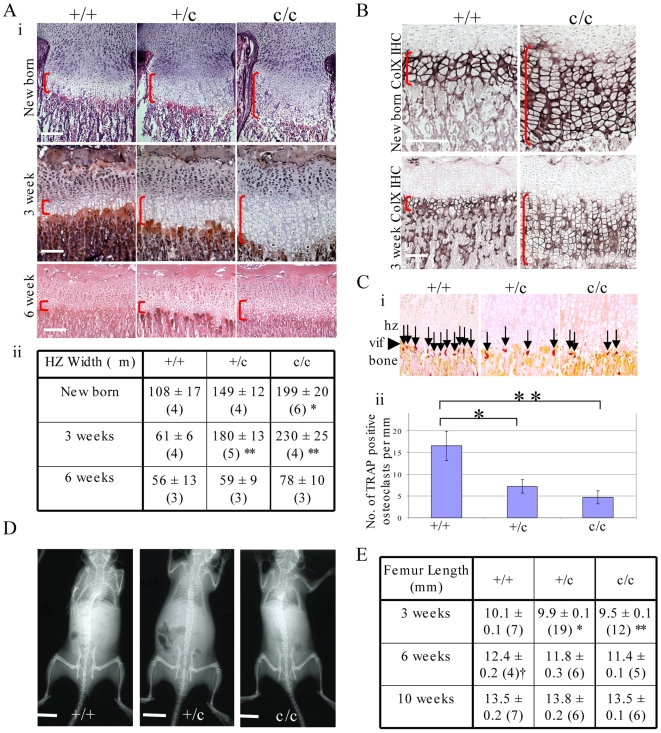
Pathologies caused by mutations in extracellular matrix proteins are generally considered to result from the synthesis of extracellular matrices that are defective. Mutations in type X collagen cause metaphyseal chondrodysplasia type Schmid (MCDS), a disorder characterised by dwarfism and an expanded growth plate hypertrophic zone. We generated a knock-in mouse model of an MCDS-causing mutation (COL10A1 p.Asn617Lys) to investigate pathogenic mechanisms linking genotype and phenotype. Mice expressing the collagen X mutation had shortened limbs and an expanded hypertrophic zone. Chondrocytes in the hypertrophic zone exhibited endoplasmic reticulum (ER) stress and a robust unfolded protein response (UPR) due to intracellular retention of mutant protein. Hypertrophic chondrocyte differentiation and osteoclast recruitment were significantly reduced indicating that the hypertrophic zone was expanded due to a decreased rate of VEGF-mediated vascular invasion of the growth plate. To test directly the role of ER stress and UPR in generating the MCDS phenotype, we produced transgenic mouse lines that used the collagen X promoter to drive expression of an ER stress-inducing protein (the cog mutant of thyroglobulin) in hypertrophic chondrocytes. The hypertrophic chondrocytes in this mouse exhibited ER stress with a characteristic UPR response. In addition, the hypertrophic zone was expanded, gene expression patterns were disrupted, osteoclast recruitment to the vascular invasion front was reduced, and long bone growth decreased. Our data demonstrate that triggering ER stress per se in hypertrophic chondrocytes is sufficient to induce the essential features of the cartilage pathology associated with MCDS and confirm that ER stress is a central pathogenic factor in the disease mechanism. These findings support the contention that ER stress may play a direct role in the pathogenesis of many connective tissue disorders associated with the expression of mutant extracellular matrix proteins.
细胞外基质蛋白突变引起的病理状况通常被认为是由有缺陷的细胞外基质合成所致。X型胶原蛋白的突变会导致施密德型干骺端软骨发育不良(MCDS),这是一种以侏儒症和生长板肥大区扩大为特征的疾病。我们构建了一个导致MCDS突变(COL10A1 p.Asn617Lys)的基因敲入小鼠模型,以研究将基因型与表型联系起来的致病机制。表达胶原蛋白X突变的小鼠四肢缩短,肥大区扩大。肥大区内的软骨细胞由于突变蛋白的细胞内滞留而表现出内质网(ER)应激和强烈的未折叠蛋白反应(UPR)。肥大软骨细胞分化和破骨细胞募集显著减少,表明肥大区扩大是由于VEGF介导的生长板血管侵入速率降低所致。为了直接测试ER应激和UPR在产生MCDS表型中的作用,我们构建了转基因小鼠品系,该品系使用胶原蛋白X启动子在肥大软骨细胞中驱动一种ER应激诱导蛋白(甲状腺球蛋白的cog突变体)的表达。该小鼠中的肥大软骨细胞表现出具有特征性UPR反应的ER应激。此外,肥大区扩大,基因表达模式被破坏,破骨细胞向血管侵入前沿的募集减少,长骨生长减缓。我们的数据表明,在肥大软骨细胞中引发ER应激本身足以诱导与MCDS相关的软骨病理的基本特征,并证实ER应激是疾病机制中的一个核心致病因素。这些发现支持了这样一种观点,即ER应激可能在许多与突变细胞外基质蛋白表达相关的结缔组织疾病的发病机制中起直接作用。