Department of Physiology, Loma Linda University of Medicine, Loma Linda, CA, USA.
Crit Care Med. 2010 Feb;38(2):612-8. doi: 10.1097/CCM.0b013e3181c027ae.
Accumulated evidence suggests that the primary cause of poor outcome after subarachnoid hemorrhage is not only cerebral arterial narrowing but also early brain injury. Our objective was to determine the effect of recombinant osteopontin, a pleiotropic extracellular matrix glycoprotein, on early brain injury after subarachnoid hemorrhage in rats.
Controlled in vivo laboratory study.
Animal research laboratory.
One hundred seventy-seven male adult Sprague-Dawley rats weighing 300 to 370 g.
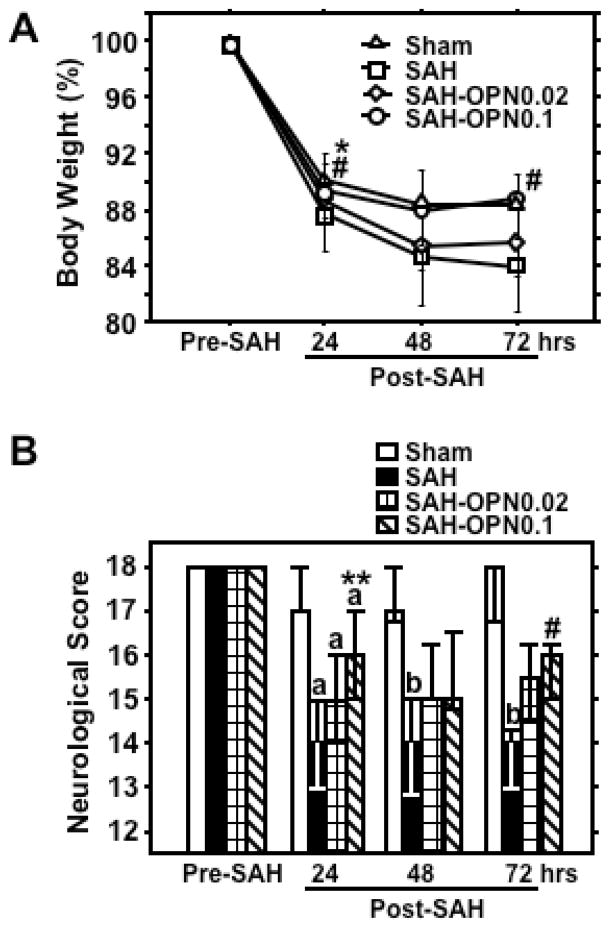
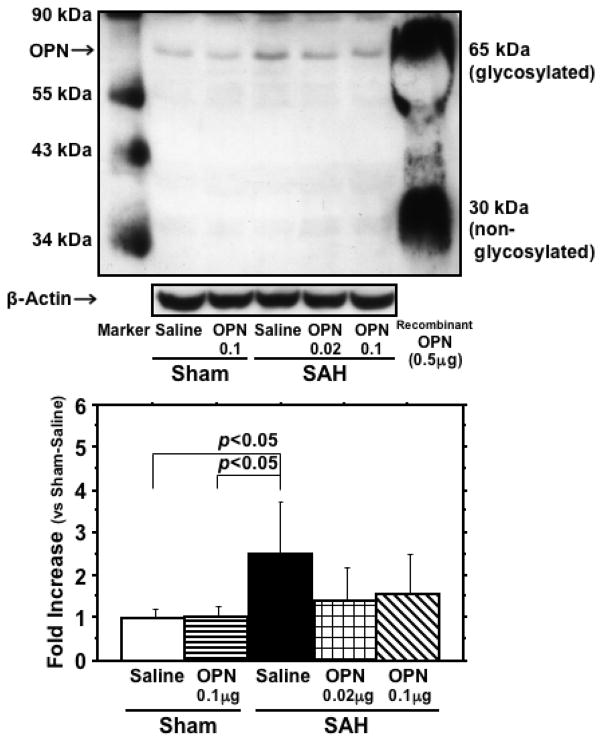
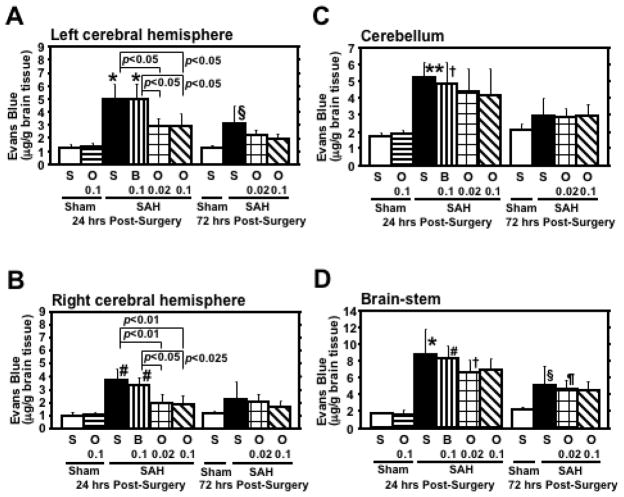
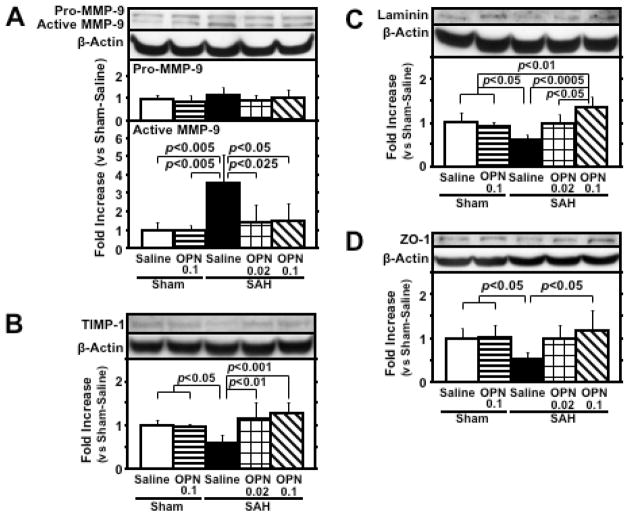
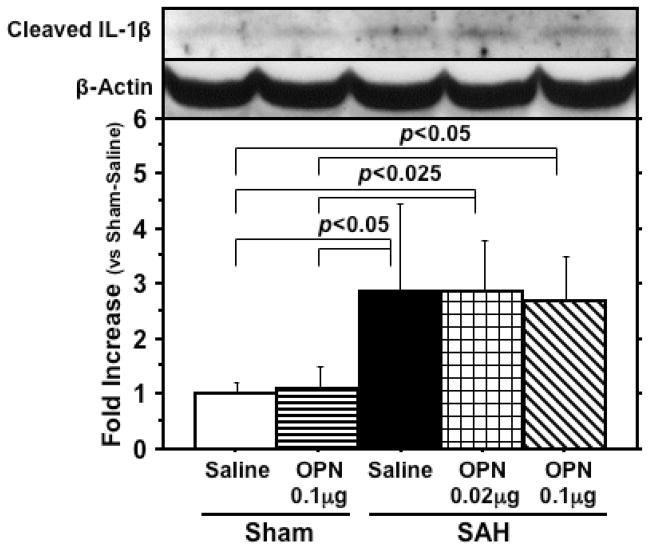
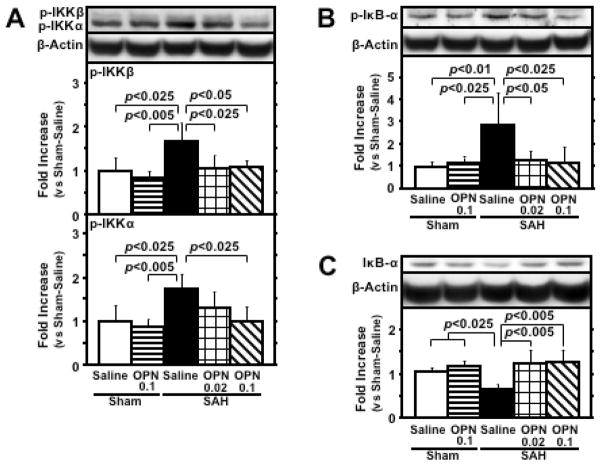
The endovascular perforation model of subarachnoid hemorrhage was produced. Subarachnoid hemorrhage or sham-operated rats were treated with an equal volume (1 microL) of pre-subarachnoid hemorrhage intracerebroventricular administration of two dosages (0.02 and 0.1 microg) of recombinant osteopontin, albumin, or vehicle. Body weight, neurologic scores, brain edema, and blood-brain barrier disruption were evaluated, and Western blot analyses were performed to determine the effect of recombinant osteopontin on matrix metalloproteinase-9, substrates of matrix metalloproteinase-9 (zona occludens-1, laminin), tissue inhibitor of matrix metalloproteinase-1, inflammation (interleukin-1beta), and nuclear factor-kappaB signaling pathways.
Treatment with recombinant osteopontin prevented a significant loss in body weight, neurologic impairment, brain edema, and blood-brain barrier disruption after subarachnoid hemorrhage. These effects were associated with the deactivation of nuclear factor-kappaB activity, inhibition of matrix metalloproteinase-9 induction, the maintenance of tissue inhibitor of matrix metalloproteinase-1, the consequent preservation of the cerebral microvessel basal lamina protein laminin, and the tight junction protein zona occludens-1.
These results demonstrate that recombinant osteopontin treatment is effective for early brain injury after subarachnoid hemorrhage.
越来越多的证据表明,蛛网膜下腔出血后预后不良的主要原因不仅是脑动脉狭窄,还有早期脑损伤。我们的目的是确定重组多配体蛋白聚糖(一种多功能细胞外基质糖蛋白)对蛛网膜下腔出血后大鼠早期脑损伤的影响。
体内对照实验室研究。
动物研究实验室。
177 只雄性成年 Sprague-Dawley 大鼠,体重 300 至 370 克。
制作血管内穿孔蛛网膜下腔出血模型。蛛网膜下腔出血或假手术大鼠在蛛网膜下腔出血前给予 1 微升(1 微升)两种剂量(0.02 和 0.1 微克)重组骨桥蛋白、白蛋白或载体的脑室给药,评估体重、神经评分、脑水肿和血脑屏障破坏,并进行 Western blot 分析,以确定重组骨桥蛋白对基质金属蛋白酶-9、基质金属蛋白酶-9 底物(紧密连接蛋白-1、层粘连蛋白)、基质金属蛋白酶-1 组织抑制剂、炎症(白细胞介素-1β)和核因子-κB 信号通路的影响。
重组骨桥蛋白治疗可防止蛛网膜下腔出血后体重明显下降、神经功能障碍、脑水肿和血脑屏障破坏。这些作用与核因子-κB 活性失活、基质金属蛋白酶-9 诱导抑制、基质金属蛋白酶-1 组织抑制剂维持、脑微血管基底膜蛋白层粘连蛋白的保存以及紧密连接蛋白-1 的紧密相关。
这些结果表明,重组骨桥蛋白治疗对蛛网膜下腔出血后早期脑损伤有效。