Simard J Marc, Geng Zhihua, Woo S Kyoon, Ivanova Svetlana, Tosun Cigdem, Melnichenko Ludmila, Gerzanich Volodymyr
Department of Neurosurgery, University of Maryland School of Medicine, Baltimore, Maryland 21201-1595, USA.
J Cereb Blood Flow Metab. 2009 Feb;29(2):317-30. doi: 10.1038/jcbfm.2008.120. Epub 2008 Oct 15.
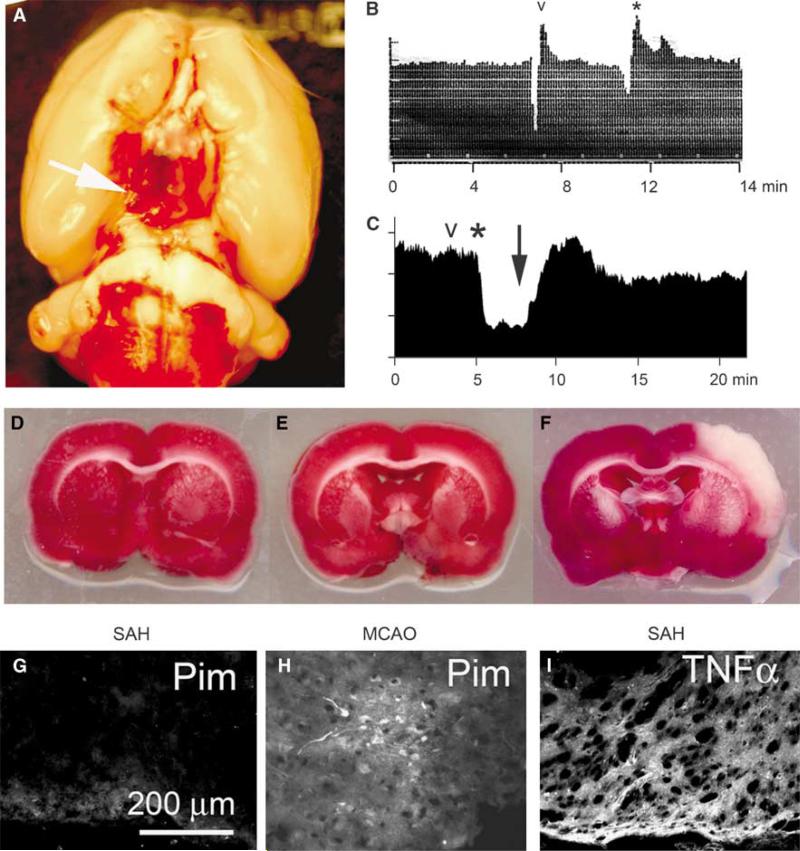
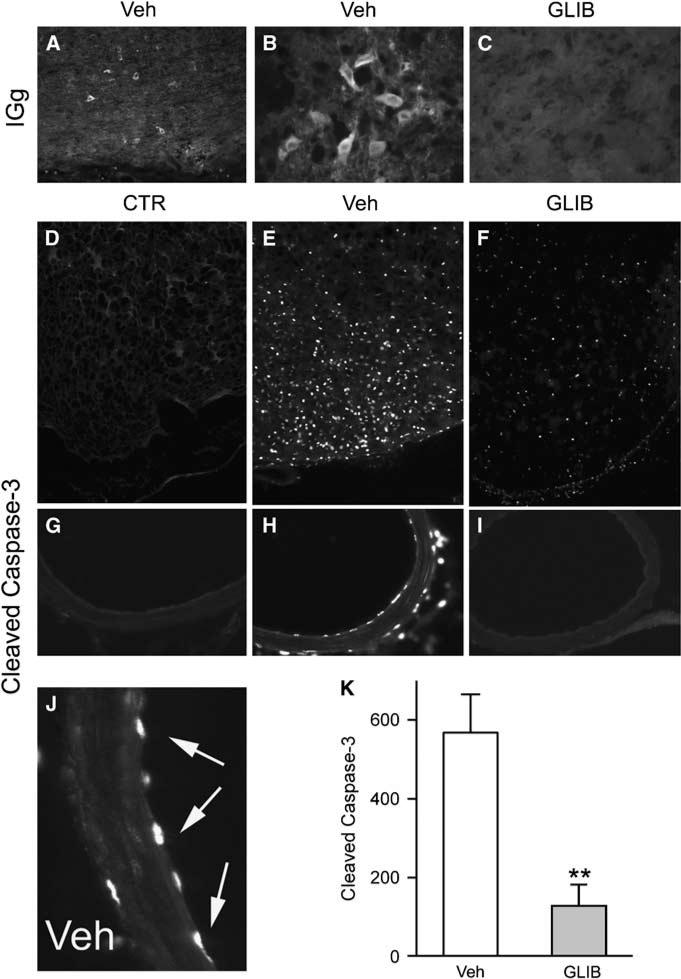
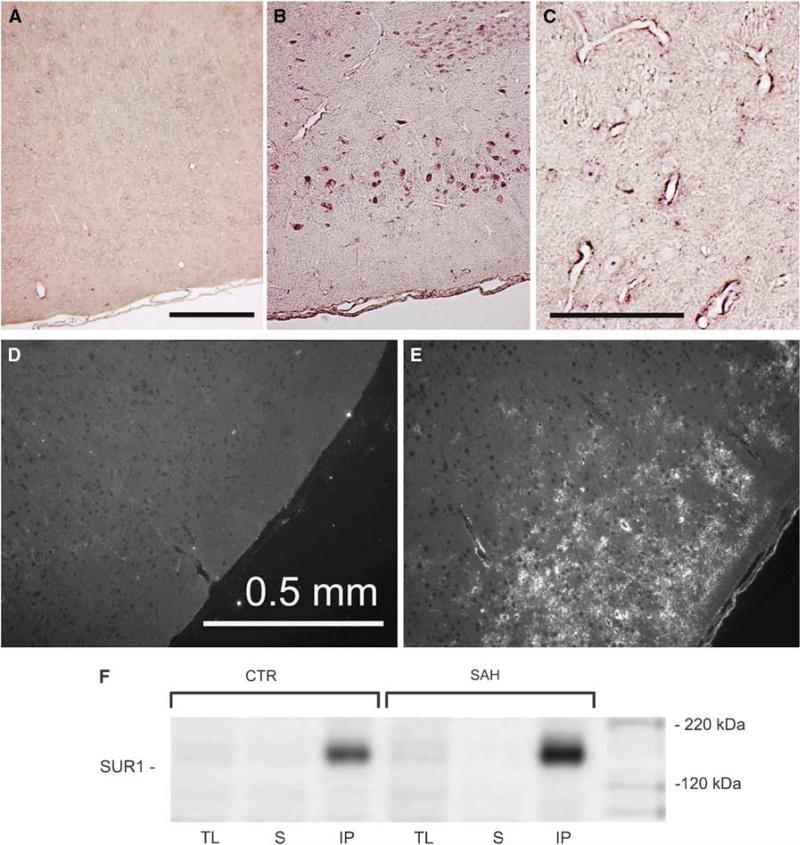
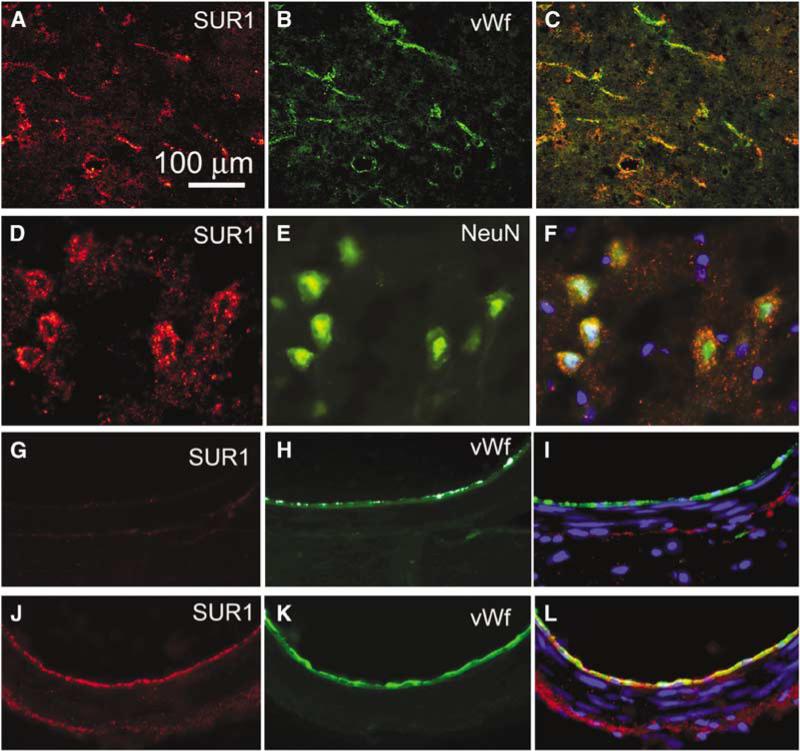
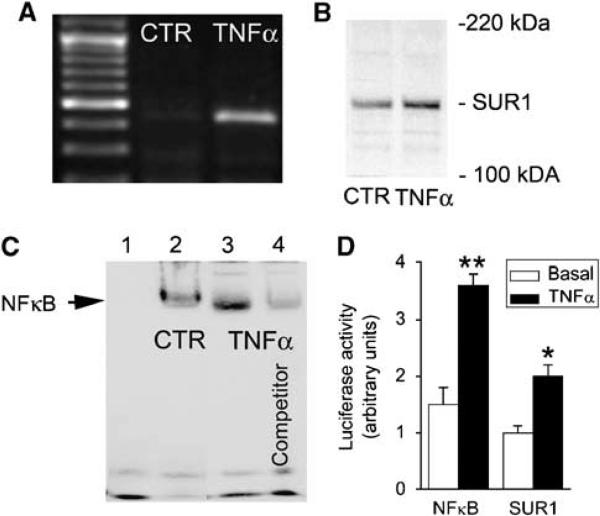
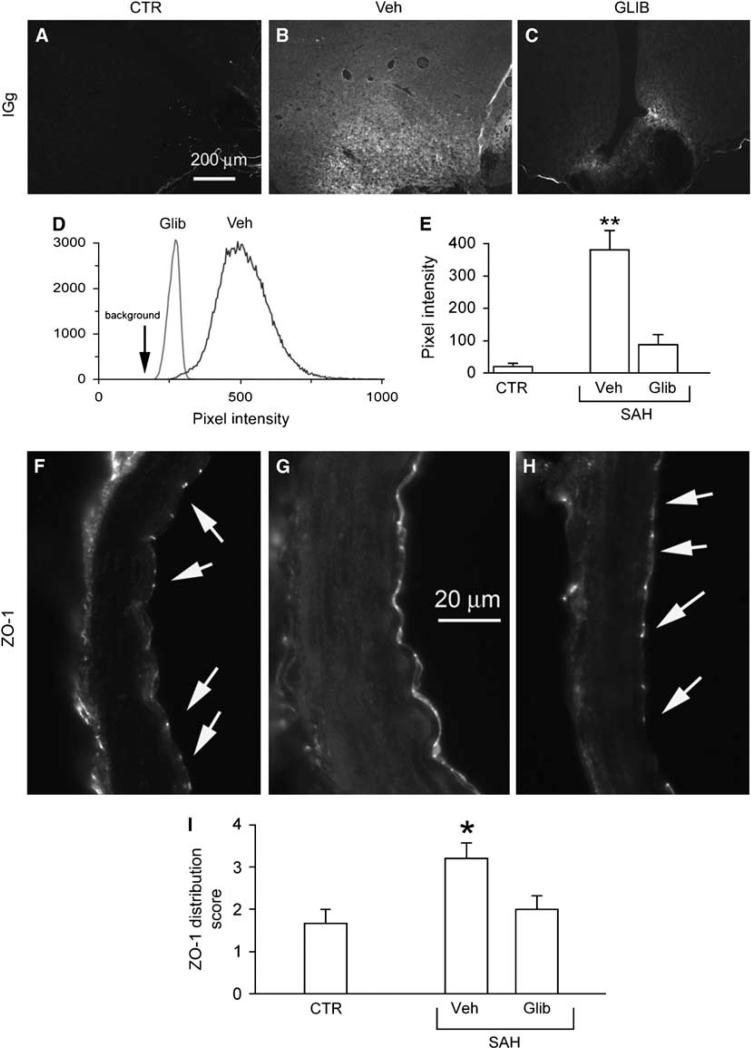
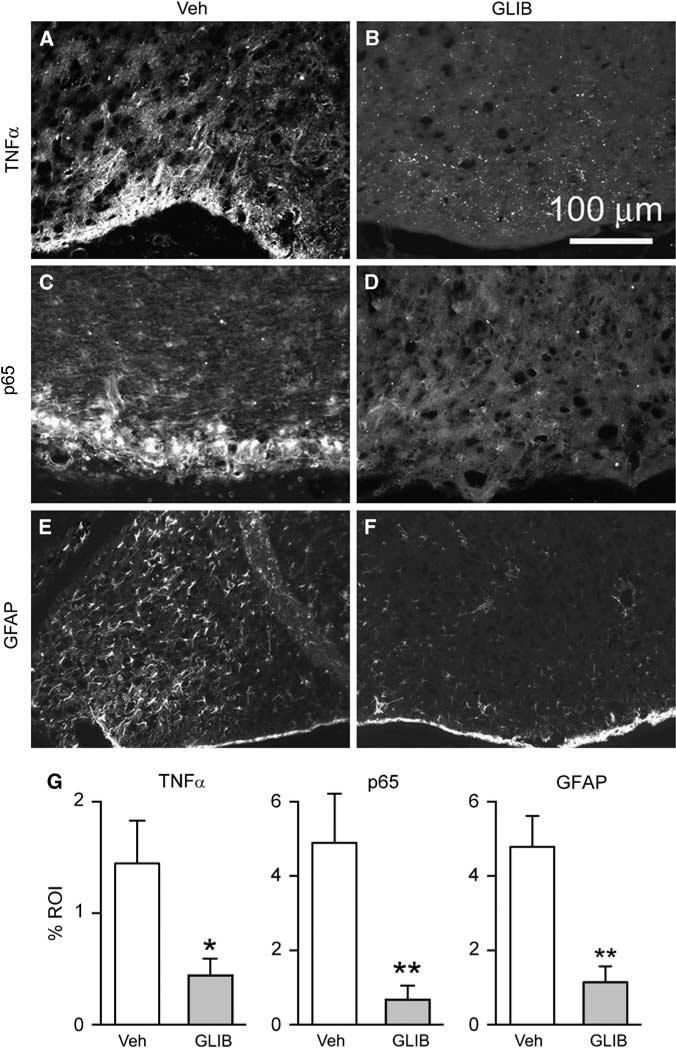
Subarachnoid hemorrhage (SAH) causes secondary brain injury due to vasospasm and inflammation. Here, we studied a rat model of mild-to-moderate SAH intended to minimize ischemia/hypoxia to examine the role of sulfonylurea receptor 1 (SUR1) in the inflammatory response induced by SAH. mRNA for Abcc8, which encodes SUR1, and SUR1 protein were abundantly upregulated in cortex adjacent to SAH, where tumor-necrosis factor-alpha (TNFalpha) and nuclear factor (NF)kappaB signaling were prominent. In vitro experiments confirmed that Abcc8 transcription is stimulated by TNFalpha. To investigate the functional consequences of SUR1 expression after SAH, we studied the effect of the potent, selective SUR1 inhibitor, glibenclamide. We examined barrier permeability (immunoglobulin G, IgG extravasation), and its correlate, the localization of the tight junction protein, zona occludens 1 (ZO-1). SAH caused a large increase in barrier permeability and disrupted the normal junctional localization of ZO-1, with glibenclamide significantly reducing both effects. In addition, SAH caused large increases in markers of inflammation, including TNFalpha and NFkappaB, and markers of cell injury or cell death, including IgG endocytosis and caspase-3 activation, with glibenclamide significantly reducing these effects. We conclude that block of SUR1 by glibenclamide may ameliorate several pathologic effects associated with inflammation that lead to cortical dysfunction after SAH.
蛛网膜下腔出血(SAH)会因血管痉挛和炎症导致继发性脑损伤。在此,我们研究了一种轻至中度SAH的大鼠模型,旨在尽量减少缺血/缺氧,以检查磺脲类受体1(SUR1)在SAH诱导的炎症反应中的作用。编码SUR1的Abcc8的mRNA和SUR1蛋白在SAH附近的皮质中大量上调,其中肿瘤坏死因子-α(TNFα)和核因子(NF)κB信号很突出。体外实验证实,TNFα可刺激Abcc8转录。为了研究SAH后SUR1表达的功能后果,我们研究了强效、选择性SUR1抑制剂格列本脲的作用。我们检查了屏障通透性(免疫球蛋白G,IgG外渗)及其相关指标,即紧密连接蛋白闭合蛋白1(ZO-1)的定位。SAH导致屏障通透性大幅增加,并破坏了ZO-1的正常连接定位,而格列本脲可显著降低这两种作用。此外,SAH导致炎症标志物大幅增加,包括TNFα和NFκB,以及细胞损伤或细胞死亡标志物,包括IgG内吞作用和半胱天冬酶-3激活,而格列本脲可显著降低这些作用。我们得出结论,格列本脲阻断SUR1可能会改善与炎症相关的几种病理效应,这些效应会导致SAH后皮质功能障碍。